
Marrakech is the city most travelers picture when they think of Morocco: rose-colored walls, a maze of souks, palm trees against the snow line of the High Atlas. It is also busy, loud and occasionally overwhelming. This Marrakech travel guide covers what is worth your time, where to base yourself and how to make the city easier on a first visit.
Marrakech at a Glance
- Best for: history, architecture, food, shopping and easy access to the mountains.
- How long: three days for the city, four or five with day trips.
- Best time: March to May and September to November.
- Getting around: on foot in the Medina, by petit taxi elsewhere.
The Medina and Jemaa el-Fnaa
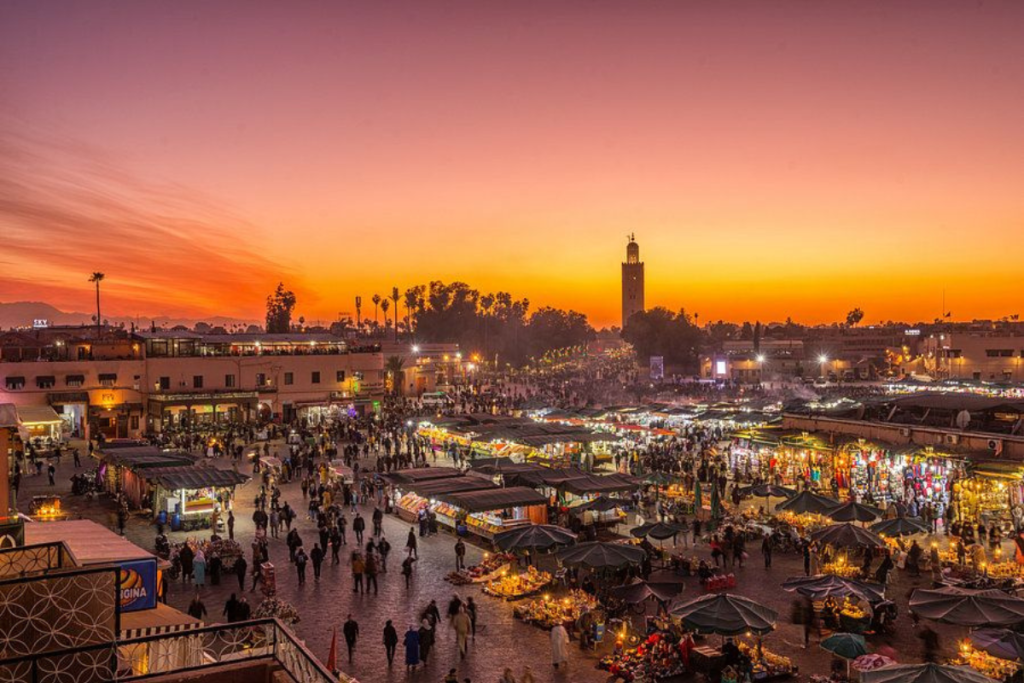
The old city has been a UNESCO World Heritage Site since 1985, and most of what you will want to see lies inside its walls. Its heart is Jemaa el-Fnaa, a large square that changes character through the day. In the morning it is fairly quiet, with orange juice stalls and a few vendors. From late afternoon it fills with musicians, storytellers and rows of open-air food stalls, and by nightfall it is one of the liveliest public spaces in Africa.
North of the square, the souks spread out in a web of covered alleys. Trades still cluster by street: leather, metalwork, carpets, spices, slippers, lanterns. Getting a little lost is part of the experience, and the square is never far away. Bargaining is expected; start well below the first price, stay good-humored and walk away if the price does not suit you.
Monuments Worth Your Time
Koutoubia Mosque
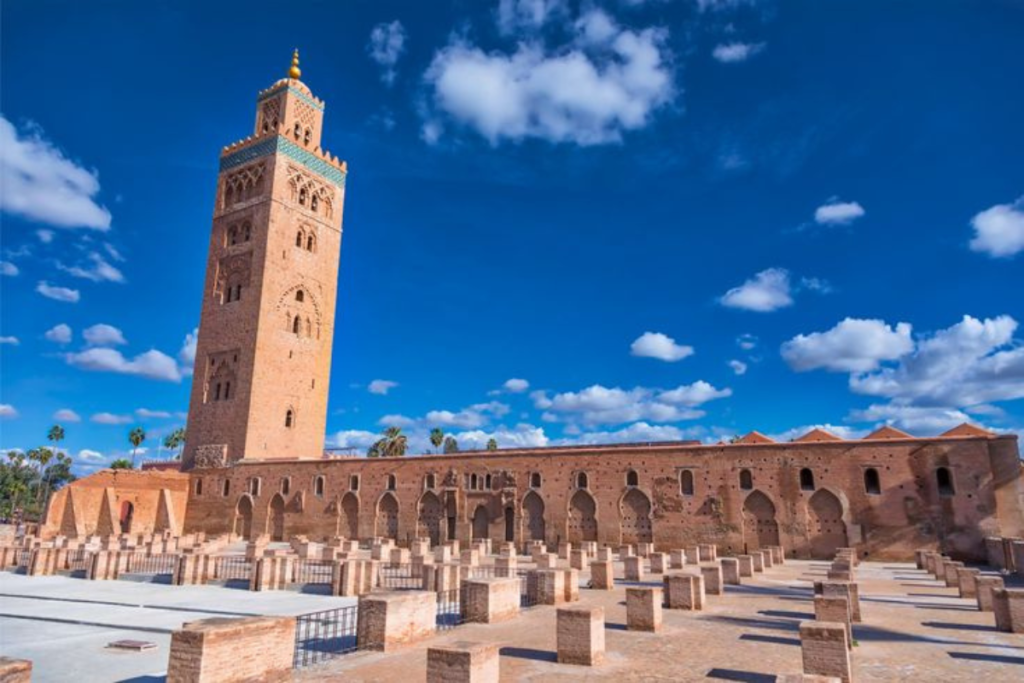
The 12th-century minaret of the Koutoubia is the city’s landmark and a useful point of orientation, visible from much of the Medina. Non-Muslims cannot enter the mosque, but the gardens around it are open to all and pleasant at sunset.
Bahia Palace
Built in the late 19th century for a powerful grand vizier, the Bahia Palace is a sequence of courtyards, gardens and rooms with painted cedar ceilings and zellige tilework. Go early in the morning, before the tour groups arrive.
Saadian Tombs and El Badi Palace
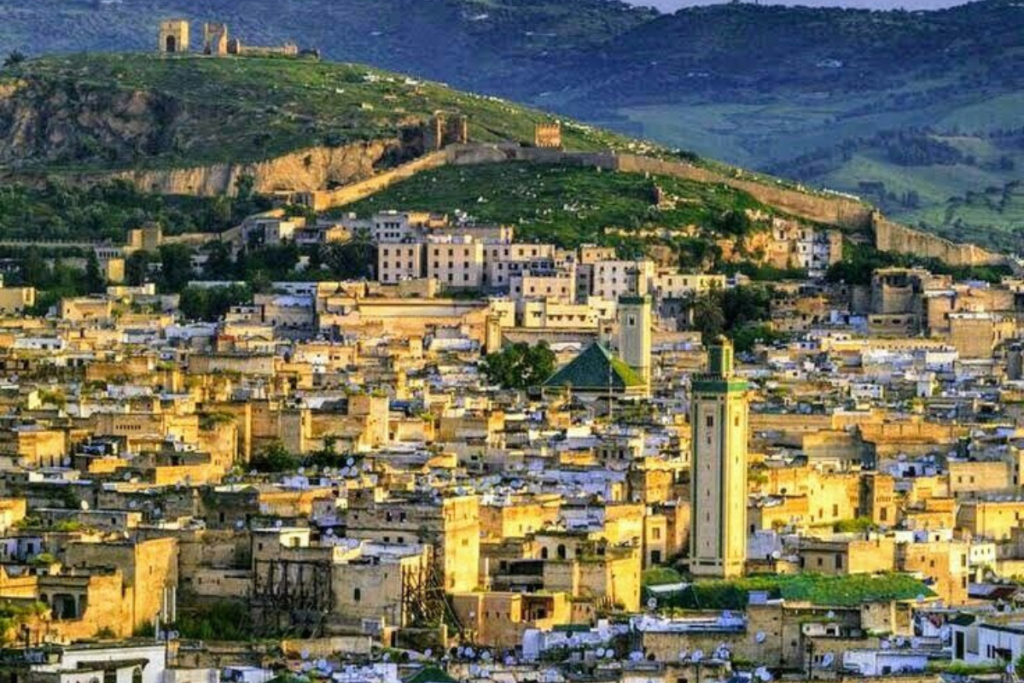
In the Kasbah district, the Saadian Tombs hold the richly decorated mausoleums of a 16th-century dynasty, rediscovered in 1917. A short walk away, the ruins of El Badi Palace give a sense of the scale of the same era, with sunken gardens and storks nesting on the walls.
Ben Youssef Madrasa
This former Islamic college in the northern Medina is one of the finest examples of Moroccan craftsmanship: carved stucco, cedar wood and a marble courtyard around a reflecting pool. The small student cells upstairs look down onto it.
Majorelle Garden
Created by the French painter Jacques Majorelle and later bought and restored by Yves Saint Laurent and Pierre Bergé, this garden in the new town is known for its cobalt-blue villa, cactus collection and small museum of Amazigh art. It is the most visited site in the city, so book a timed ticket online and choose the first slot of the day.
Some monuments were damaged by the earthquake of September 2023 and parts of them have been closed for repairs at various times. Check current opening before you plan your day around a particular site.
Where to Stay in Marrakech
The Medina is the choice for a first visit. Staying in a riad, a traditional house built around an inner courtyard, puts you within walking distance of the main sights and gives you a quiet place to retreat to. Riads range from simple guesthouses to very luxurious small hotels. Ask your host for precise directions or an escort on arrival, since many are hidden down narrow lanes that cars cannot reach.
Gueliz, the new town laid out in the 20th century, has modern hotels, cafés, galleries and easier transport. Hivernage, between Gueliz and the Medina, is the area for large upscale hotels and nightlife. The Palmeraie, north of the city, suits travelers who want a resort with a pool and do not mind taking a taxi into town.
What to Eat
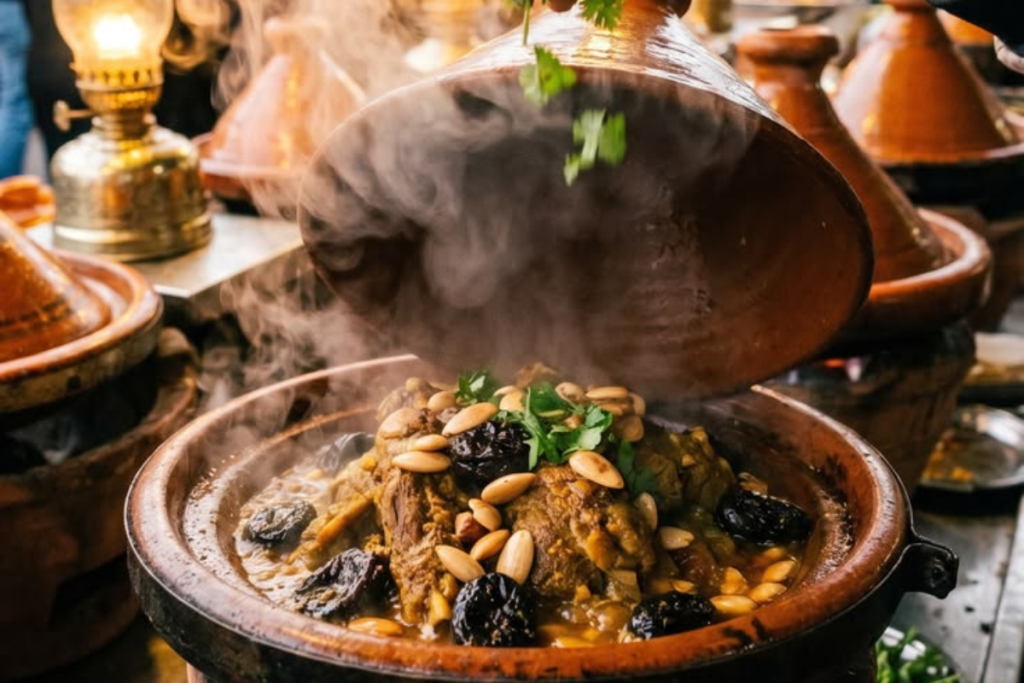
The local specialty is tanjia, meat slow-cooked in a clay urn in the embers of a hammam furnace. You will also find tagines, couscous (traditionally served on Fridays), pastilla, harira soup and mechoui, slow-roasted lamb sold by weight near the square. The food stalls on Jemaa el-Fnaa are worth trying once for the atmosphere; choose a busy one and check prices before you sit down. A cooking class or a guided food walk is a good way to understand what you are eating.
Day Trips from Marrakech
- Ourika Valley: under an hour away, with riverside cafés and the waterfalls of Setti Fatma.
- Imlil: a mountain village about an hour and a half away, the starting point for walks below Mount Toubkal.
- Ouirgane: a quiet valley with a reservoir, good for a slow day or a night away.
- Essaouira: a walled port on the Atlantic, two and a half to three hours by road. Possible in a day, better with a night.
- Ait Ben Haddou: a fortified earthen village across the Tizi n’Tichka pass. It is a long day; an overnight stop toward Ouarzazate is more comfortable.
The Sahara is not a day trip. The dunes of Erg Chebbi are a full day’s drive away, and a desert tour needs at least three days, or two for the nearer dunes around Zagora.
Best Time to Visit
Spring and autumn bring warm days and comfortable evenings. Summer is very hot, with afternoon temperatures that often pass 40°C, so sightseeing has to be done early. Winter days are usually sunny and mild, but nights are cold and many riads are not well heated; pack a warm layer.
Getting There and Around
Marrakech Menara Airport is only a few kilometers from the center and has direct flights from many European cities. Trains link Marrakech with Casablanca and Rabat, and buses run to Essaouira, Agadir and the south.
Inside the Medina you will walk. For longer hops, use the small beige petits taxis: ask the driver to use the meter, or agree on the fare before you get in.
Practical Tips
- Carry cash in dirhams. Many shops, taxis and small restaurants do not take cards.
- Dress modestly, with shoulders and knees covered, especially in the Medina.
- Be polite but firm with unsolicited guides who offer to show you the way; a “no, thank you” and keeping walking is enough.
- Ask before photographing people, and expect performers on the square to ask for a tip.
- Download an offline map. Phone navigation works reasonably well in the main lanes.
Where to Go Next
Marrakech combines well with the coast at Essaouira, the imperial cities of Fes and Rabat, or a loop south through Ouarzazate to the desert. Give the city three unhurried days first: it rewards slow mornings, long lunches and evenings on a rooftop more than a checklist.
Pingback: Zagora Travel Guide | 7 Best Sahara Tours & Desert Camping
Pingback: Foum Zguid Travel Guide 2026: Amazing Desert Tours, 4x4 Adventures & Sahara Gateway
Pingback: Essaouira Travel Guide 2026: Amazing Beaches, Medina & Activities
Pingback: Azrou Travel Guide 2026: Amazing Nature & Middle Atlas Mountains
Pingback: Meta Title: Tangier Travel Guide 2026 : Best Things to Do in Tangier
Pingback: Erg Chebbi Travel Guide: 10 Essential Stops for Morocco’s Most Famous Sand Dunes
Pingback: What to Eat in Morocco: 18 Must-Try Dishes and Drinks
Pingback: M'Hamid El Ghizlane Travel Guide: Gateway to Erg Chigaga
Pingback: Moroccan Etiquette: Essential Dos and Don'ts for a Respectful Trip
Pingback: How to Haggle in Moroccan Souks: 7 Simple Steps and Smart Tips
Pingback: Best Time to Visit Morocco: A Month-by-Month Guide
Pingback: 10-Day Morocco Itinerary: Marrakech, Sahara & Fes | Travel By Tips
Pingback: Staying in a Riad in Morocco: How to Choose & What to Expect
Pingback: Taroudant Travel Guide: Ramparts, Souks and the Souss Valley
Pingback: How to Buy a Moroccan Rug: Styles, Prices and Tips to Avoid Fakes
Pingback: Tafraoute Travel Guide: Painted Rocks, Almond Valleys and the Anti-Atlas
Pingback: Travelling in Morocco During Ramadan: What to Expect and Tips
Pingback: Oukaimeden Travel Guide: Skiing and Hiking Above Marrakech