
Moroccan food is one of the great pleasures of a trip to the country. It mixes Amazigh, Arab, Andalusian and Mediterranean influences, and it changes from region to region: fish on the Atlantic coast, slow-cooked lamb in Marrakech, hearty soups in the mountains. This guide covers what to eat in Morocco, from the classics on every menu to the snacks locals queue for, with tips on finding the best versions.
What to Eat in Morocco at a Glance
- Main flavours: cumin, saffron, ginger, cinnamon, preserved lemon, olives, fresh coriander and parsley.
- Spicy? Rarely. Food is aromatic rather than hot; chilli paste (harissa) is served on the side.
- Bread: served with almost every meal and used instead of cutlery.
- Best meals: often in family homes, guesthouses and simple local eateries rather than smart restaurants.
The Classics: What to Eat in Morocco First
1. Tagine
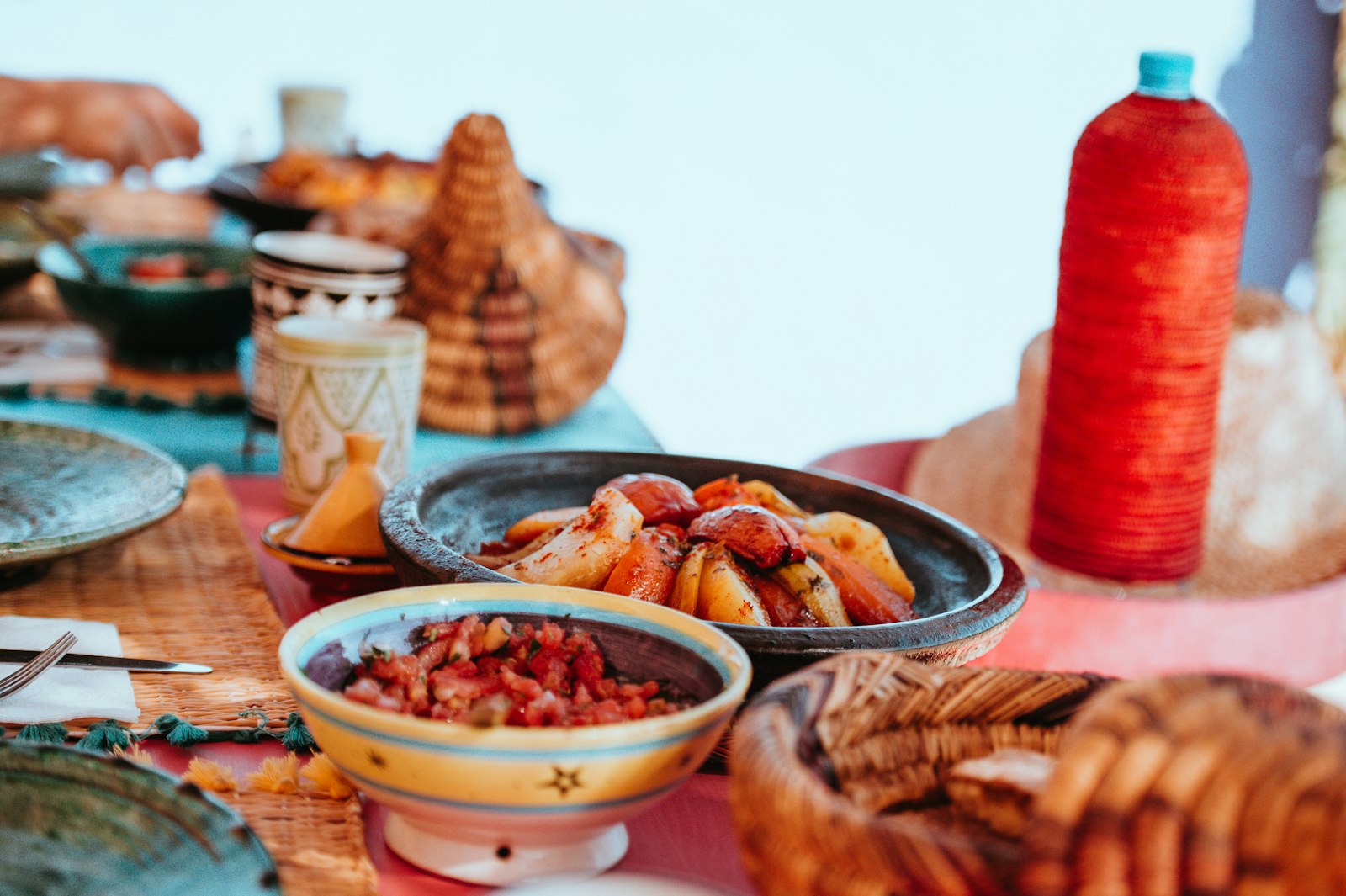
The tagine is both a dish and the conical clay pot it is cooked in. Meat or fish and vegetables simmer slowly until tender. Classic versions include chicken with preserved lemon and olives, lamb with prunes and almonds, and kefta (meatballs) with tomato and egg. Roadside tagines cooked over charcoal are often the best.
2. Couscous
Steamed semolina topped with vegetables and meat, couscous is traditionally a Friday lunch dish, eaten by families after midday prayer. Look for couscous with seven vegetables, or the sweet-savoury version with caramelised onions and raisins known as tfaya.
3. Pastilla
A festive pie of thin, crisp pastry filled with spiced pigeon or chicken, almonds and egg, dusted with sugar and cinnamon. The mix of sweet and savoury surprises many visitors. Seafood pastilla is also common.
4. Harira
A rich tomato soup with lentils, chickpeas, herbs and often a little meat. It is the dish that breaks the fast during Ramadan, usually served with dates and sweets, but you can find it all year in simple cafés.
5. Tanjia
The signature dish of Marrakech: beef or lamb with preserved lemon, garlic and spices, sealed in a tall clay jar and cooked for hours in the embers of a hammam furnace. The meat falls apart. Look for it in small eateries around the medina.
6. Mechoui
Whole lamb slow-roasted in an underground oven or over fire, served simply with salt and cumin. It is a celebration dish, but some places sell it by weight at lunchtime.
7. Rfissa
Shredded flatbread soaked in a broth of chicken, lentils and fenugreek. It is comfort food, traditionally made to celebrate a birth, and rarely on tourist menus, so try it if you see it.
Salads and Starters
8. Zaalouk and Taktouka
Moroccan “salads” are often cooked dishes eaten with bread. Zaalouk is smoky aubergine with tomato and garlic; taktouka is grilled peppers and tomatoes. A spread of small salads is a great way to start a meal.
9. Bissara
A thick soup of dried fava beans, finished with olive oil, cumin and paprika. It is a cheap, filling breakfast in the north and in Fes, especially in winter.
Street Food: What to Eat in Morocco on the Go
10. Grilled Sardines and Fried Fish
On the coast, fresh fish is a must. In Essaouira, choose your fish at the grills by the port and have it cooked on the spot. Sardine balls in tomato sauce are another coastal speciality.
11. Brochettes and Kefta
Skewers of lamb, chicken or liver and spiced minced-meat kefta, grilled over charcoal and served with bread, onions and salad. Many butchers will grill the meat you buy from them.
12. Maakouda
Fried potato cakes, often stuffed into bread with harissa. Cheap, filling and very popular with students and workers.
13. Snail Soup
Small snails in a peppery, herb-filled broth, served by the bowl from street carts in the evening. Locals say it aids digestion. Try it in the main square of Marrakech if you are curious.
14. Madfouna
Often called “Berber pizza”, this is a flatbread stuffed with spiced meat, onions and egg and baked in a wood-fired or sand oven. It is a speciality of the area around Rissani and the Merzouga dunes.
Breads and Sweets to Eat in Morocco
15. Msemen, Baghrir and Sfenj
Breakfast is a highlight and one of the best answers to what to eat in Morocco. Msemen are flaky square pancakes, baghrir are spongy “thousand-hole” pancakes, and sfenj are ring doughnuts fried in the morning and sold on a string of palm. Eat them with honey, butter, olive oil or amlou, a spread of argan oil, almonds and honey.
16. Moroccan Pastries
Try cornes de gazelle (almond-filled crescents), chebakia (sesame cookies fried and soaked in honey, eaten especially during Ramadan) and briouats (small pastry triangles, sweet or savoury). Pastry shops sell them by weight.
Drinks
17. Mint Tea
Green tea brewed with fresh mint and, usually, plenty of sugar, poured from a height to create a little foam. You can ask for it with less sugar. In winter, other herbs such as wormwood are sometimes added.
18. Fresh Juices and Avocado Smoothies
Freshly squeezed orange juice is everywhere and excellent. Juice bars also make thick avocado smoothies, often blended with milk, dates or almonds, a surprising and delicious local favourite.
Tips on What to Eat in Morocco and Where
- Follow the locals. Busy places with a quick turnover serve the freshest food.
- Eat at your guesthouse at least once. Home-style dinners in riads and family gîtes are often the best meals of a trip.
- Check prices first at food stalls in tourist squares, and confirm what is included before you sit down.
- Be careful with tap water if you have a sensitive stomach. Bottled water is easy to find, and peeled fruit and cooked dishes are the safest choices for the first few days.
- Vegetarians can eat well with vegetable tagines, couscous, salads, lentils and bissara, but ask whether stock or meat fat is used.
- Eat with your right hand when sharing a dish, using bread to scoop.
Conclusion
Knowing what to eat in Morocco opens up a whole side of the country. Go beyond the tagine: try tanjia in Marrakech, grilled sardines in Essaouira, madfouna near the dunes and a breakfast of msemen with amlou. Eat where the locals eat, accept invitations to share a meal, and let food guide your trip as much as the monuments do.
Featured image: photo by Annie Spratt on Unsplash.
Pingback: Asilah Travel Guide: Murals, Ramparts and Atlantic Sunsets
Pingback: Argan Oil in Morocco: Cooperatives, Uses and How to Buy the Real Thing
Pingback: Moroccan Cooking Class: What You'll Learn and How to Choose One