
Few souvenirs say Morocco like a hand-knotted rug: thick Beni Ourain wool, bright boucherouite rag rugs, flat-woven kilims full of Amazigh symbols. Yet buying one can feel intimidating, with endless glasses of mint tea, piles of carpets unrolled at your feet and prices that seem to change by the minute. This guide on how to buy a Moroccan rug explains the main styles, how to judge quality, what affects the price and how to negotiate, pay and ship without regrets.
Know the Main Types of Moroccan Rugs
Moroccan rugs are traditionally woven by Amazigh (Berber) women, and every region has its own style. Knowing a few names helps you understand what a seller is showing you and compare like with like.
Pile rugs (knotted)
- Beni Ourain: thick, soft, cream-coloured wool with dark diamond or line patterns, from the Middle Atlas. The most copied style worldwide.
- Azilal: a cream base with colourful, playful motifs, from the High Atlas around Azilal.
- Boujad: warm reds, pinks and oranges with abstract geometric shapes, from the plains near Khenifra.
- Rehamna and Chichaoua: regional rugs from around Marrakech, often in red or orange tones with simple, bold symbols.
Flat-weaves and recycled rugs
- Kilim (hanbel): thin, flat-woven rugs with no pile, light to carry and easy to fold into a suitcase.
- Zanafi and Glaoua: combinations of flat-weave stripes and knotted sections, typical of the High Atlas.
- Boucherouite: colourful rag rugs woven from recycled strips of fabric, usually the most affordable option.
- Hendira: flat-woven wool blankets or capes decorated with sequins, now often used as wall hangings or throws.
Where to Buy a Rug in Morocco
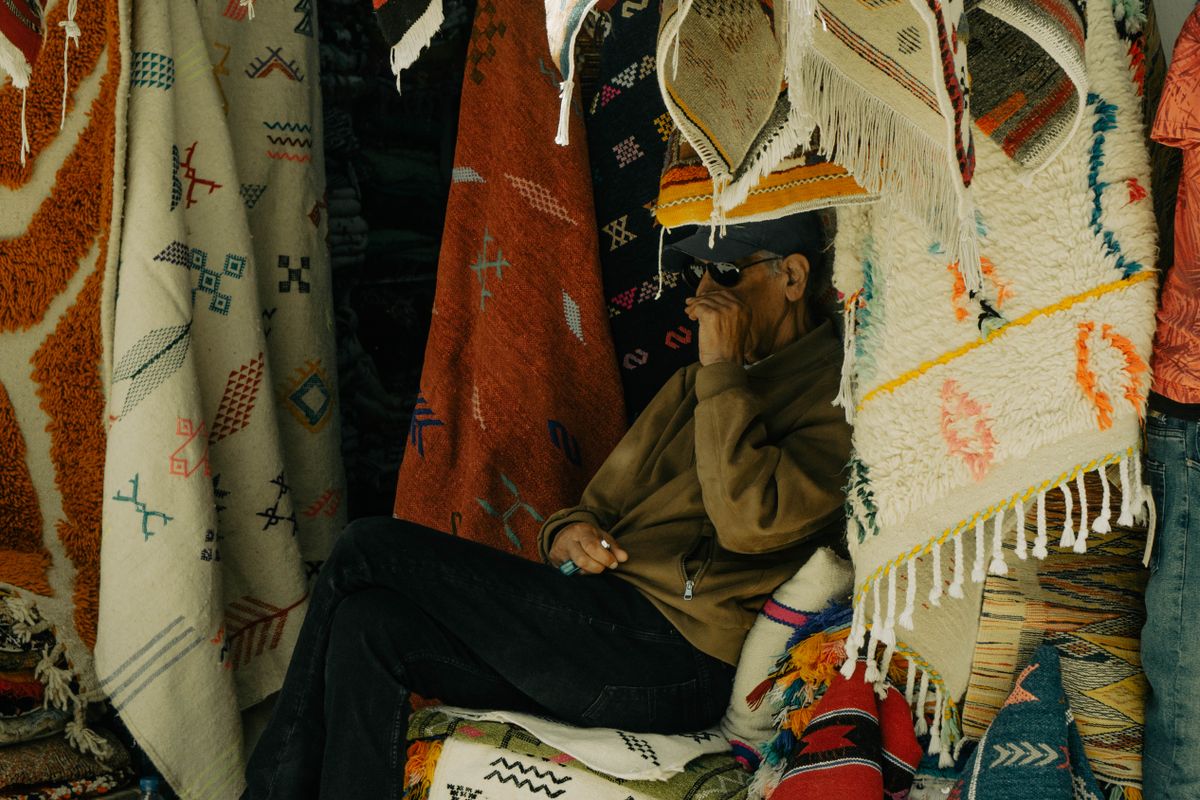
- Medina rug shops: the souks of Marrakech and Fes have the widest choice, from new pieces to vintage rugs. Expect the full sales ritual.
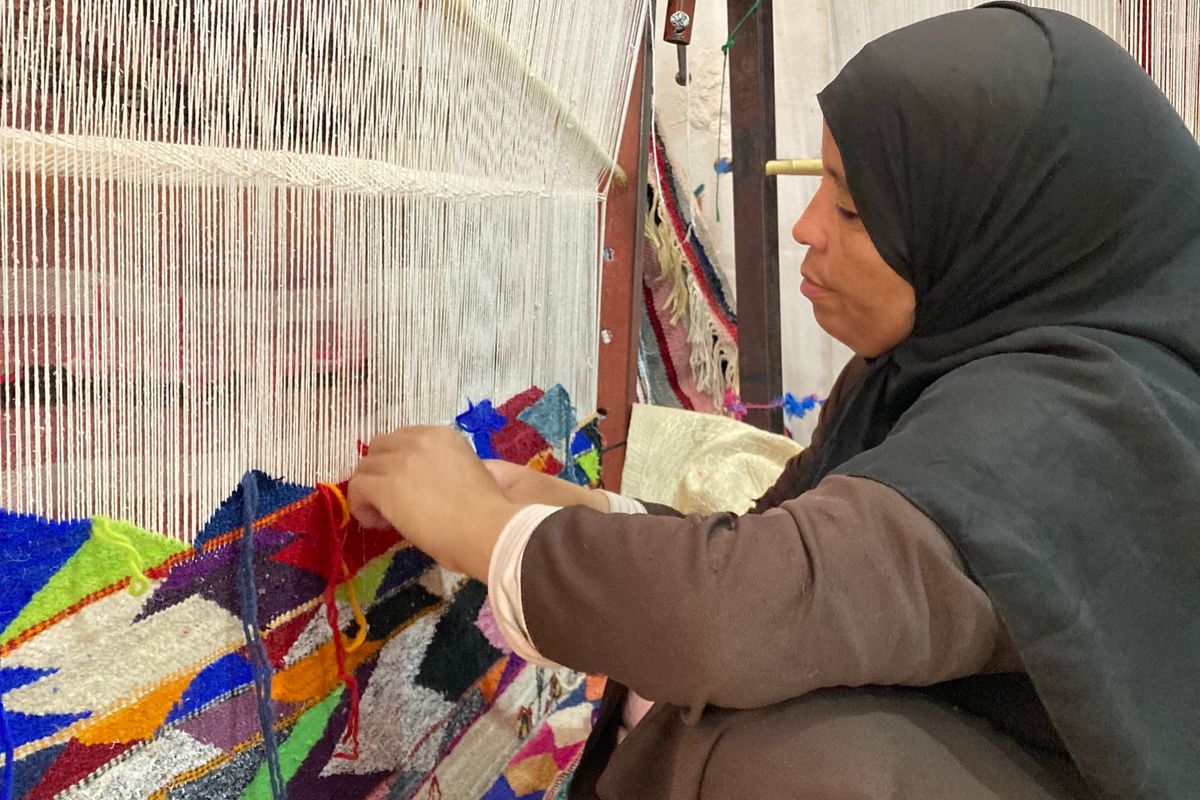
- Weaving cooperatives: in the Atlas and smaller towns, women’s cooperatives sell directly, so more of the money reaches the weavers. Choice is smaller but provenance is clearer.
- Rural weekly markets: some village souks in the Middle and High Atlas have rug sections where locals sell to dealers. Prices can be low, but you need a good eye and some patience.
- Fixed-price boutiques: concept stores in Marrakech and other cities sell curated rugs with clear price tags. You pay more, but there is no haggling.
Be wary of guides or “friendly” strangers who insist on taking you to a particular rug shop. They usually earn a commission that is added to your price. Our guide on common scams in Morocco explains how to decline politely.
How to Check the Quality of a Moroccan Rug
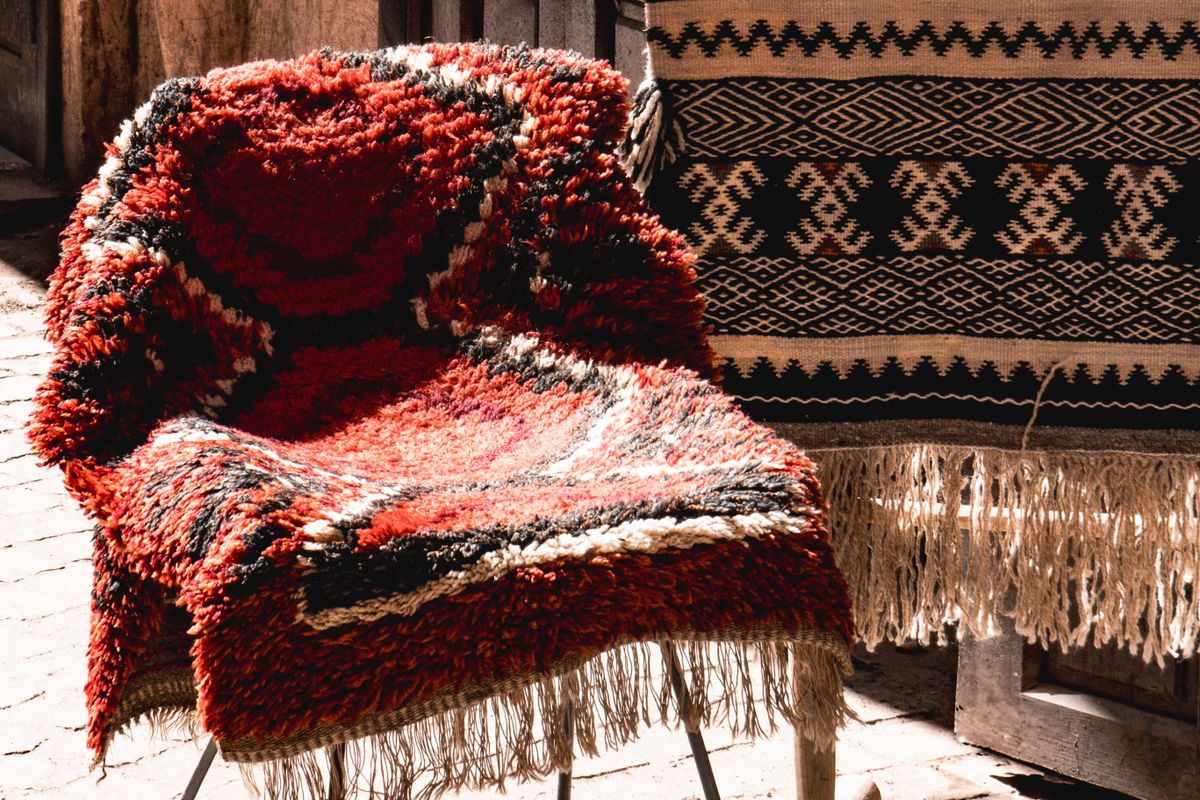
- Turn it over. On a hand-knotted rug, the pattern on the back mirrors the front and the knots are slightly irregular. A perfectly uniform back or a glued canvas backing suggests machine-made or hand-tufted production.
- Feel the wool. Good wool feels soft but slightly greasy from natural lanolin. Very shiny, squeaky fibres may be synthetic or “sabra” (cactus silk), which is often viscose.
- Check the fringe. On a real knotted rug, the fringe is the end of the warp threads running through the rug, not a strip sewn on afterwards.
- Test the colours. Rub a damp white tissue on the surface. Colour coming off is a sign of poor dyes.
- Look at the shape. Handmade rugs are rarely perfectly straight, but strong wrinkles, waves or curling edges make a rug harder to lay flat.
- Smell it. A strong musty smell can mean damp storage. Ask whether the rug has been washed.
“Vintage” and “antique” labels are hard to verify. Some newer rugs are artificially sun-faded or washed to look older. Buy because you love the piece, not because of a claimed age.
What Affects the Price
There is no official price list for rugs, and asking prices vary hugely from one shop to another. The main factors are:
- Size: sellers often quote per square metre, which makes it easier to compare.
- Technique: dense hand-knotted pile rugs cost more than flat-weaves, which cost more than boucherouites.
- Materials: pure wool and natural dyes are worth more than synthetic blends.
- Age and condition: genuine older pieces in good condition are rarer, while repairs and stains lower the value.
- Location: rugs in tourist medinas usually start higher than in cooperatives or rural markets.
Before you shop, decide on a budget and the size you need, and check what similar rugs cost at a fixed-price store or online at home. That gives you a realistic reference.
How to Negotiate for a Rug
- Enjoy the tea, but stay free. Accepting tea and looking at rugs does not oblige you to buy.
- Do not reveal your budget first. Ask the price, then make a calm, much lower counter-offer and work up slowly.
- Narrow the pile. Ask the seller to set aside two or three favourites and negotiate on those only.
- Bundle items. Buying two smaller rugs or adding a cushion cover can improve the overall deal.
- Be ready to walk away. A polite “thank you, I will think about it” often brings the best final price.
For the full bargaining routine, read our guide on how to haggle in Moroccan souks.
Paying and Shipping Your Rug
- Pay safely: many rug shops accept cards, sometimes with a surcharge. Keep your card in sight and ask for a written receipt describing the rug, its size and the price.
- Carry it yourself if you can: most shops will fold or roll a rug tightly and wrap it for the plane. Flat-weaves fit easily in luggage; a large pile rug may count as extra baggage, so check your airline’s rules.
- Shipping: shops can arrange delivery, but timing and reliability vary. Photograph the rug, ideally with a mark the seller adds to the back, confirm in writing what the shipping price includes, and ask who pays import duties or taxes in your country.
- Customs: import rules and duties depend on your home country, so check them before you buy anything expensive.
FAQ
Is it cheaper to buy a Moroccan rug in Morocco?
Often yes, especially for flat-weaves and boucherouites, and you get to choose the exact piece. Once you add a high opening price, luggage fees or shipping, the saving shrinks, so compare carefully.
Which city is best for buying rugs?
Marrakech has the biggest selection, while Fes and the Middle Atlas towns are good for traditional styles. For a calmer experience, cooperatives in the Atlas valleys are worth seeking out.
Conclusion
A Moroccan rug is a piece of craftsmanship you will live with for years, so take your time. Learn the styles, check the back and the wool, set a budget, negotiate calmly and get everything in writing. Do that, and the long tea-filled ritual of the rug shop becomes one of the best memories of your trip. For more ways to make your money go further, see our guide to Morocco on a budget.
Featured image: colourful rugs hanging in the medina of Fes, photo by Moussa Idrissi on Pexels.