
Rabat is Morocco’s capital and one of its most relaxed cities. It has the monuments of an imperial city, an Atlantic seafront and broad, tree-lined avenues, without the crowds or pressure of the better-known destinations. This Rabat travel guide covers the main sights, how to organize a visit and why the city deserves more than a quick stop.
Rabat at a Glance
- Best for: history without the hassle, gardens, museums and sea air.
- How long: one full day for the highlights, two to enjoy it properly.
- Best time: spring and autumn; the climate is mild all year.
- Getting around: tramway, blue petits taxis and walking.
Kasbah of the Udayas
This 12th-century fortress stands on a bluff where the Bou Regreg river meets the Atlantic. You enter through a monumental Almohad gate into a small residential quarter of blue-and-white lanes. At the far end, a wide platform looks over the river mouth, the beach and the neighboring city of Salé. Below the walls, the Andalusian Gardens offer shade and quiet, and a traditional café beside them serves mint tea and pastries with a view of the water.
Hassan Tower and the Mausoleum of Mohammed V
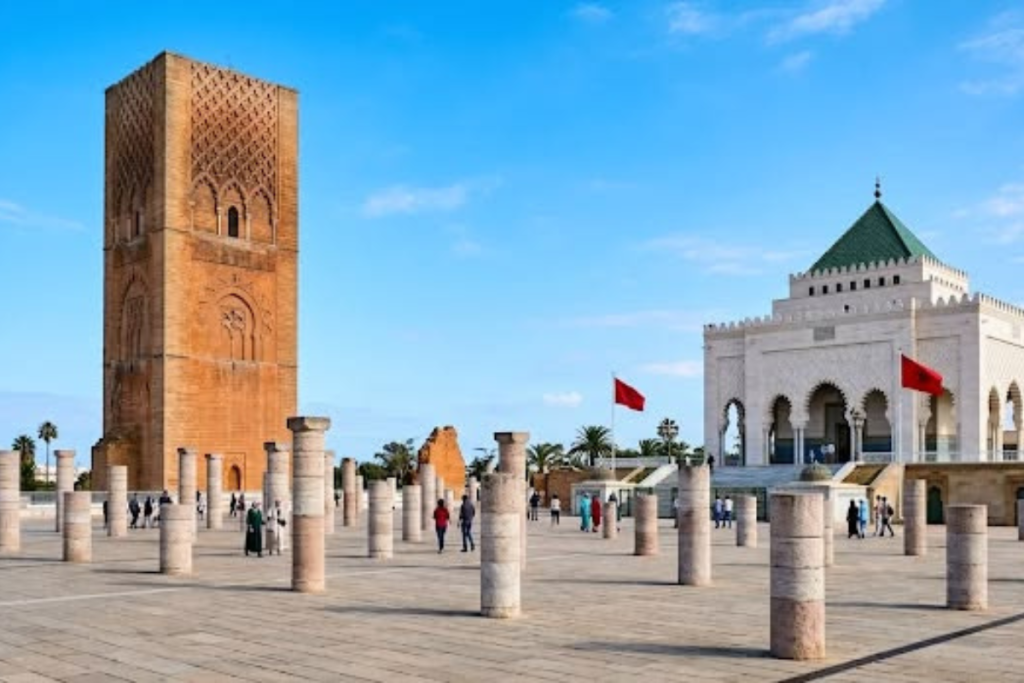
In the late 12th century, an Almohad sultan began building what was meant to be one of the largest mosques in the world. Work stopped at his death, leaving a 44-meter red sandstone minaret and a field of columns. The site is one of the most striking in Morocco, especially in the late afternoon.
Facing the tower, the Mausoleum of Mohammed V holds the tombs of the king who led Morocco to independence and of his two sons. The white marble building with its green tiled roof is guarded by soldiers in ceremonial dress and is open to respectful visitors of all faiths.
The Chellah
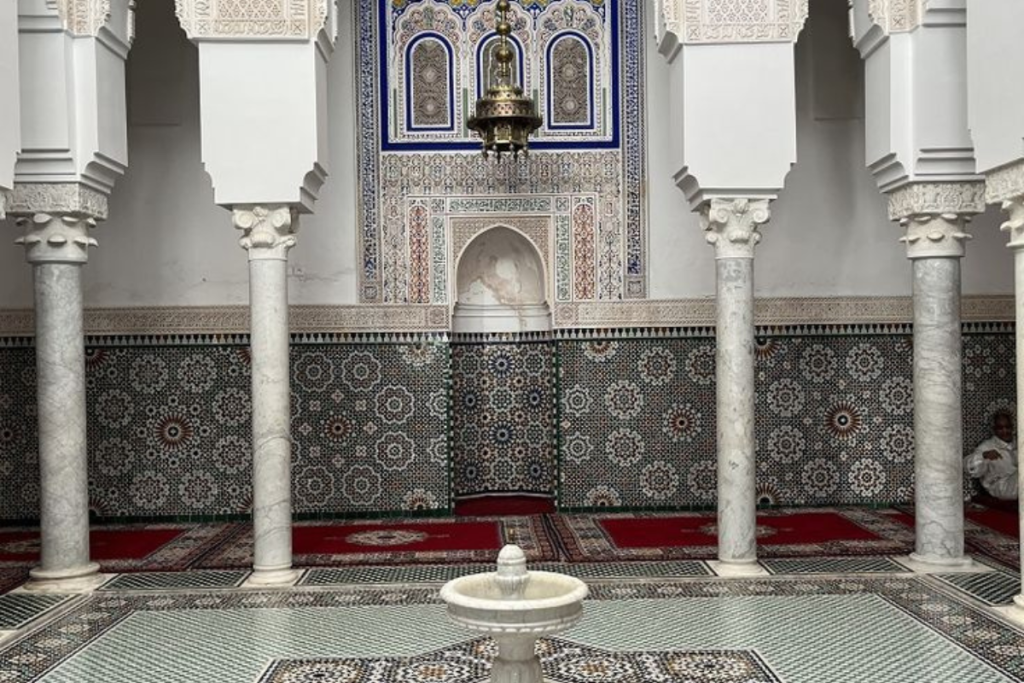
Just outside the city walls, the Chellah is a walled enclosure containing the remains of a Roman town and, on top of it, a 14th-century royal necropolis. Ruined minarets, tombs and fragments of mosaic sit in an overgrown garden where storks nest on every high point. It is one of the most atmospheric places in the country. The site has been renovated in recent years, so check that it is open before you go.
The Medina
Rabat’s medina is small, orderly and easy to explore on your own. Rue des Consuls is the street for carpets, leather and jewelry, with fixed or gently negotiable prices and very little hard selling. It is a good place to shop if you found the souks elsewhere tiring.
The Modern City and Museums
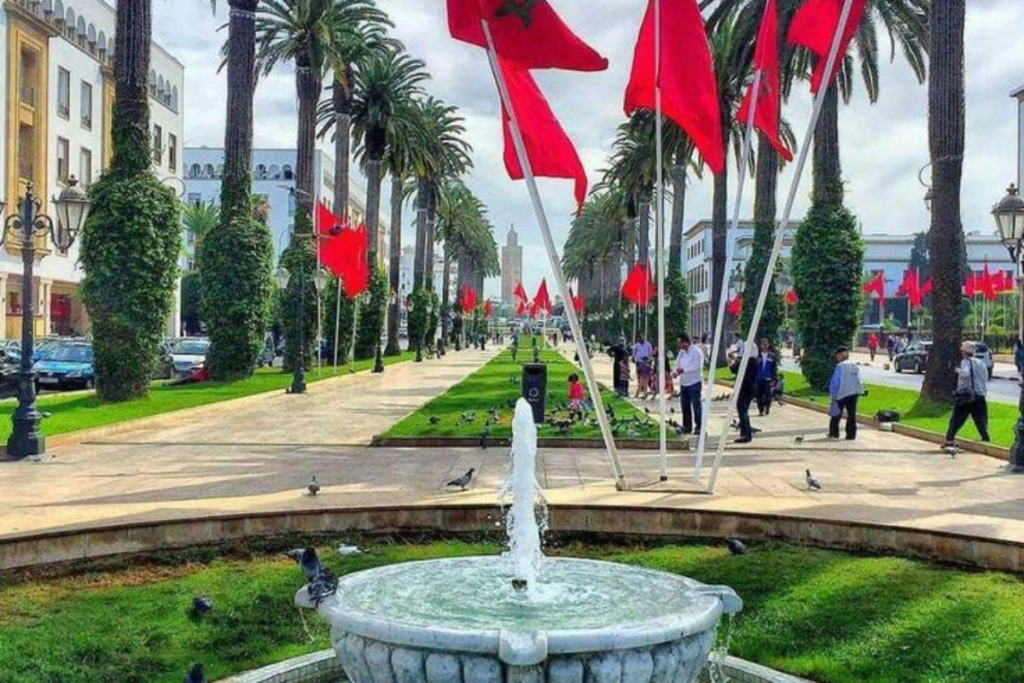
The Ville Nouvelle, laid out in the early 20th century, is part of the reason Rabat was listed by UNESCO in 2012 as a city that joins a modern capital with a historic one. Avenue Mohammed V runs from the medina past the parliament to the main mosque. Close by, the Mohammed VI Museum of Modern and Contemporary Art presents Moroccan painting and sculpture from the 20th century to today.
The Royal Palace occupies a large walled precinct in the center. It is not open to the public, but visitors may usually walk through the grounds to see the ceremonial gates.
Salé and the Riverfront
Across the river, Salé is an old city in its own right, with a quiet medina and a fine 14th-century madrasa. You can reach it by tram or by one of the small rowing boats that ferry people across the Bou Regreg. On the Rabat side, the riverfront promenade and marina are pleasant for an evening walk.
Where to Stay
Riads in the medina and near the Kasbah put you within walking distance of the old sights. Hotels in the Ville Nouvelle, around the Hassan and Agdal districts, are convenient for the stations, restaurants and the tram.
Getting There and Around
Rabat is about an hour by train from Casablanca and is a stop on the Al Boraq high-speed line to Tangier. Direct trains also run to Meknes and Fes. The city has two main stations: Rabat Ville in the center and Rabat Agdal, used by the high-speed trains. Rabat-Salé Airport handles a limited number of international flights; many visitors arrive through Casablanca.
The tramway links Rabat and Salé and passes close to several sights. Blue petits taxis are metered and inexpensive.
A Simple One-Day Plan
- Morning: Hassan Tower and the Mausoleum, then the Chellah.
- Lunch in the Ville Nouvelle or the medina.
- Afternoon: Rue des Consuls, then up to the Kasbah of the Udayas and the Andalusian Gardens.
- Sunset from the Kasbah platform or on the riverfront.
Practical Tips
- Unofficial guides sometimes wait at the Kasbah gate. You do not need one; the quarter is small and free to enter.
- The Atlantic here has strong currents. Swim only where locals do and when the beach is supervised.
- Museums usually close one day a week, often Tuesday. Check before you go.
Pingback: Meta Title: Tangier Travel Guide 2026 : Best Things to Do in Tangier
Pingback: El Jadida Travel Guide: Portuguese Cistern, Ramparts and Oualidia