
Shopping in a Moroccan souk is unlike shopping at home. Prices are rarely written down, the seller offers you tea, and the final price depends on a conversation that can last two minutes or half an hour. For many visitors, haggling is the most intimidating part of a trip to Morocco. It does not have to be. This guide explains how to haggle in Moroccan souks with confidence, stay friendly, and come home with things you love at a price you are happy with.
How to Haggle in Moroccan Souks at a Glance
- Where you haggle: souks, craft shops, market stalls, carpet shops.
- Where you don’t: supermarkets, pharmacies, cafés, restaurants, fixed-price cooperatives and shops with marked prices.
- The golden rule: decide what an item is worth to you before you ask the price.
Understand the Game
In the souk, the first price is an opening offer, not the real price. Sellers expect you to haggle in Moroccan souks, and many enjoy it. The aim is not to “win” or to pay the lowest possible amount, but to reach a price both sides accept. Seen that way, haggling becomes a social exchange rather than a battle.
Remember too that the person in front of you is earning a living. A few dirhams make little difference to most visitors but can matter a lot to a small craftsman. Bargain firmly, but fairly.
Before You Start: Do Your Homework
Look Before You Buy
Before you haggle in Moroccan souks, spend your first day or two looking rather than buying. Walk through the souks, compare similar items in several shops, and ask a few prices without committing. You will quickly get a sense of the range. Prices are also usually lower in smaller towns than in the main tourist streets of Marrakech or Fes.
Visit a Fixed-Price Shop
Cooperatives, government-backed craft centres and some boutiques have marked prices. Even if you do not buy there, they give you a benchmark for quality and value before you head into the souk.
Ask Your Host
The owner or staff of your riad know local prices well. Ask them what a fair price would be for a pair of babouche slippers, a leather bag or a small rug. This is the single most useful step you can take.
How to Haggle in Moroccan Souks Step by Step
- Greet the seller. A salam alaykum and a smile set the tone.
- Show interest, but not too much. Look at several items, not just the one you want.
- Let the seller name the first price. Ask “how much?” and listen.
- Make a lower counter-offer. Start well below the price you are willing to pay, so there is room to move. There is no fixed rule; your research tells you where to begin.
- Move up slowly. The seller will come down; you go up in small steps. Expect some theatre: sighs, talk of family, the quality of the work.
- Stop at your limit. When you reach the price you decided on, say it is your last offer.
- Shake hands and pay. Once a price is agreed, it is a deal. Backing out at that point is considered bad form.
Tips to Haggle in Moroccan Souks Like a Local
- Never name a price you would not pay. If the seller accepts, you are expected to buy.
- Be ready to walk away. Saying thank you and leaving is often the moment the price drops. If it does not, you have learned the real floor.
- Buy several items together. Sellers give better prices on bundles.
- Carry small notes. Having close to the exact amount helps, and pulling out a thick wallet does not.
- Shop early. Some sellers believe the first sale of the day brings luck and may accept a lower price.
- Keep your sense of humour. A joke or a few words of Arabic or French often lead to a better deal than a hard face.
Common Traps to Avoid
Guides Who Lead You to Shops
Unofficial guides, and sometimes friendly strangers, may steer you to a particular shop or a “cooperative” where they receive a commission, which is added to your price. Shop on your own when you can.
“Last Day” and “Special Price” Stories
You may hear that a festival is ending today, or that a price is special only for you. Treat these as part of the sales patter, not a reason to buy.
Quality Claims
Not all “silver” is silver, not all “leather” is good leather, and not every rug is antique or hand-knotted. Inspect items carefully: check stitching, smell leather, turn rugs over to look at the knots. If something matters a lot to you, buy from a reputable shop rather than on the street.
What to Buy in Moroccan Souks
- Rugs and carpets: the biggest purchase most visitors make. Take your time, see many, and never feel obliged after the tea.
- Leather: bags, belts, jackets and babouche slippers. Fes is famous for its tanneries.
- Ceramics: painted plates, bowls and tagines. Decorative tagines are not always safe for cooking; ask.
- Lanterns and metalwork: pierced brass and copper lamps, teapots and trays.
- Argan oil and cosmetics: best bought from a women’s cooperative or a reputable shop, as diluted oil is common.
- Spices: ras el hanout, cumin and saffron. Real saffron is expensive; very cheap “saffron” usually is not.
Where to Shop
The souks of Marrakech are the largest and liveliest, with whole streets devoted to dyers, metalworkers and leather. Fes has the most traditional atmosphere, and smaller medinas like Essaouira and Chefchaouen are calmer, with lower pressure. For a taste of a real rural market, visit a weekly souk such as the one in Rissani, where locals buy livestock, vegetables and household goods.
Shipping and Paying
- Cash is king in the souk. Larger shops may take cards, sometimes with a surcharge.
- If a shop offers to ship a rug home, get a written receipt with a full description, and consider whether you can carry it instead. Rugs fold surprisingly small.
- Check your airline’s baggage allowance before buying large or heavy items.
Conclusion
When you haggle in Moroccan souks, the goal is not the lowest price but enjoying the exchange. Do your research, decide what something is worth to you, bargain with a smile and walk away when it does not feel right. Pay a price you are happy with, and the rug or lantern you bring home will carry a good story with it.
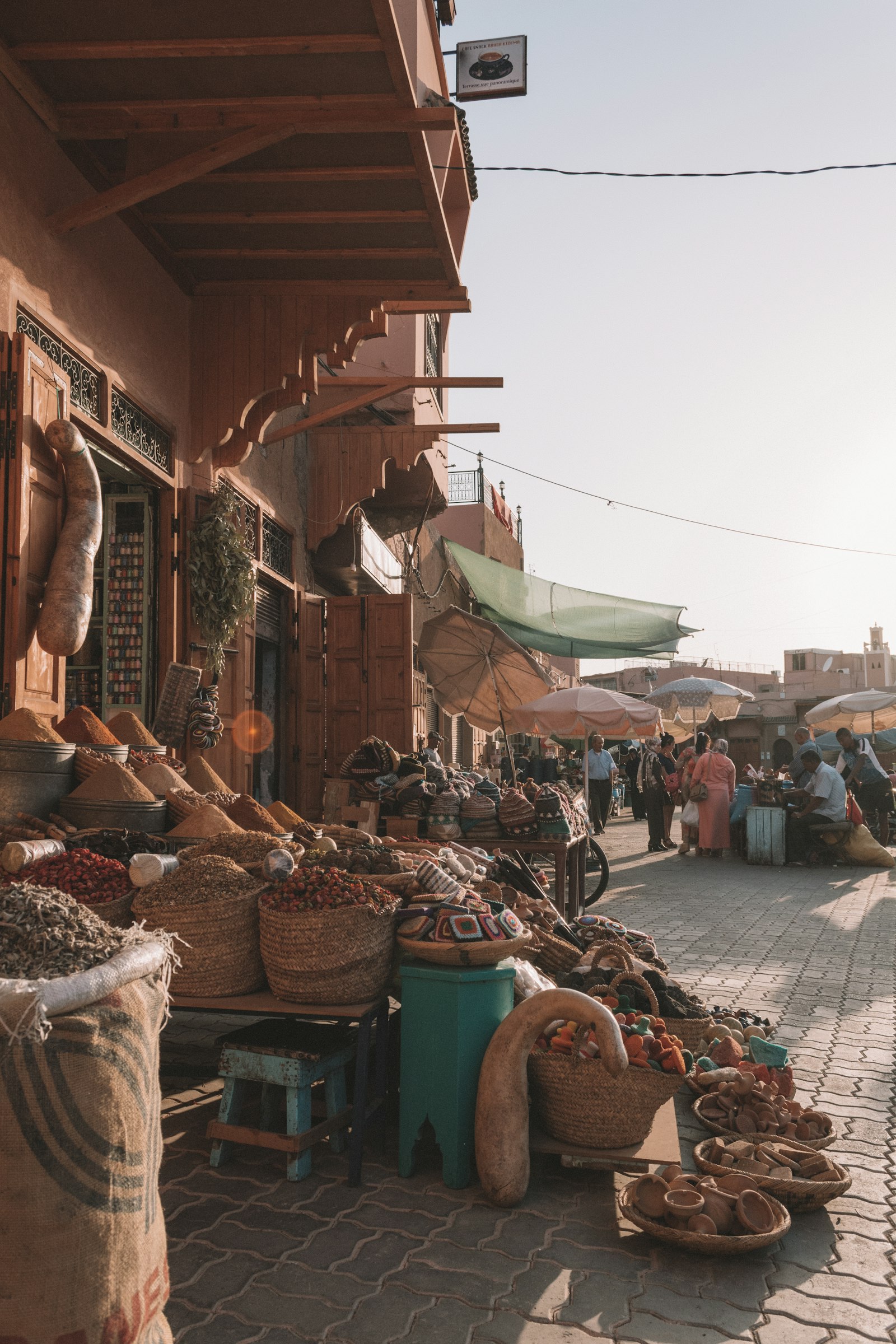
Featured image: photo by Alex Azabache on Unsplash.
Pingback: Is Morocco Safe? Safety Tips & Common Scams to Avoid
Pingback: Tetouan Travel Guide: What to See in Morocco's White Dove
Pingback: How to Buy a Moroccan Rug: Styles, Prices and Tips to Avoid Fakes