
Tangier sits at the northern tip of Morocco, facing Spain across the Strait of Gibraltar. For centuries it was a city of diplomats, traders, writers and spies, and it still feels different from the rest of the country: part Mediterranean port, part Moroccan medina. This Tangier travel guide covers the main sights, how to arrive and how to use the city as a base for the north.
Tangier at a Glance
- Best for: sea views, café culture, an easy first contact with Morocco.
- How long: two days, or three with a day trip.
- Best time: April to June and September to October.
- Getting around: on foot in the old town, by petit taxi elsewhere.
The Kasbah
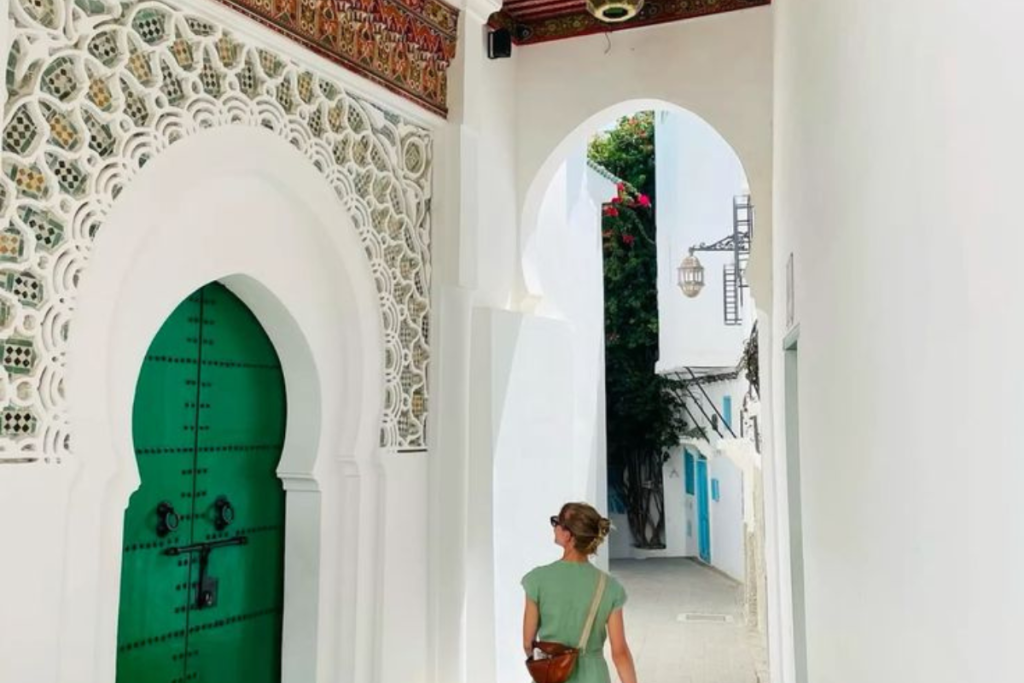
The Kasbah is the old fortified quarter at the highest point of the Medina. Its whitewashed lanes are quiet and photogenic, and the viewpoint at the sea gate looks straight across the Strait to the Spanish coast. The former sultan’s palace now houses the Kasbah Museum, with archaeological finds and a pleasant garden.
The Medina, Petit Socco and Grand Socco
Tangier’s Medina is compact and easier to navigate than those of Fes or Marrakech. At its center is the Petit Socco, a small square ringed by old cafés where writers and smugglers once did business; it is still the best place to sit with a mint tea and watch the city pass.
Just outside the walls, the Grand Socco is the large, lively square that joins the old town to the modern city, with a fountain, a restored Art Deco cinema and a market nearby where women from the Rif sell produce in striped cloth and wide straw hats.
The American Legation
Tucked inside the Medina, this building was given to the United States by the Moroccan sultan in 1821 and is the only U.S. National Historic Landmark on foreign soil. It is now a small museum and cultural center, with rooms devoted to the city’s history and to the writer Paul Bowles, who lived in Tangier for half a century.
Cafés with a View
Café culture is part of Tangier’s identity. Café Hafa, open since 1921, is a series of simple terraces stepping down a cliff above the sea, where the order is always mint tea. In the modern town, the Gran Café de Paris on Place de France recalls the era when Tangier was an international zone.
Cape Spartel and Hercules Caves
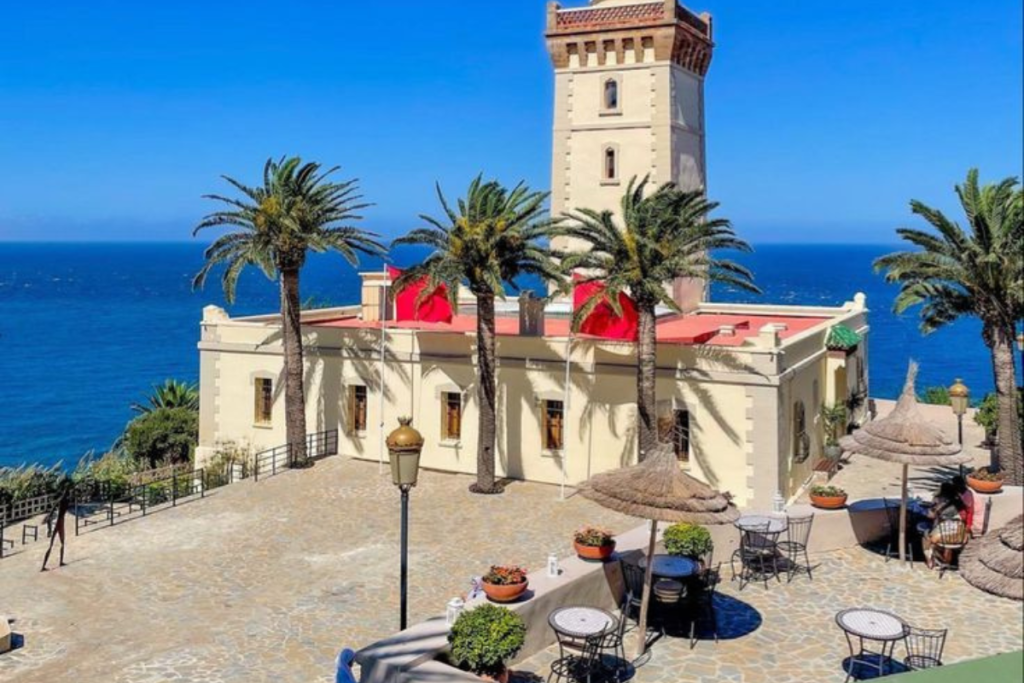
About 14 kilometers west of the city, Cape Spartel marks the northwestern corner of Africa, where the Atlantic meets the entrance to the Mediterranean. A 19th-century lighthouse stands on the headland above pine woods and cliffs.
A few kilometers south are the Hercules Caves, partly natural and partly cut by people who quarried millstones here. The sea-facing opening is famous for resembling the outline of Africa. The long Atlantic beach of Achakkar is next door. A taxi can take you to the cape and the caves in half a day; agree on the price and waiting time beforehand.
The Seafront and Marina
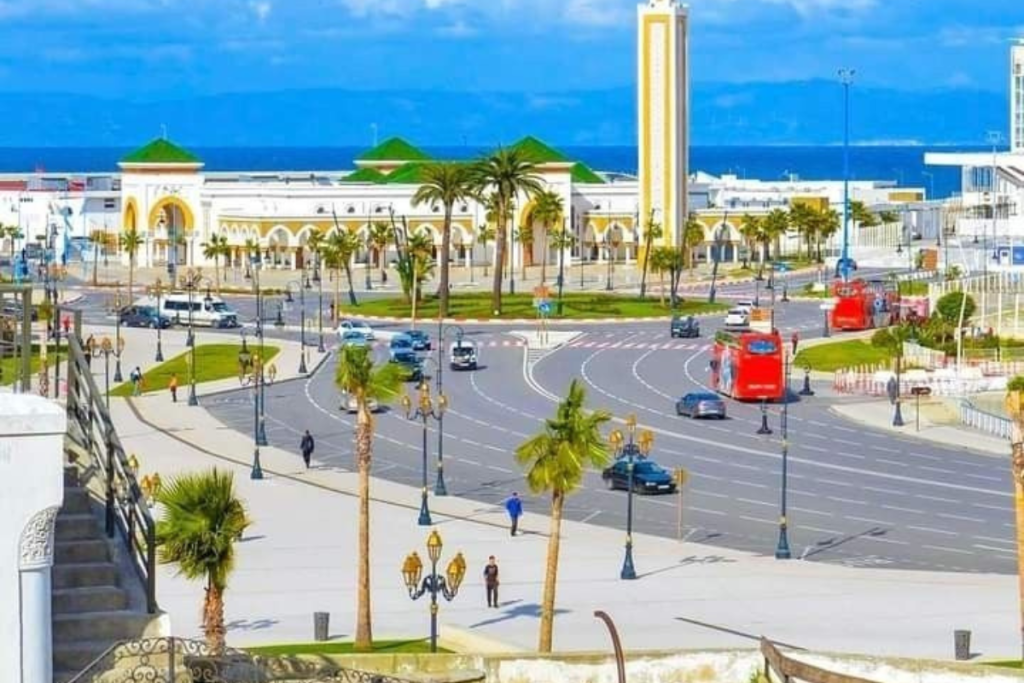
The bay of Tangier has been redeveloped in recent years, with a wide promenade, a marina lined with restaurants and a long city beach. It is a good place for an evening walk, when families come out to stroll.
Where to Stay
The Kasbah and Medina have characterful guesthouses, many with roof terraces over the Strait. The city center around Place de France and the boulevard offers standard hotels close to restaurants and transport. Malabata, on the eastern side of the bay, has modern seafront hotels and resorts.
Getting to Tangier
By ferry: boats cross from Spain throughout the day. Ferries from Tarifa arrive at Tanger Ville, the port beside the Medina, in about an hour. Services from Algeciras use Tanger Med, a large port about 40 kilometers east of the city, so allow time and budget for the transfer.
By train: the Al Boraq high-speed line links Tangier with Kenitra, Rabat and Casablanca in a little over two hours.
By air: Tangier Ibn Battouta Airport, southwest of the city, has flights from many European cities.
Day Trips from Tangier
- Asilah: a small whitewashed town on the Atlantic, known for its ramparts and murals, under an hour south.
- Tetouan: a city with a UNESCO-listed medina and strong Andalusian heritage, about an hour east.
- Chefchaouen: the blue town in the Rif mountains, two to two and a half hours by road. Stay overnight if you can.
Practical Tips
- At the port, ignore unofficial guides and walk on; the Medina is a few minutes away.
- Spanish and French are both widely understood, alongside Arabic.
- The wind can be strong and ferries are occasionally delayed or cancelled. Keep some flexibility if you have a connection.
- Summer is high season, when many Moroccans living in Europe come home. Book ferries and rooms ahead.
A classic northern route continues from Tangier to Chefchaouen and then to Fes, before turning south toward Marrakech.
Pingback: Marrakech Travel Guide 2026: Amazing Attractions, Riads & Travel Tips
Pingback: Ultimate Casablanca Travel Guide: Modern Morocco’s Iconic Landmarks in 2026
Pingback: Al Hoceima Travel Guide: Beaches and Cliffs on the Mediterranean
Pingback: Getting Around Morocco: Trains, Buses, Taxis and Driving
Pingback: 7-Day Northern Morocco Itinerary: Tangier, Chefchaouen and Fes