
Few souvenirs are as closely tied to Morocco as argan oil. Golden, silky and prized for both cooking and skincare, it comes from a tree that grows naturally almost nowhere else on Earth. But with so many bottles on sale in souks and roadside stalls, knowing what you are buying matters. This guide to argan oil in Morocco explains how it is made, the difference between cosmetic and culinary oil, how to visit a women’s cooperative and how to make sure you bring home the real thing.
What Is Argan Oil?
Argan oil is pressed from the kernels of the argan tree (Argania spinosa), a thorny, drought-resistant tree native to south-western Morocco. Its forests stretch across the Souss Valley and the hills between Essaouira, Agadir and the Anti-Atlas, where they protect the soil from erosion and support rural communities. The region was declared the Arganeraie Biosphere Reserve by UNESCO, and the traditional knowledge linked to the argan tree is listed as part of humanity’s intangible cultural heritage.
For local Amazigh families, the argan tree has always been a source of food, oil, fuel and fodder. Its international fame as a beauty product is much more recent.
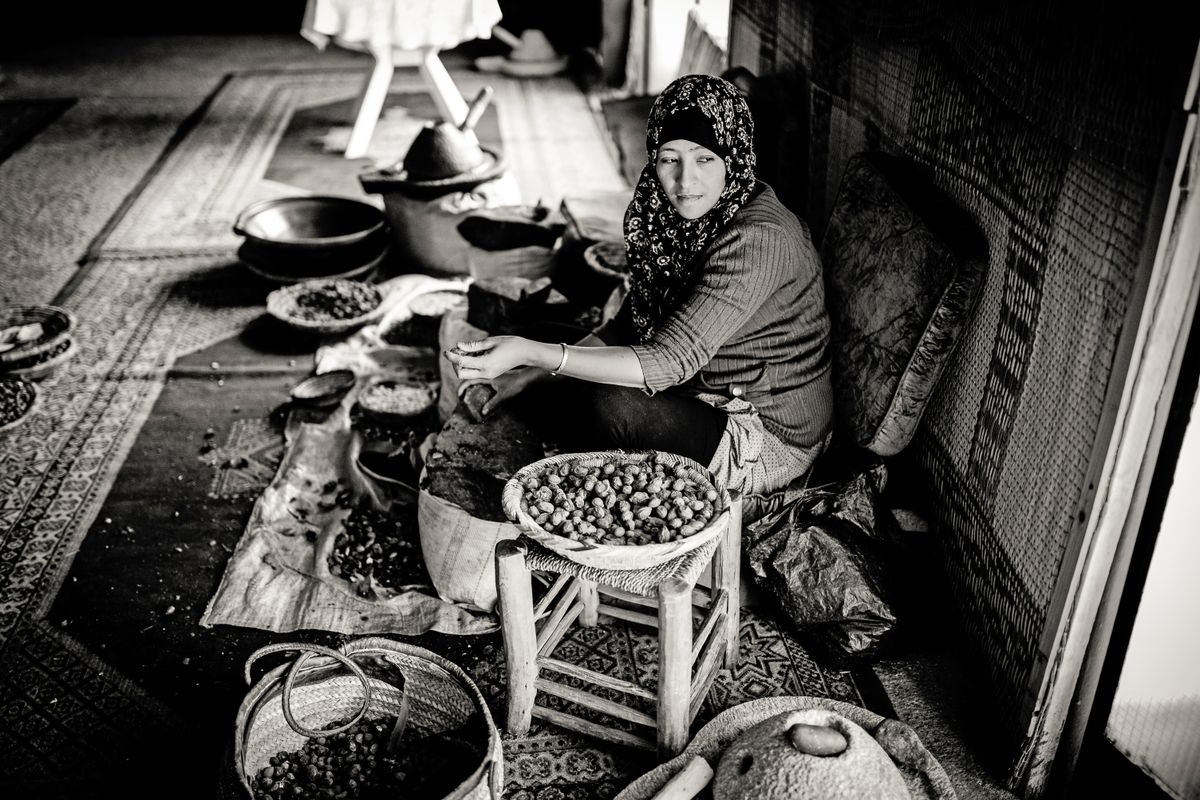
How Argan Oil Is Made
Making argan oil is labour-intensive, which explains why the genuine product is relatively expensive. The traditional process has several stages:
- Harvesting: ripe fruits are collected once they fall from the trees, then dried in the sun.
- Peeling: the dried outer pulp is removed, often used as animal feed.
- Cracking: the very hard nut is cracked between two stones to release one to three small kernels. This is the slowest step and is still often done by hand.
- Roasting (for culinary oil only): the kernels are gently roasted, giving the oil its nutty taste and darker colour.
- Pressing: kernels are ground and pressed, traditionally with a stone hand mill and water, and today usually with mechanical cold presses that produce a cleaner, longer-lasting oil.
It takes a large quantity of fruit and many hours of work to produce a single litre, so be wary of anything sold at a suspiciously low price.
Cosmetic vs Culinary Argan Oil
- Cosmetic argan oil: pressed from raw, unroasted kernels. It is pale golden with a very light, slightly nutty smell that fades quickly on the skin. It is used on skin, hair and nails.
- Culinary argan oil: pressed from roasted kernels. It is darker, with a rich, toasted aroma. Moroccans drizzle it over salads, couscous and tagines, dip bread in it at breakfast or blend it into amlou, a delicious spread of almonds, argan oil and honey.
The two are not interchangeable: culinary oil smells too strong for skincare, and cosmetic oil is not meant to be eaten unless the label says it is food grade. If you love Moroccan food, try amlou at breakfast and read our guide on what to eat in Morocco for more ideas.
The Famous Tree-Climbing Goats
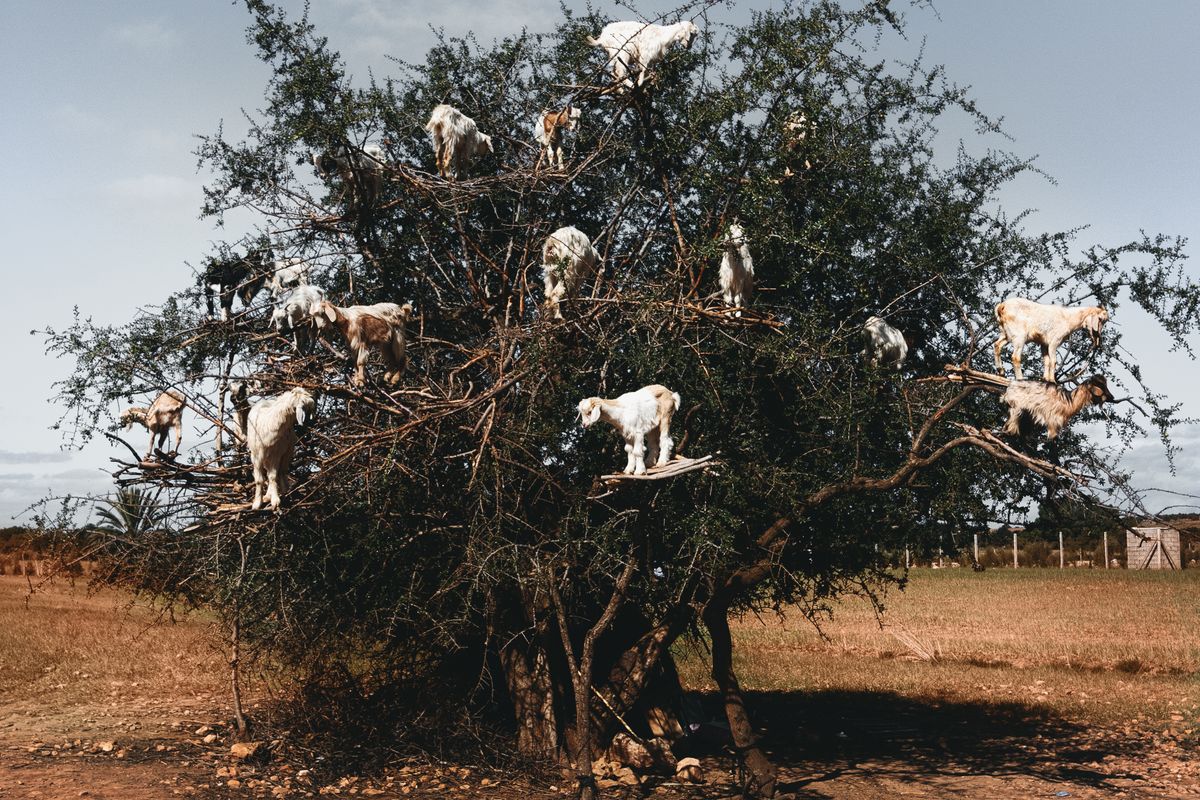
Driving between Marrakech and Essaouira or around Agadir, you may see goats balanced on the branches of argan trees. Goats do naturally climb argan trees to eat the leaves and fruit, especially when grazing is scarce. However, many of the trees right beside the main roads are set up for tourists, with goats placed on platforms and handlers asking for money for photos.
If animal welfare matters to you, avoid paying for staged photo stops, especially in the heat of the day. You are more likely to see goats feeding naturally in the countryside, away from the busiest roads, at a respectful distance.
Visiting an Argan Cooperative
Women’s cooperatives have transformed argan production in recent decades, giving rural women a regular income and a share in the profits. Many welcome visitors, showing each step of the process and offering tastings of oil and amlou before you browse the shop.
- Where: cooperatives are found along the Marrakech to Essaouira road, around Essaouira, in the hills near Agadir and around Taroudant in the Souss Valley.
- Check it is genuine: some roadside “cooperatives” are simply shops for tour groups. A real cooperative usually displays its official registration and is run and staffed by local women.
- Ask questions: how the oil is pressed, when it was made and how the women are paid. Good cooperatives are proud to explain.
- No obligation: visits are often free, but buying something or leaving a tip supports the women directly.
How to Spot Real Argan Oil
Diluted or fake argan oil is common, especially in tourist areas. Use these checks before you buy:
- Read the label: it should say 100% pure argan oil (Argania spinosa kernel oil) with no other ingredients, along with the producer’s name and a production or expiry date.
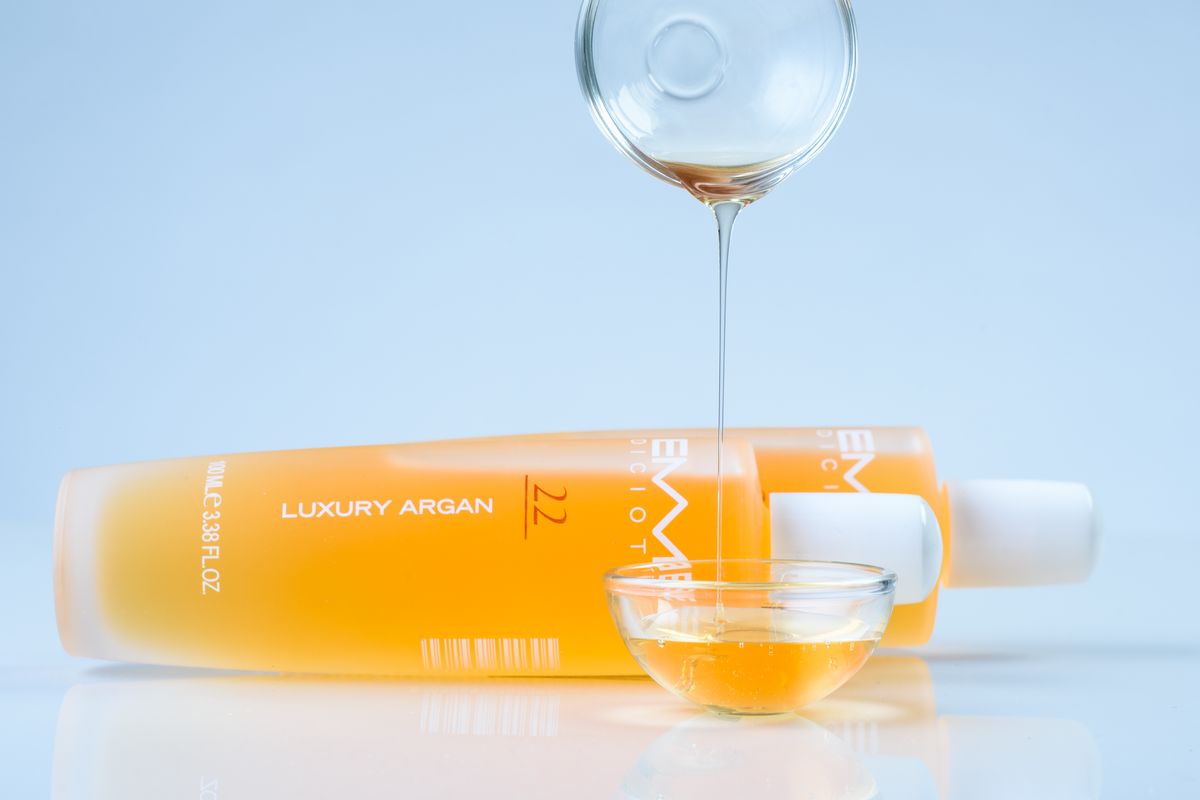
- Check the bottle: good oil is sold in dark glass or opaque bottles that protect it from light. Avoid unlabelled plastic bottles or recycled water bottles.
- Smell it: cosmetic oil should smell faintly nutty, not perfumed and not rancid. Culinary oil should smell of toasted nuts. A strong chemical or fragrance note suggests additives.
- Feel it: pure cosmetic argan oil absorbs fairly quickly and leaves skin soft rather than greasy or sticky.
- Be wary of bargains: because production is so laborious, a very cheap price is the clearest warning sign.
Where to Buy Argan Oil in Morocco
- Cooperatives: the best option for traceability and supporting local women, with fair, often fixed prices.
- Pharmacies and organic shops: reliable cosmetic oils from known brands, usually with clear labelling.
- Supermarkets: a practical choice for culinary oil and amlou at local prices.
- Souks: possible, but quality varies a lot. Apply the checks above and negotiate politely; our guide on how to haggle in Moroccan souks explains how.
Packing and Flying Home With Argan Oil
Liquids in hand luggage are subject to airport security limits, so pack larger bottles in your checked bag. Seal the cap with tape, put each bottle in a zip bag and wrap it in clothing. Store argan oil away from heat and light once home, and use it within the period shown on the label for the best quality.
FAQ
Is argan oil cheaper in Morocco?
Usually, yes, especially when bought from cooperatives or supermarkets. Still, genuine oil is never really cheap because of the work involved.
Can I use culinary argan oil on my skin?
It will not harm you, but its strong roasted smell makes it unpleasant for skincare. Buy cosmetic oil for skin and hair.
What is amlou?
Amlou is a traditional spread from the Souss region made with roasted almonds, culinary argan oil and honey. It is eaten with bread at breakfast and makes an excellent edible souvenir.
Conclusion
Argan oil is one of Morocco’s most meaningful souvenirs when you buy it well. Visit a genuine women’s cooperative, learn to tell cosmetic from culinary oil, read labels carefully and skip the staged goat photos. You will bring home a high-quality product and support the communities that protect the argan forests.
Featured image: goats climbing an argan tree in Morocco, photo by Jacek Plak on Pexels.