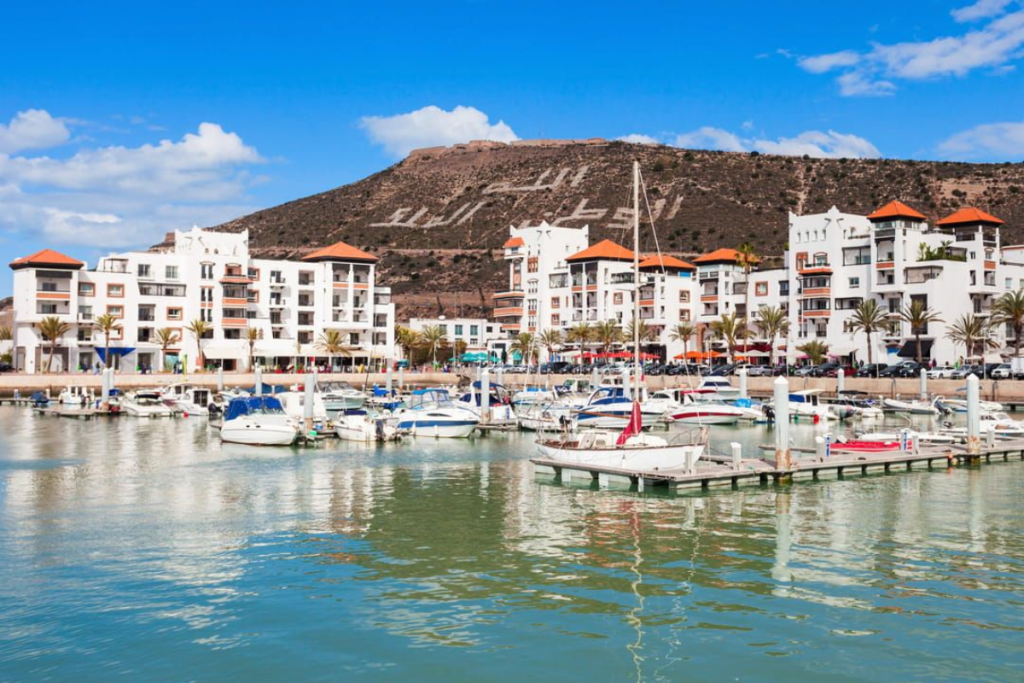
This Agadir travel guide unlocks Morocco’s favorite beach destination. In 2026, Agadir continues to shine as the country’s leading seaside resort, offering golden sands, year-round sunshine, world-class surfing, and a perfect mix of relaxation and adventure.
This Agadir travel guide shows why the city deserves more than a quick stop. Rebuilt after the 1960 earthquake with wide boulevards and modern infrastructure, Agadir blends Moroccan hospitality with European-style beach vibes. This Agadir travel guide covers pristine beaches, thrilling ocean activities, bustling souks, excellent restaurants, and comfortable resorts.
Whether you want to surf epic waves, unwind by the pool, or explore the Atlantic coast, this Agadir travel guide delivers all the information you need for an unforgettable 2026 trip. Start by reading our comprehensive Morocco Travel Guide to understand how this Agadir travel guide fits into larger itineraries that often combine the coast with Marrakech, Essaouira, or desert adventures.
Where Is Agadir and How to Get There in 2026?
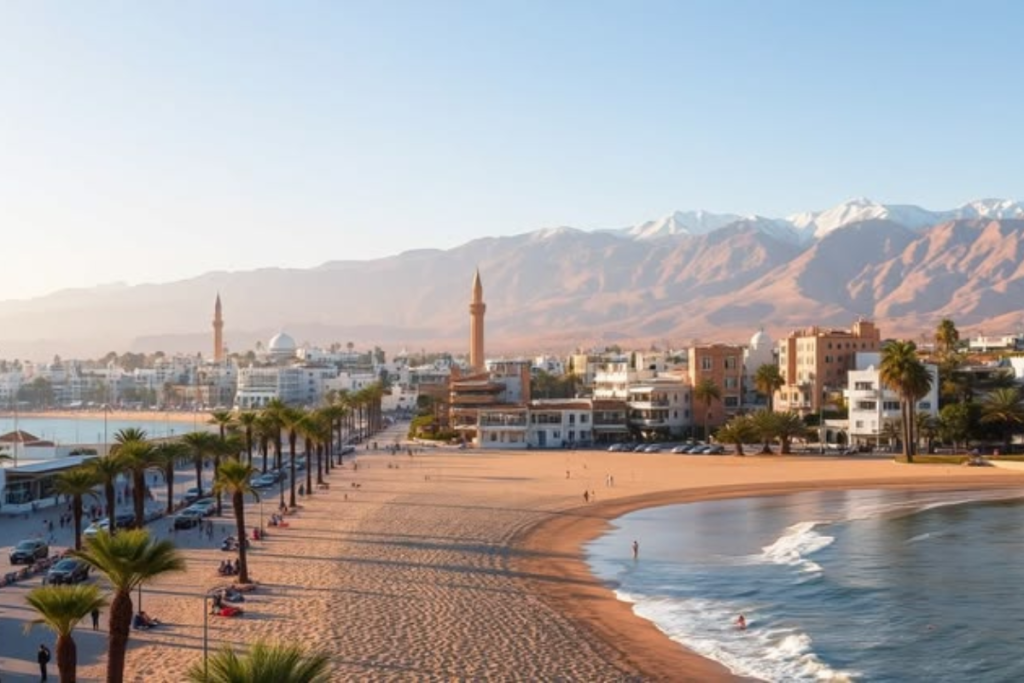
This Agadir travel guide places the city on Morocco’s southern Atlantic coast, about 550 km southwest of Marrakech and 170 km from Essaouira. It enjoys a mild climate almost all year round.
According to this Agadir travel guide, most visitors fly into Agadir Al-Massira International Airport, which received major upgrades in 2025. This Agadir travel guide also recommends the comfortable Al Boraq high-speed train from Marrakech (under 3 hours) or private transfers. This Agadir travel guide suggests using ride-sharing apps or official taxis once in the city. For those continuing to the desert, explore our Best Morocco Desert Tours.
Agadir’s World-Class Beaches

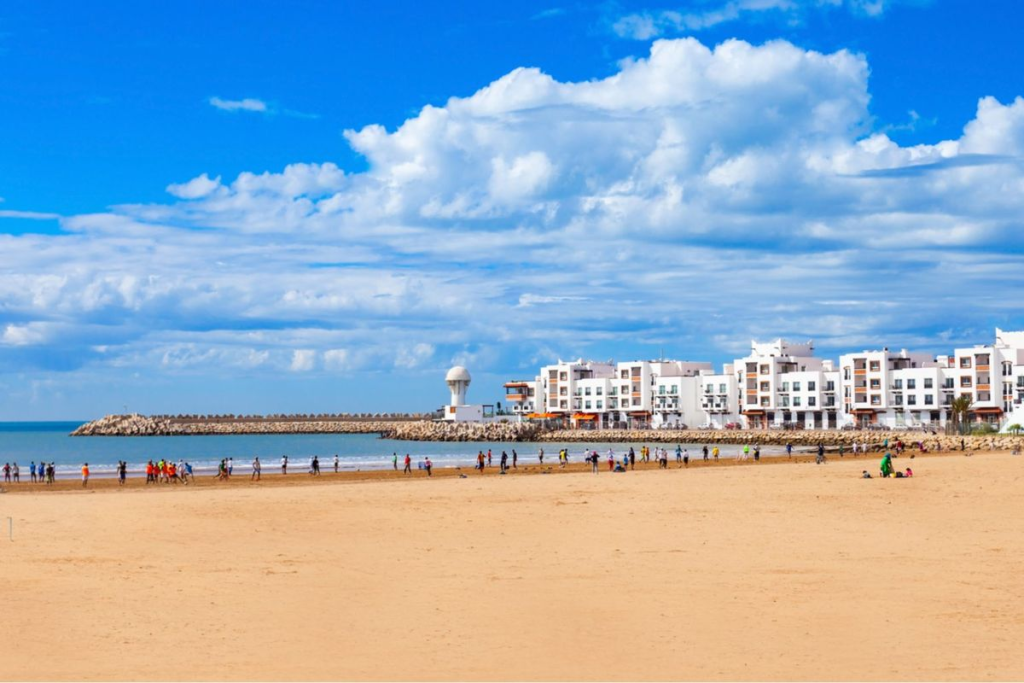
This Agadir travel guide highlights the main beach as one of Morocco’s finest — a sweeping 6 km crescent of soft golden sand protected by a breakwater. This Agadir travel guide notes that the beach is clean, well-maintained, and ideal for swimming, sunbathing, and evening walks.
This Agadir travel guide also recommends nearby Taghazout and Tamraght for serious surfers. These spots have become world-renowned surf destinations with consistent waves and several surf schools. This Agadir travel guide confirms that 2026 has seen new eco-friendly surf camps opening along this stretch.
Image ALT: “Surfers riding waves at Taghazout near Agadir in 2026”
Top Things to Do in Agadir
This Agadir travel guide lists several must-do activities. Visit the bustling Souk El Had for spices, carpets, leather goods, and fresh produce. This Agadir travel guide suggests spending at least half a day exploring this vibrant market.
This Agadir travel guide also recommends a boat trip from the marina to see dolphins, a visit to the Crocodile Park, and sunset camel rides along the beach. This Agadir travel guide highlights the Valley of the Birds as a peaceful green space in the city center.
Perfect 3-Day Agadir Itinerary for 2026
This Agadir travel guide provides a balanced 3-day plan.
Day 1: Beach and Relaxation
This Agadir travel guide suggests starting with a full day on the main beach followed by dinner at the harbor with fresh seafood.
Day 2: Surfing and Coastline
This Agadir travel guide recommends heading to Taghazout for surfing lessons and exploring the dramatic coastal cliffs.
Day 3: Culture and Markets
This Agadir travel guide advises visiting the souk in the morning and the modern marina in the afternoon before enjoying a hammam spa session.
Where to Stay in Agadir in 2026
This Agadir travel guide offers choices for every budget. Luxury travelers will love resorts like the Sofitel or Hyatt Regency with private beaches and spas. This Agadir travel guide also recommends boutique riads and surf hostels in Taghazout for a more relaxed vibe. Most properties featured in this Agadir travel guide offer direct beach access and excellent breakfasts.
Food Scene and Local Cuisine
This Agadir travel guide celebrates the city’s fresh seafood. Grilled sardines, shrimp tagines, and oyster platters feature heavily. This Agadir travel guide recommends restaurants around the marina and the famous Marché aux Poissons. Don’t miss argan-flavored desserts and Moroccan pastries.
Image ALT: “Fresh seafood platter at Agadir harbor restaurant 2026”
Best Time to Visit Agadir in 2026
This Agadir travel guide recommends year-round visits thanks to the mild climate. Peak season runs from April to October. This Agadir travel guide notes that winter months (November–March) remain pleasant for sightseeing with fewer crowds. For nationwide advice, read our Best Time to Visit Morocco.
The Agadir Oufella: A Hilltop Journey Through Time
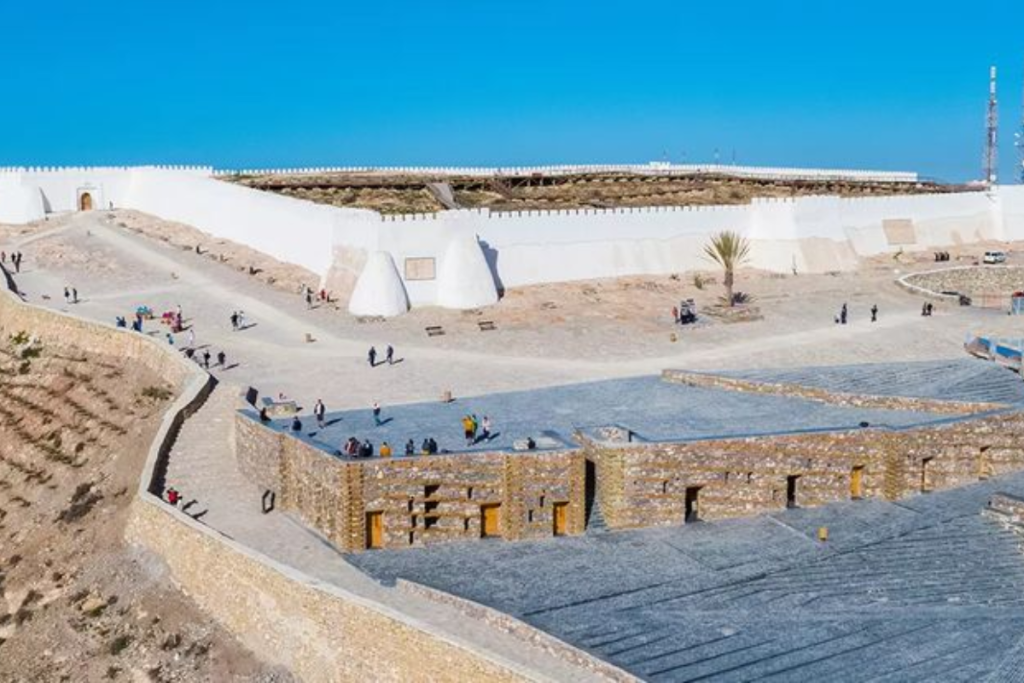
Perched high above the glittering coastline, the Agadir Oufella ruins tell a haunting story.
The ancient Kasbah walls stand silent and solemn against the endless blue sky. Built in 1541 by Sultan Mohammed ech-Cheikh to defend against Portuguese naval attacks, this fortress once bristled with cannons and housed a thriving community within its thick rammed-earth walls. Today, only the outer shell remains.
The earthquake of 1960 shattered everything.
Walking along the restored ramparts, you can still feel the weight of history pressing against the stones. The view from up here is absolutely spectacular—the entire crescent bay stretches beneath you, framed by the hazy blue Atlantic and the distant outline of the Anti-Atlas Mountains. This is the best sunset spot in the entire city.
Arrive an hour before dusk. Watch the fishing boats become tiny specks on the golden water. Listen to the wind whisper through the gaps in the ancient walls. Read the Arabic inscription that survives on the main gate: “Fear God and honor the King.” It is a powerful, meditative experience.
The site has been carefully restored in recent years. Informative plaques in multiple languages explain the history. A small café near the entrance serves refreshing mint tea and light snacks. The road up is steep but accessible by taxi or the open-top tourist bus.
Locals come here to remember. Tourists come to understand. Everyone leaves moved.
A Culinary Journey: The Tastes of Agadir
Moroccan cuisine needs no introduction, but Agadir adds its own distinctive coastal twist.
The Atlantic Ocean is Agadir’s pantry. The seafood here is unbelievably fresh—caught at dawn, on your plate by lunch. Head to the Port de Pêche early in the morning to witness the chaotic, colorful spectacle of fishing boats unloading their glistening catch. Crates of silver sardines, pink sea bream, and massive tuna are hauled ashore while seagulls scream overhead.
Nearby, the Fish Market is a revelation.
Point to whatever looks appealing. Pay by weight. Carry your tray to one of the tiny grill stations clustered at the market’s edge. Within minutes, your selection arrives at your table—charred, smoky, seasoned with nothing more than sea salt, cumin, and a squeeze of lemon. It is the purest, most satisfying seafood experience imaginable.
For the ultimate indulgence, seek out a traditional seafood pastilla. This sweet-savory masterpiece layers flaky warqa pastry with vermicelli noodles, tender squid, shrimp, and a delicate blend of cinnamon and almonds. It is a Sephardic-Moroccan specialty that arrives dusted with powdered sugar—strange on paper, transcendent on the tongue.
Street food enthusiasts must try sardine kefta. Fresh sardines are minced with herbs, spices, and onions, shaped into patties, and grilled over charcoal. Served in crusty bread with harissa and tomato salad, it costs mere dirhams and tastes like a million bucks.
For dessert, the prickly pear vendors are everywhere. Watch them expertly peel the spiky fruit with a knife, revealing the jewel-toned flesh inside. Sweet, refreshing, and impossibly cheap.
Wash everything down with avocado smoothies. Agadir’s surrounding countryside produces some of Morocco’s finest avocados, and local cafés blend them with milk, sugar, and a whisper of almond extract into creamy, dreamy concoctions.
The Amazigh Heritage: Agadir’s Berber Soul
Agadir sits in the heart of Amazigh country.
The indigenous Berber people of the Souss-Massa region have inhabited these lands for millennia. Their language, Tachelhit, flows through the souks and cafés. Their geometric symbols adorn carpets and pottery. Their hospitality defines every interaction.
The Musée du Patrimoine Amazigh (Amazigh Heritage Museum) offers a fascinating window into this rich culture. Housed in a modest building near the Kasbah entrance, the museum displays traditional jewelry, clothing, tools, and musical instruments. The exhibits are beautifully curated with English and French explanations.
You will learn about the significance of Berber tattoos—intricate facial and hand markings that women wore for protection and identity. You will see silver fibula brooches used to fasten traditional garments. You will understand the deep connection between the Amazigh people and the land they have stewarded for thousands of years.
Supporting Amazigh artisans is easy. When shopping in Souk El Had, look for the Label Artisanat Maroc certification. This guarantees the product is handmade by local craftspeople, not mass-produced elsewhere. Buy argan oil from women’s cooperatives. Purchase pottery directly from the artisan who shaped it. Your money makes a real difference.
Argan Oil: Liquid Gold of the Souss
The argan tree grows nowhere else on Earth except southwestern Morocco.
Driving through the countryside surrounding Agadir, you will spot these gnarled, thorny trees dotting the landscape. And famously, you might spot goats perched improbably in their branches, nibbling the fruit. (A word of caution: many of these “goat trees” are staged for tourist photos. Genuine sightings require luck and timing.)
Argan oil production is painstaking labor, traditionally performed by women’s cooperatives. The nuts are harvested, dried, cracked open by hand, and cold-pressed. It takes approximately 30 kilograms of fruit and 15 hours of work to produce a single liter of oil.
The results are extraordinary.
Culinary argan oil, with its nutty, slightly smoky flavor, elevates simple bread, salads, and tagines. Cosmetic argan oil, lighter and more refined, nourishes skin and hair with vitamin E and essential fatty acids.
Several cooperatives near Agadir welcome visitors. The Cooperative Marjana and Cooperative Toudarte offer tours demonstrating the production process. You can purchase pure, fairly traded oil directly from the women who made it. It is a meaningful souvenir that supports sustainable development and female empowerment.
Practical Tips for Your Agadir Trip
This Agadir travel guide advises using sunscreen daily, staying hydrated, and choosing licensed guides for excursions. This Agadir travel guide also suggests women travelers dress modestly when visiting souks. Combine your trip with nearby Essaouira Travel Guide for a perfect coastal itinerary.
External links for further reading:
Conclusion: Make 2026 the Year You Experience Agadir
This Agadir travel guide proves that Agadir is much more than a beach resort. It is a dynamic destination that perfectly balances relaxation, adventure, culture, and Moroccan warmth.
Use this Agadir travel guide to plan your ideal coastal escape. Pair it with our Morocco Travel Guide and Best Morocco Desert Tours for an unforgettable 2026 Morocco journey.
The Atlantic is calling — are you ready for an epic coastal adventure?