
Fes is the oldest of Morocco’s imperial cities and the one that has changed least. Its medina, Fes el-Bali, is a medieval city still lived and worked in, with thousands of lanes too narrow for cars, where goods move by handcart and donkey. This Fes travel guide explains how to approach it, what to see and how to plan your days.
Fes at a Glance
- Best for: history, traditional crafts, architecture and food.
- How long: two full days, three with a day trip.
- Best time: March to May and September to November.
- Good to know: the medina is hilly and confusing; a licensed guide for the first half-day is money well spent.
Understanding the City
Fes has three parts. Fes el-Bali is the original walled city, founded in the 9th century and listed by UNESCO since 1981. Fes el-Jdid, “New Fes”, was added in the 13th century and holds the Royal Palace and the old Jewish quarter. The Ville Nouvelle is the modern town built in the 20th century, with wide avenues, cafés and the train station.
What to See in Fes el-Bali
Bab Boujloud and the Main Lanes
Most visits begin at Bab Boujloud, the “Blue Gate”, tiled blue on one side and green on the other. Two main lanes, Talaa Kebira and Talaa Seghira, run downhill from here into the heart of the medina. Follow either and you will pass food stalls, workshops and most of the main monuments.
Bou Inania and Al-Attarine Madrasas
These two 14th-century colleges are the best places to see Marinid craftsmanship up close: carved cedar, stucco as fine as lace, and zellige tilework in geometric patterns. Both are open to non-Muslim visitors.
Al-Qarawiyyin
Founded in 859, Al-Qarawiyyin is often described as the oldest continuously operating university in the world. Non-Muslims cannot enter the mosque, but its doors are often open and you can look into the courtyard from the lane.
The Chouara Tannery
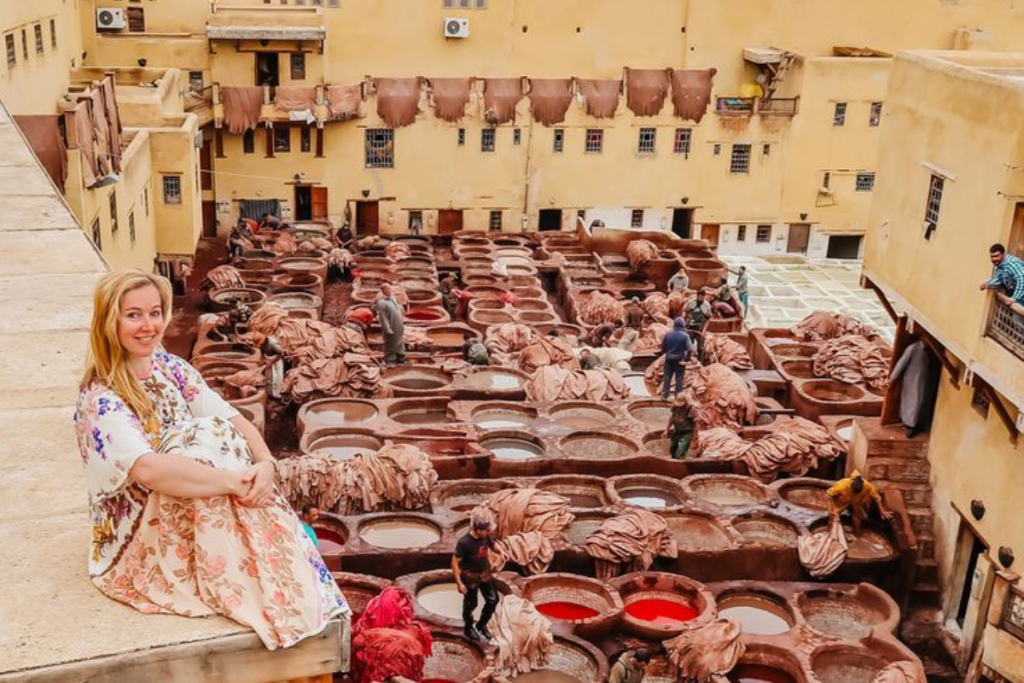
Leather has been tanned and dyed here in stone vats for centuries. You view the tannery from the terraces of the surrounding leather shops, which let visitors up for free in the hope of a sale. The smell is strong; the sprig of mint you are handed at the door helps. There is no obligation to buy.
Nejjarine Square and the Craft Souks
The restored Nejjarine fondouk, once an inn for merchants, is now a museum of wooden arts with a rooftop café. Around it, the souks are still organized by trade. Listen for the hammering of the coppersmiths on Seffarine Square.
Beyond the Old Medina
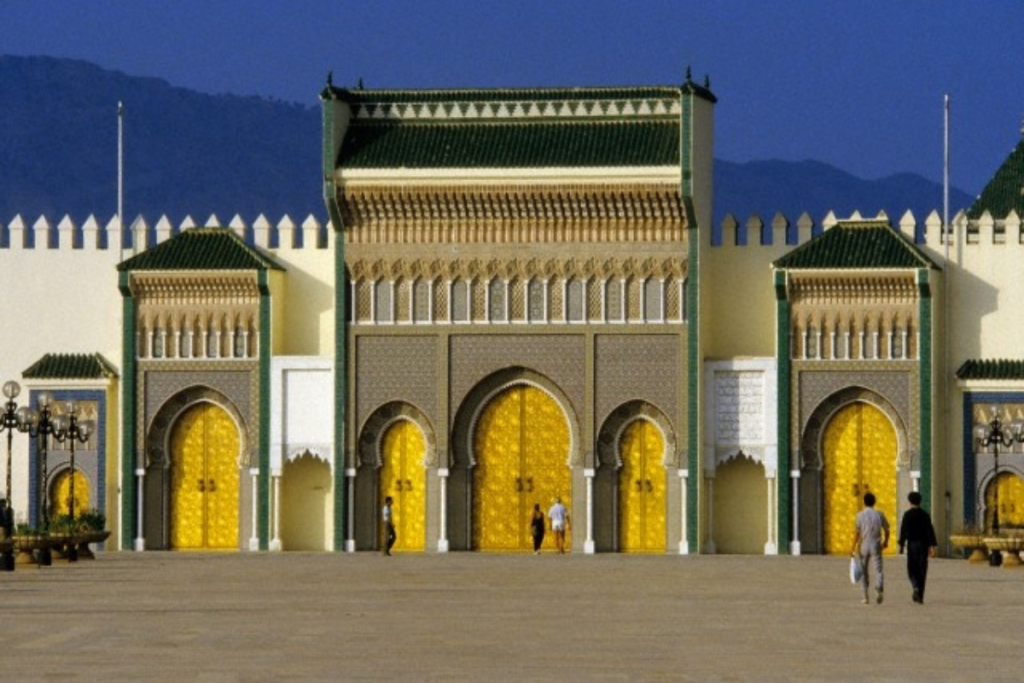
In Fes el-Jdid, the golden doors of the Royal Palace make a popular photo stop, though the palace itself is closed to the public. The nearby Mellah, the former Jewish quarter, has distinctive houses with wooden balconies and a restored synagogue.
For the classic view over the medina, go up to the Marinid Tombs on the hill to the north in the late afternoon, when the light is soft and the call to prayer rises from hundreds of minarets.
Where to Stay
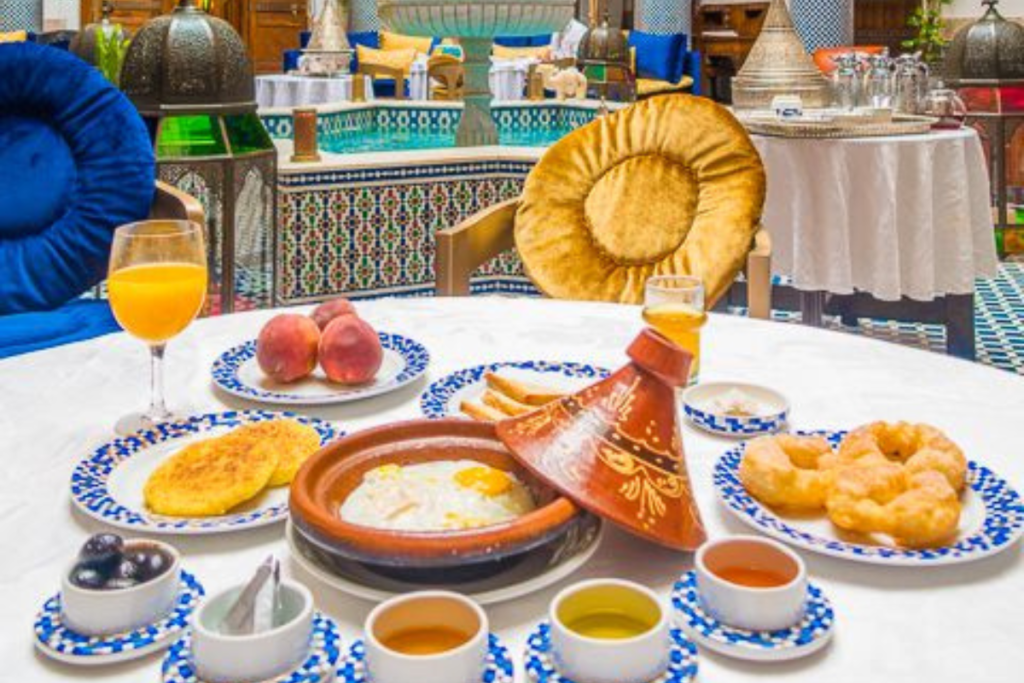
Staying in a riad or a dar inside Fes el-Bali is the most memorable option. Choose one near a gate, such as Bab Boujloud or Bab Rcif, so that taxis can drop you close by, and ask the riad to send someone to meet you on arrival. Travelers who prefer easy access and modern comforts will find standard hotels in the Ville Nouvelle, a short taxi ride from the medina.
What to Eat
Fes is known for refined home cooking. The signature dish is pastilla, a flaky pie that combines savory filling, almonds and a dusting of sugar and cinnamon. Look also for slow-cooked tagines with prunes or preserved lemon, harira soup and street snacks along Talaa Kebira. Many of the best meals are served in riads, usually ordered a few hours ahead.
Day Trips from Fes
- Meknes, Volubilis and Moulay Idriss: an imperial city, Roman ruins and a holy hill town, easily combined in one day.
- Ifrane and Azrou: the cedar forests and cool air of the Middle Atlas, about an hour south.
- Chefchaouen: the blue town in the Rif. It is a long day by road, and far better with an overnight stay.
Getting There and Around
Fès-Saïss Airport lies south of the city and receives flights from several European countries. Trains connect Fes with Meknes, Rabat, Casablanca and Marrakech; the journey to Marrakech takes most of a day. Buses and shared grand taxis serve Chefchaouen and the Middle Atlas.
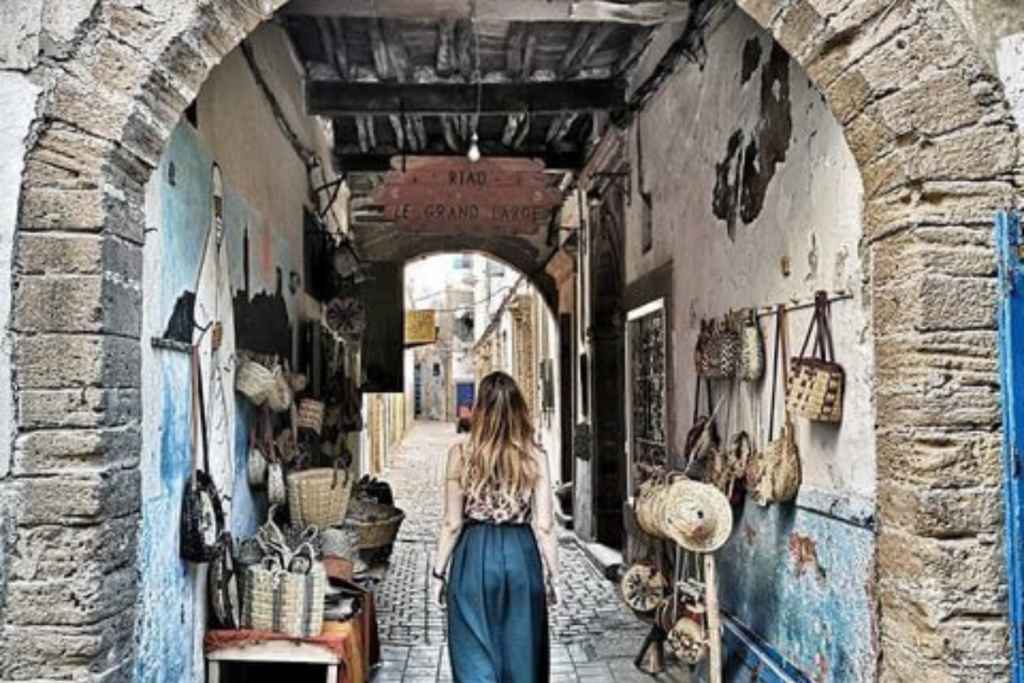
Inside the medina everything is on foot. Red petits taxis link the gates with the Ville Nouvelle and the station, and they normally use the meter.
Practical Tips
- Hire only licensed guides, who carry an official badge. Your riad can arrange one.
- Step aside when you hear “balak!“: it means a loaded mule or cart is coming through.
- Many shops close on Friday afternoons, so plan monuments and museums for that day.
- Wear shoes with a good grip. The lanes are steep and can be slippery.
- Summers are hot and winters can be cold and wet; riads are not always heated.
From Fes, many travelers continue north to Chefchaouen and Tangier, or south across the Middle Atlas through Midelt to the dunes of Erg Chebbi.
Pingback: Rabat Travel Guide 2026: Amazing Attractions, Culture & Travel Tips
Pingback: Essaouira Travel Guide 2026: Amazing Beaches, Medina & Activities
Pingback: Chefchaouen Travel Guide 2026: Amazing Blue City Attractions & Travel Tips
Pingback: Ultimate Casablanca Travel Guide: Modern Morocco’s Iconic Landmarks in 2026
Pingback: Marrakech Travel Guide: What to See, Where to Stay, Tips
Pingback: Meknes Travel Guide 2026: Amazing Historic Sites & Top Attractions
Pingback: Midelt Travel Guide: 10 Best Ways to Experience Berber Culture
Pingback: Nador Travel Guide: 10 Essential Stops for Morocco’s Mediterranean Coast
Pingback: How to Haggle in Moroccan Souks: 7 Simple Steps and Smart Tips
Pingback: Moroccan Etiquette: Essential Dos and Don'ts for a Respectful Trip
Pingback: Erg Chebbi Travel Guide: Visiting the Merzouga Dunes
Pingback: Best Day Trips from Fes: Volubilis, Meknes and the Middle Atlas
Pingback: Erfoud Travel Guide: Fossils, Dates and the Ziz Valley