
Casablanca is Morocco’s largest city and its economic capital. It has no grand medieval medina and makes little effort to charm visitors, which is exactly why some travelers like it: this is modern Morocco at work. This Casablanca travel guide covers the sights that justify a stop, how long to stay and how to get around.
Casablanca at a Glance
- Best for: architecture, seafood, city life and onward connections.
- How long: one full day covers the essentials; two days is comfortable.
- Best time: all year. The Atlantic keeps summers milder than inland.
- Getting around: tramway, red petits taxis and walking in the center.
Hassan II Mosque
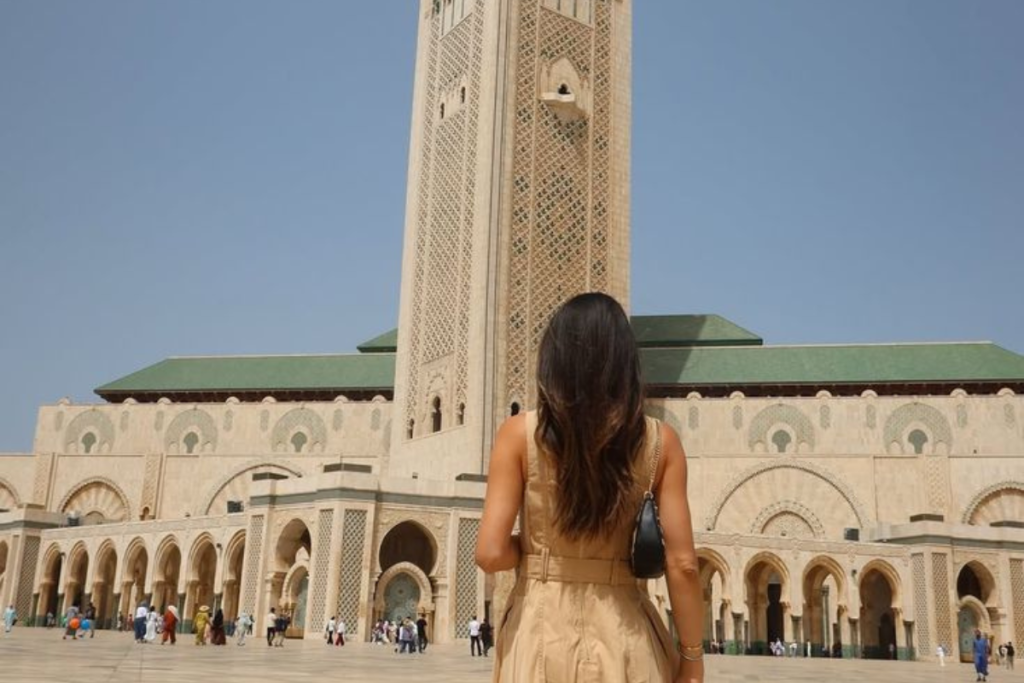
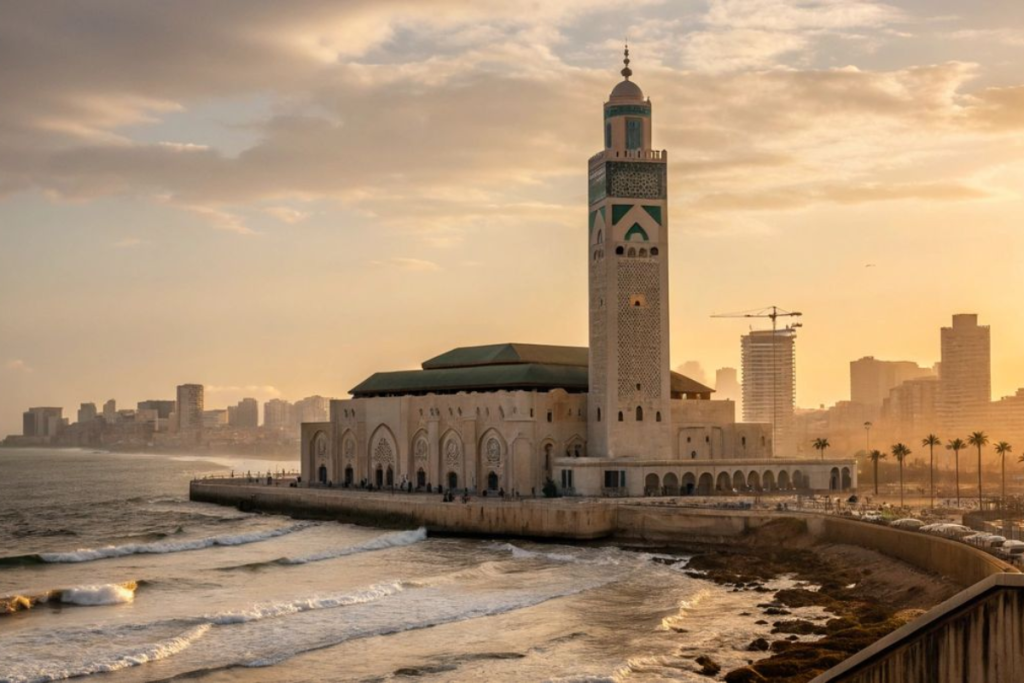
The reason most people stop in Casablanca. Completed in 1993 and built partly over the Atlantic, the Hassan II Mosque is one of the largest in the world, and its 210-meter minaret is visible across the city. Inside, the prayer hall shows the full range of Moroccan craftsmanship: carved cedar, marble, plaster and tilework on a monumental scale.
It is one of the few mosques in Morocco that non-Muslims may enter, but only on a guided tour at fixed times, outside prayer hours. Times change with the season and during Ramadan, so check the schedule before you go and arrive early to buy your ticket. Dress modestly; you will be asked to remove your shoes.
The Art Deco City Center
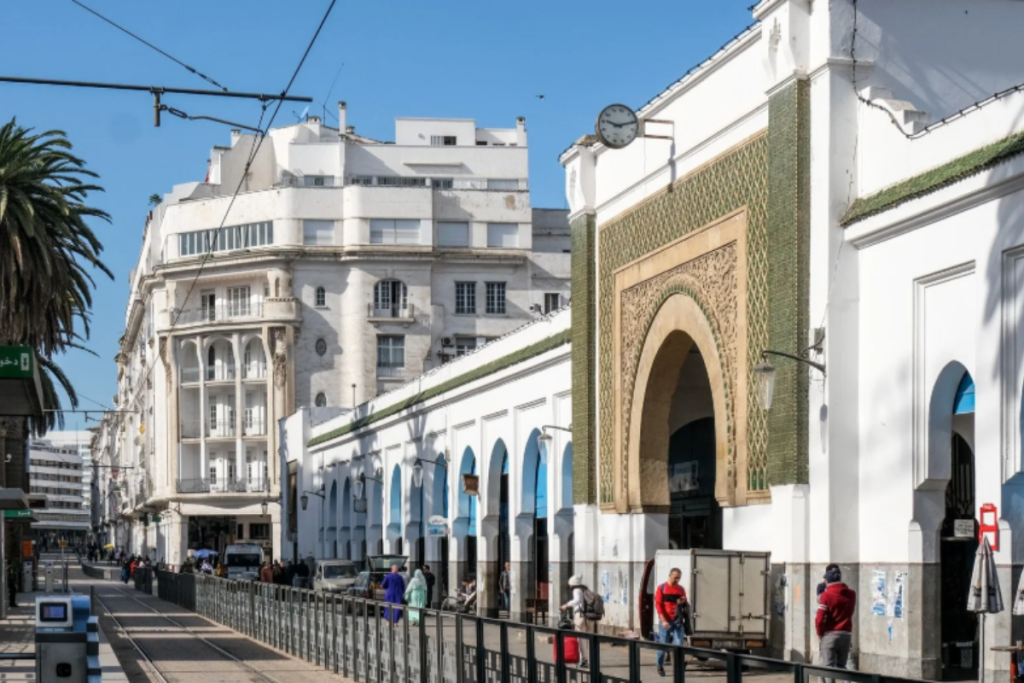
During the French Protectorate, Casablanca became a testing ground for architects, and the downtown area still has one of the richest collections of Art Deco and “Mauresque” buildings anywhere. Walk along Boulevard Mohammed V and the surrounding streets and look up: curved balconies, wrought iron, tiled friezes and old cinema facades.
Mohammed V Square, lined with imposing administrative buildings and fountains, is the formal heart of the district. Nearby, the Central Market is a good stop for flowers, fresh fish and a simple seafood lunch at one of the stalls around it.
The Old Medina
Casablanca’s medina is small and ordinary compared with those of Fes or Marrakech, and that is its interest. It is a working neighborhood with few souvenir shops, where you can see daily life without being hustled. It lies between the port and the city center and takes less than an hour to walk through.
The Habous Quarter
Built in the 1920s and 1930s as a planned “new medina”, the Habous quarter combines traditional Moroccan forms with orderly streets, arcades and small squares. It is the most pleasant place in the city to shop for crafts, olives, pastries and books, at calmer prices than in the tourist cities. The area is busiest in the late afternoon.
The Corniche and Ain Diab
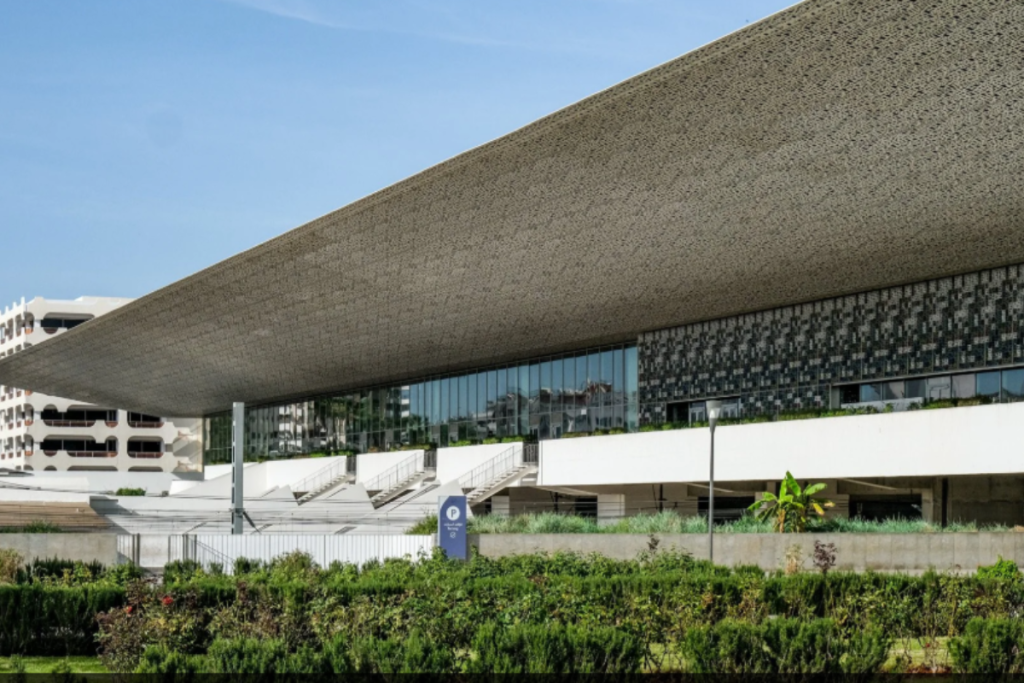
West of the mosque, the seafront boulevard runs past beach clubs, cafés and restaurants to the public beach of Ain Diab. Casablancans come here to walk, jog and watch the sunset. At the far end stands Morocco Mall, one of the largest shopping centers in Africa, with a large aquarium inside.
Food and Drink
Seafood is the thing to eat: grilled fish, fried calamari and oysters from the coast to the south. The restaurants near the port and along the Corniche are the classic addresses. Casablanca also has the country’s widest choice of international restaurants and a lively café culture.
Rick’s Café, near the old medina, recreates the bar from the film Casablanca. The film was shot entirely in Hollywood and the café opened in 2004, but it is done with care and makes a pleasant evening. Reserve ahead.
Where to Stay
The city center is the most practical base: you can walk to the Art Deco district and the medina, and the tram and Casa Port station are close. The Corniche suits travelers who want sea views and a resort feel, at the cost of taxi rides into town. Business hotels cluster around the Maarif and Anfa districts.
Getting There and Around
Mohammed V International Airport is Morocco’s main gateway, about 30 kilometers south of the city. A train links the airport with Casa Voyageurs station, and taxis wait outside the terminal.
Casablanca is the hub of the rail network. The Al Boraq high-speed train reaches Tangier in a little over two hours, Rabat is about an hour away, and regular trains run to Marrakech, Meknes and Fes.
In town, the modern tramway is cheap and easy to use. Red petits taxis are plentiful; they may pick up other passengers along the way, which is normal.
Best Time to Visit and How Long to Stay
The climate is mild all year. Spring and autumn are the most pleasant seasons for walking; winter brings some rain, and summer is warm rather than hot. One full day is enough for the mosque, the center and the Habous quarter. A second day lets you slow down, enjoy the Corniche or take a day trip to Rabat or to the coastal town of El Jadida, with its Portuguese fortifications.
Practical Tips
- This is a big city: keep your phone and bag secure, especially in crowded areas and at night.
- Traffic is heavy at rush hour. Allow extra time to reach the airport or the station.
- Ask taxi drivers to use the meter.
- Visit the mosque in the morning, then walk or take a taxi to the center for lunch.
Pingback: Rabat Travel Guide 2026: Amazing Attractions, Culture & Travel Tips
Pingback: Moroccan Etiquette: Essential Dos and Don'ts for a Respectful Trip
Pingback: Meknes Travel Guide: The Quiet Imperial City and Volubilis