
Within an hour of arriving in Morocco, someone will probably offer you a glass of sweet, steaming mint tea. Served in riads, shops, homes and desert camps, Moroccan mint tea is far more than a drink: it is a gesture of welcome, a pause in the day and a small ceremony with its own rules. This guide explains where the tradition comes from, how the tea is prepared and poured, the etiquette to follow when you are served, how to make it at home and the best places to enjoy it on your trip.
What Is Moroccan Mint Tea?
Moroccan mint tea, often called atay or, jokingly, “Berber whisky”, is a blend of Chinese green tea, a generous bunch of fresh spearmint and sugar. The tea is usually gunpowder green tea, whose leaves are rolled into small pellets that unfurl as they brew. The spearmint, known locally as nana, gives the drink its fresh aroma, while the sugar, traditionally broken from a large cone, makes it sweet enough to balance the bitterness of the tea.
Tea arrived in Morocco through trade with Europe and became widespread over the nineteenth century, when it spread from the royal court and wealthy merchants to every level of society. Today it is the national drink, prepared several times a day in almost every household.
The Tea Ritual Step by Step
Making tea is traditionally the role of the host, often the head of the family or an honoured guest. The equipment is simple but beautiful: a bulbous metal teapot (berrad), small decorated glasses, a tray and often a set of boxes for tea, sugar and mint. The method varies from family to family, but it usually follows these steps:
- Rinse the tea: green tea leaves go into the pot with a little boiling water. This first liquid, sometimes poured into a glass and set aside as the “spirit” of the tea, may be kept and added back, while a second quick rinse removes dust and some bitterness and is thrown away.
- Add mint and sugar: a large handful of fresh mint and the sugar are pushed into the pot, then topped up with boiling water.
- Heat and mix: the pot is often placed on the flame for a moment. The host then pours a glass and returns it to the pot several times to mix the sugar without stirring.
- Taste and adjust: a small sip tells the host whether more sugar or more brewing is needed.
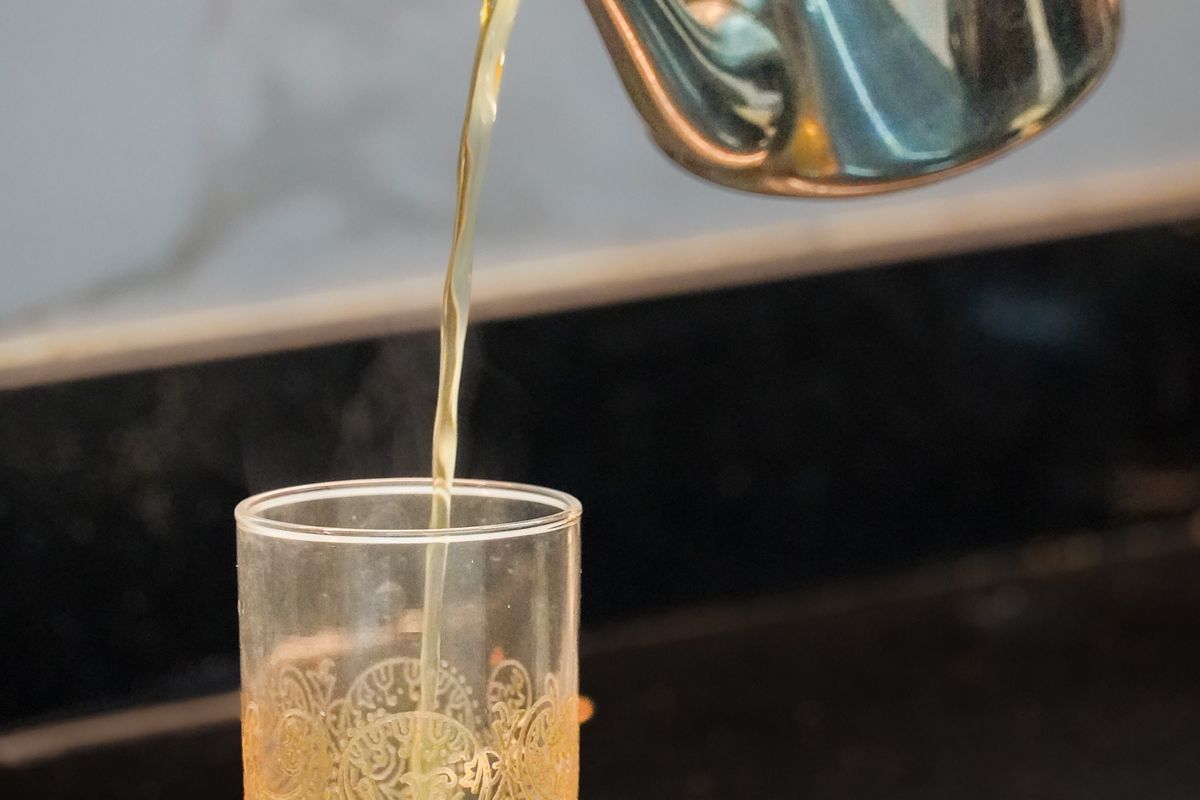
- Pour from a height: the tea is poured in a long, thin stream from as high as the host dares. This cools the tea slightly and creates a crown of foam on each glass, a sign of a well-made pot.
Tea Etiquette: How to Be a Good Guest
Being offered tea is a sign of hospitality, whether in a family home, a carpet shop or your riad on arrival. A few simple habits will make you a gracious guest:
- Accept at least one glass: refusing outright can seem cold. If you do not want more, a polite “shukran” (thank you) with a hand on your heart is enough.
- Expect three glasses: tea is often served in several rounds from the same pot. A popular saying describes the first glass as gentle like life, the second strong like love and the third bitter like death, as the flavour changes with each round.
- Hold the glass by the rim: the glasses are thin and hot, so hold them near the top or by the base.
- Sipping noisily is fine: slurping a little helps cool the tea and is not rude.
- Tea in shops is not a contract: accepting tea from a merchant does not oblige you to buy, but stay polite and thank them for their time.
For more on customs at the table and beyond, read our guide to Moroccan etiquette and dos and don’ts.
Regional Variations to Try
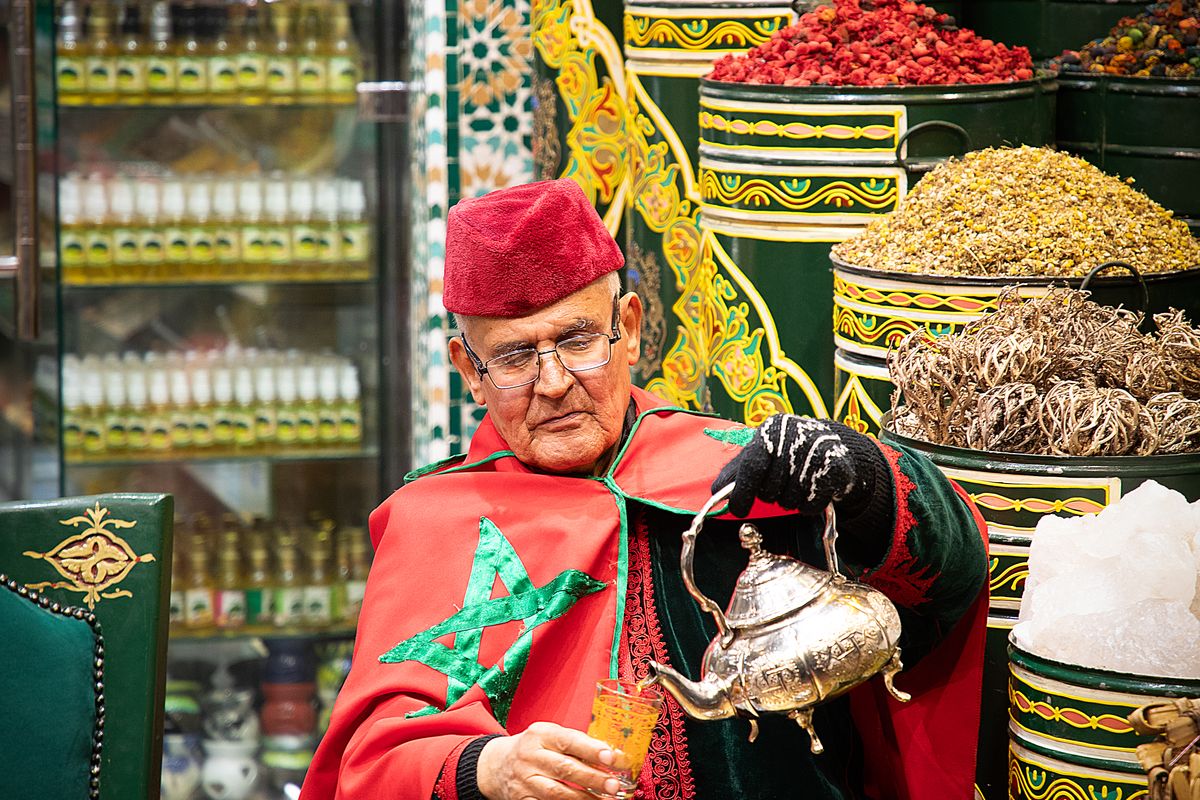
- Extra herbs in winter: in cold months, many families add absinthe wormwood (chiba), sage, lemon verbena or pennyroyal to warm the body.
- Desert tea: in the south and the Sahara, tea is often stronger and brewed slowly over charcoal, with long conversations between glasses.
- Less sugar: health-conscious Moroccans increasingly ask for “shwiya sukkar” (a little sugar) or “bla sukkar” (no sugar). You can do the same in cafés.
- Coffee culture: in big cities, café crème and spiced coffee are just as popular, but mint tea remains the drink of hospitality.
Where to Drink Mint Tea in Morocco
Rooftop Cafés in the Medinas
Terraces overlooking the medinas of Marrakech and Fes are perfect for a late-afternoon glass as the call to prayer echoes across the rooftops. Arrive before sunset to get a good seat.
Traditional Cafés
Neighbourhood cafés serve tea in a glass or a small pot for a modest price. They are social hubs, traditionally frequented by men, though foreign women are welcome in most city cafés. Sit facing the street like the locals and watch daily life go by.
Mountain Villages and Desert Camps
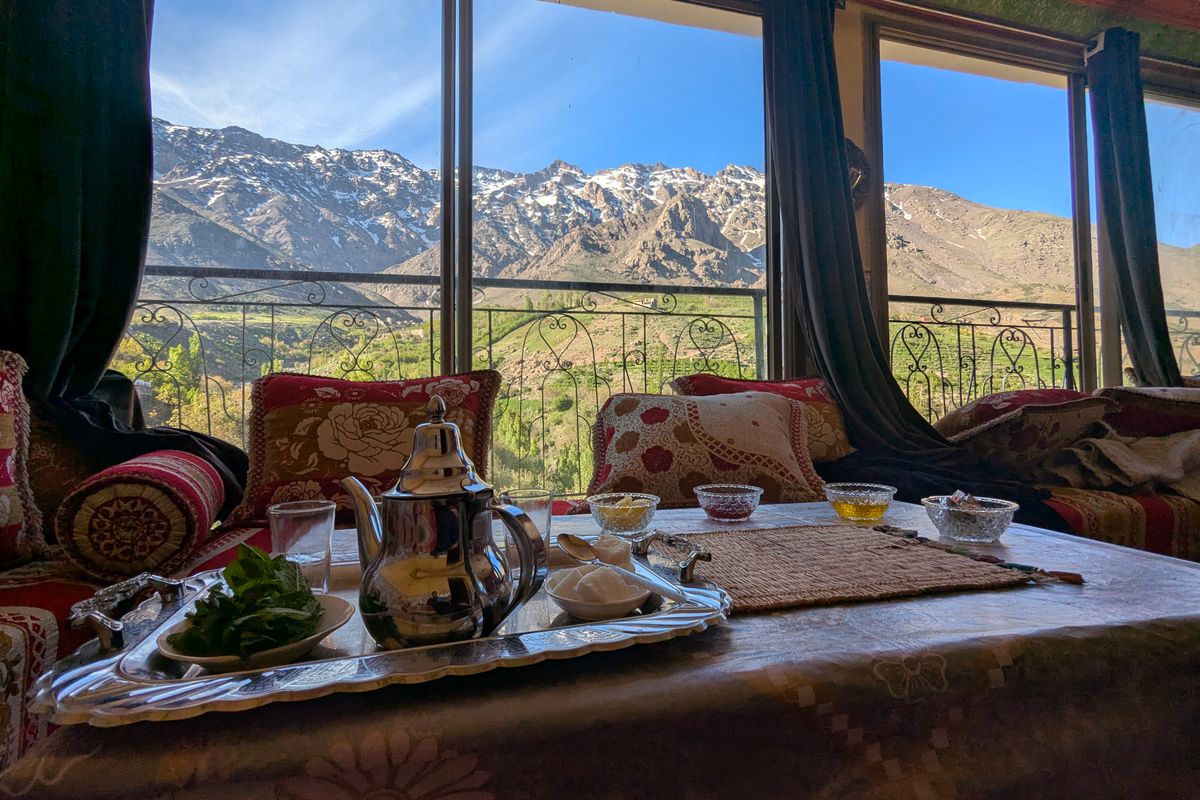
Some of the most memorable glasses are poured far from the cities: in a Berber house in the High Atlas around Imlil, or around the fire in a Sahara camp after sunset. Your host will often prepare tea in front of you, turning it into a moment to share.
How to Make Moroccan Mint Tea at Home
Bringing the ritual home is easy. For a medium teapot you will need:
- 1 heaped tablespoon of gunpowder green tea
- A large handful of fresh spearmint, stems included
- Sugar to taste (start with 2 to 3 tablespoons and adjust)
- About 750 ml of freshly boiled water
Rinse the tea with a splash of boiling water and discard it, add the mint and sugar, fill the pot with boiling water and let it steep for three to four minutes. Pour a glass and return it to the pot two or three times to mix, then serve from a height. Avoid letting the mint stew too long, or the tea becomes bitter.
Buying a Teapot and Tea Glasses
Teapots, glasses and engraved trays make lovely souvenirs. Look for heavy pots with a well-fitting lid and a handle that stays cool; lightweight versions are cheaper but dent easily. Glasses come plain, gilded or in coloured patterns. Wrap them carefully in clothes for the journey home, and remember that haggling is normal in the souks. Our guide on how to haggle in Moroccan souks will help you get a fair price.
FAQ
Does Moroccan mint tea contain caffeine?
Yes. It is made with green tea, so it contains caffeine, although usually less than a cup of coffee. Ask for a herbal version with only mint if you prefer to avoid it in the evening.
Can I ask for tea without sugar?
In cafés, yes: ask for “bla sukkar” and add sugar yourself. In homes, tea is often sweetened in the pot, so it is polite to accept it as served.
Is it rude to refuse tea in Morocco?
Not if you decline politely, but accepting at least one glass is the warmest response to hospitality.
Conclusion
A glass of Moroccan mint tea is the easiest way to connect with local life. Take time to watch it being made, sip slowly and enjoy the conversation that comes with it. Pair it with pastries or the dishes in our guide on what to eat in Morocco, and you will understand why this simple drink sits at the heart of Moroccan hospitality.
Featured image: a traditional mint tea set on a red rug in Fes, photo by Moussa Idrissi on Pexels.