
Moroccans are famously hospitable, and a little cultural awareness goes a long way. You will not be expected to know every custom, but small gestures, such as a greeting in Arabic, modest clothes in the medina or accepting a glass of tea, change how people respond to you. This guide to Moroccan etiquette covers the customs travellers meet most often and the mistakes that are easiest to avoid.
Moroccan Etiquette at a Glance
- Do: greet people before asking anything, dress modestly, use your right hand, ask before taking photos.
- Don’t: enter working mosques, drink alcohol in the street, show strong affection in public, or refuse hospitality abruptly.
- Good to know: Islam shapes daily life, and Friday is the main day of prayer.
Moroccan Etiquette for Greetings and Everyday Courtesy
In Morocco, conversations start with a greeting, even when you only want directions or a price. Jumping straight to the question can feel rude. A simple salam alaykum (peace be upon you) works everywhere; the reply is wa alaykum salam. French is widely spoken in cities, so bonjour is fine too, and in the mountains a few words of Amazigh, such as azul (hello), will earn a smile.
- Men usually shake hands with men. Between men and women, let the woman offer her hand first; some people prefer not to shake hands with the opposite sex and may place a hand on their heart instead. Do the same in return.
- Shukran means thank you. La, shukran (no, thank you) is the polite way to decline a seller or a would-be guide.
- You will often hear insha’Allah, “God willing”, when people talk about the future. It is a habit of speech, not a sign that something will not happen.
What to Wear
There is no legal dress code for visitors, and you will see a wide range of styles in Casablanca or Marrakech. Still, modest clothing is a key part of Moroccan etiquette: it is respectful and makes daily life easier, especially in the medinas, small towns and rural areas.
- Cover shoulders and knees. Loose trousers, long skirts and light shirts are comfortable in the heat.
- A light scarf is useful for women: for sun, dust, and to cover the shoulders when visiting religious sites.
- Swimwear is for the beach and the pool. Cover up when walking back into town.
- Men should avoid walking around shirtless away from the beach.
Religion, Mosques and Prayer
Most mosques in Morocco are closed to non-Muslims. You can admire the doorways and minarets from outside, but do not step inside or linger in the entrance to look in. The great exception is the Hassan II Mosque, which offers guided tours to visitors; see our Casablanca travel guide. Many historic religious schools, such as the medersas of Fes and Marrakech, are also open to all.
- The call to prayer sounds five times a day. You do not need to do anything, but lower your voice and avoid filming worshippers.
- On Friday around midday prayer, some shops and medina stalls close for a few hours.
- Do not walk in front of someone who is praying.
Travelling During Ramadan
During the holy month of Ramadan, Muslims fast from dawn to sunset. Its dates follow the lunar calendar and move about eleven days earlier each year, so check them when you plan. Travelling during Ramadan is perfectly possible and can be memorable, especially the lively evenings after the fast is broken. Moroccan etiquette during Ramadan is mostly about discretion.
- Avoid eating, drinking or smoking openly in the street during the day. Hotels and tourist restaurants still serve visitors.
- Expect shorter opening hours and slower service in the afternoon.
- If you are invited to break the fast (ftour), accept if you can. It is a warm, generous meal.
Moroccan Etiquette at the Table: Tea, Meals and Being a Guest
Mint Tea
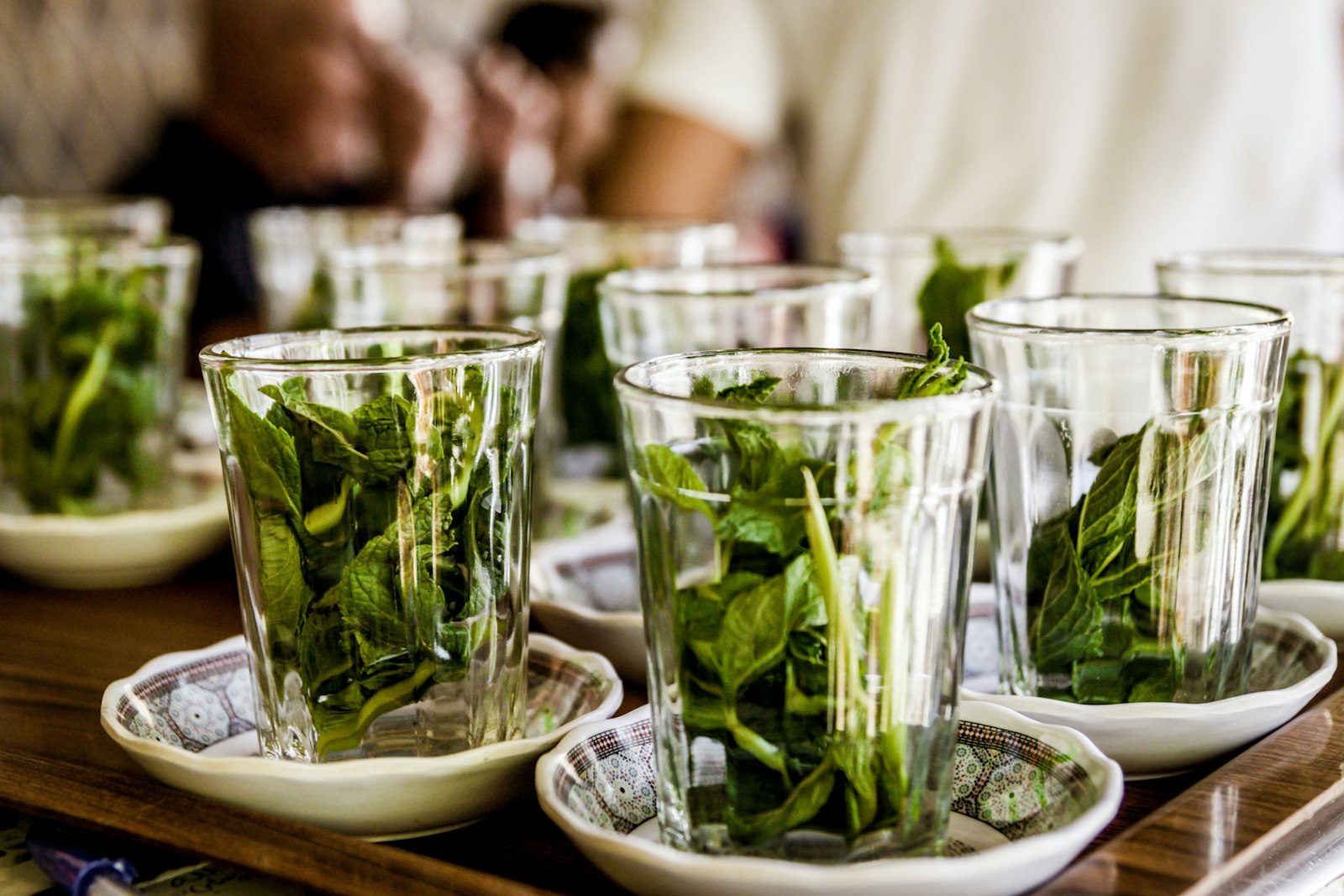
Mint tea is the symbol of Moroccan hospitality. You will be offered it in homes, shops and guesthouses. Accepting at least one glass is polite; if you do not want more, say so kindly. Being offered tea in a shop does not oblige you to buy.
At the Table
- Wash your hands before the meal. In homes, a host may bring a basin and jug to the table.
- Eat with your right hand, using bread to scoop food. The left hand is traditionally considered unclean.
- Eat from the part of the shared dish in front of you. The host will often push the best pieces of meat towards guests.
- Bread is respected. Do not throw it away or leave it on the floor.
- If you are invited home, bring a small gift such as pastries, fruit or sugar. Do not bring alcohol unless you know your hosts drink.
Alcohol and Public Behaviour
Alcohol is available in licensed hotels, bars, some restaurants and supermarkets in larger towns, but drinking in public places is not acceptable, and being drunk in public can cause real trouble. Public displays of affection are also frowned upon: holding hands is generally fine for couples, but kissing in the street is not.
Photography
- Always ask before photographing people, and accept a “no” gracefully. Many Moroccans, especially women and older people, prefer not to be photographed.
- Performers, water sellers and animal handlers in tourist squares expect payment for photos. Agree first.
- Do not photograph police, military sites, or the royal palaces’ guards.
Tipping
Tipping is part of everyday life and of Moroccan etiquette. Leave something for waiters in sit-down restaurants, round up for taxi drivers, and tip porters, guides, drivers and hotel staff who help you. Keep a supply of small coins and notes for this; amounts are modest, but they matter to people whose wages are low.
Handling Persistent Attention
In busy medinas, you will be approached by sellers and unofficial guides. Stay polite and calm: a smile and la, shukran while you keep walking is usually enough. Anger rarely helps. If someone insists on showing you the way, decline clearly at the start; accepting and then refusing to pay causes friction. See our Marrakech travel guide for more on navigating the medina.
Conclusion
Moroccan etiquette comes down to respect and warmth. Greet before you ask, dress with care, use your right hand, ask before you photograph and accept hospitality with good grace. Moroccans are quick to forgive honest mistakes, and visitors who make the effort are often rewarded with conversations, invitations and the best tea of their trip.
Featured image: photo by Massimo Adami on Unsplash.
Pingback: Morocco Packing List: What to Wear and What to Bring
Pingback: Hammam in Morocco: A First-Timer's Guide to the Traditional Bath
Pingback: Moroccan Mint Tea: The Ritual, How It's Made and Where to Drink It