
Essaouira is a walled port on Morocco’s Atlantic coast, known for its whitewashed medina, blue fishing boats and a wind that rarely stops. It is smaller and calmer than Marrakech, and many travelers come for a day and wish they had booked three. This Essaouira travel guide covers what to see, when to come and how to get there.
Essaouira at a Glance
- Best for: a relaxed medina, seafood, wind sports and sunsets.
- How long: two nights is ideal.
- Best time: spring and autumn for walking; summer for wind sports.
- Good to know: it is cooler and windier than inland, even in August. Bring a jacket.
A Short History
Long known to Europeans as Mogador, the town was rebuilt in the 1760s by Sultan Mohammed ben Abdallah, who wanted a modern trading port and hired a French engineer to design it. The result is unusual in Morocco: a medina with straight streets and European-style fortifications. UNESCO listed it as a World Heritage Site in 2001.
What to See and Do
The Ramparts
The Skala de la Ville is the sea wall on the northwest side of the medina, lined with old bronze cannons pointing at the ocean. Walk along the top for views of the waves breaking on the rocks, and visit the woodworkers’ workshops built into the arches below.
The Fishing Port
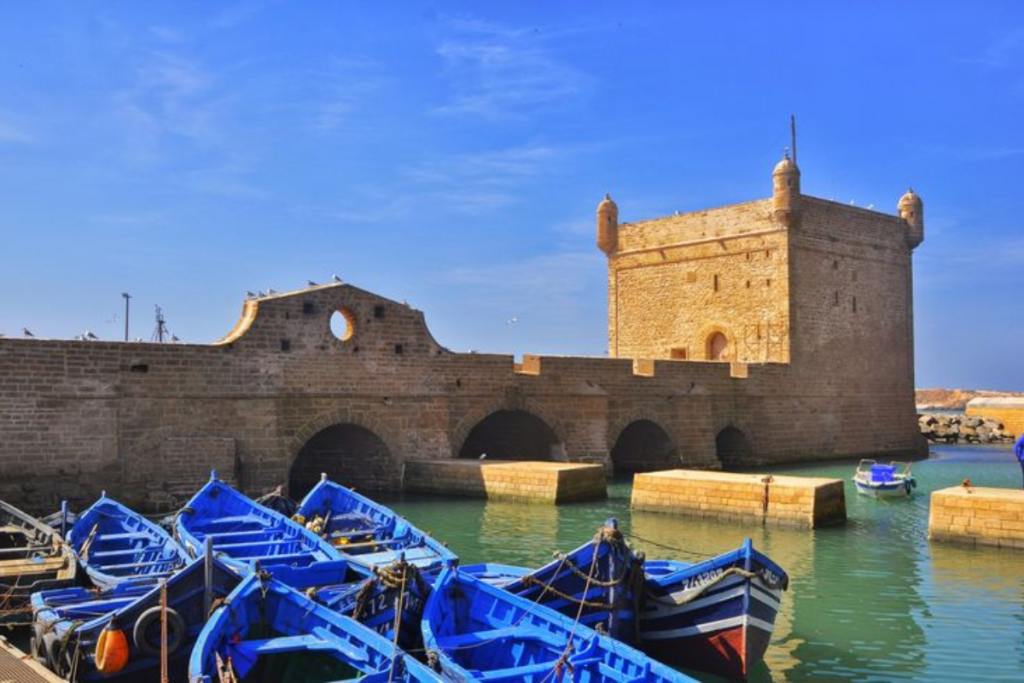
The port is still very much in use. Blue wooden boats crowd the harbor, nets are mended on the quay and gulls wheel overhead. The small fortress at the entrance, the Skala du Port, gives the classic view back toward the town walls. Come in the late morning or afternoon when the catch is landed.
The Medina
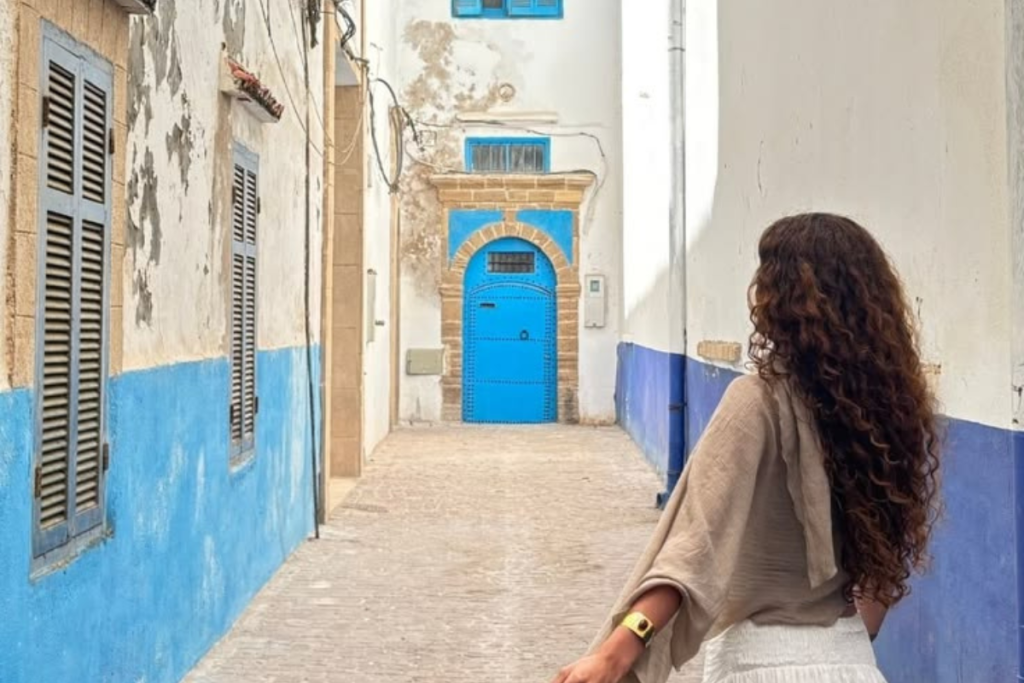
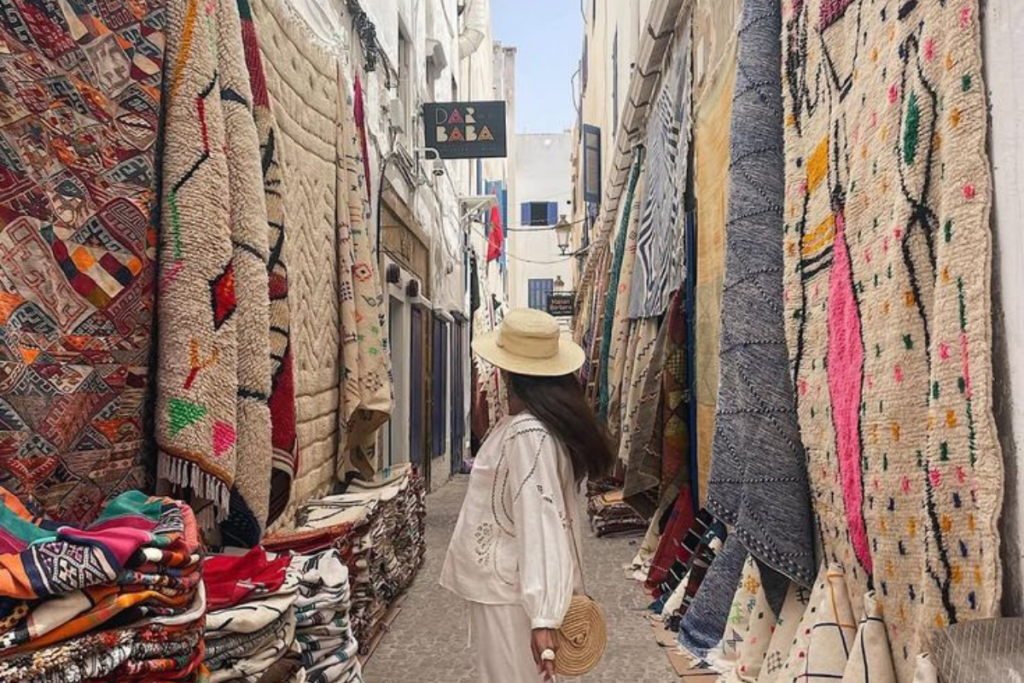
Essaouira’s medina is easy to walk and hard to get lost in. Its shops and galleries sell paintings, raffia shoes, silver and above all objects made of thuya, a fragrant local wood with a rich grain. Sellers are generally relaxed, which makes this one of the most pleasant places in Morocco to browse.
The Beach and Wind Sports
A wide sandy beach curves south from the port. The steady trade winds make it one of the best-known spots in the country for kitesurfing and windsurfing, with schools and rental shops along the bay. The same wind makes sunbathing a sandy experience on many days. Horse and camel rides are offered at the far end of the beach.
Music
The town is a center of Gnaoua music, a spiritual tradition with roots in sub-Saharan Africa. A large Gnaoua and world music festival is usually held in early summer and fills the town; book well ahead if your dates coincide.
What to Eat
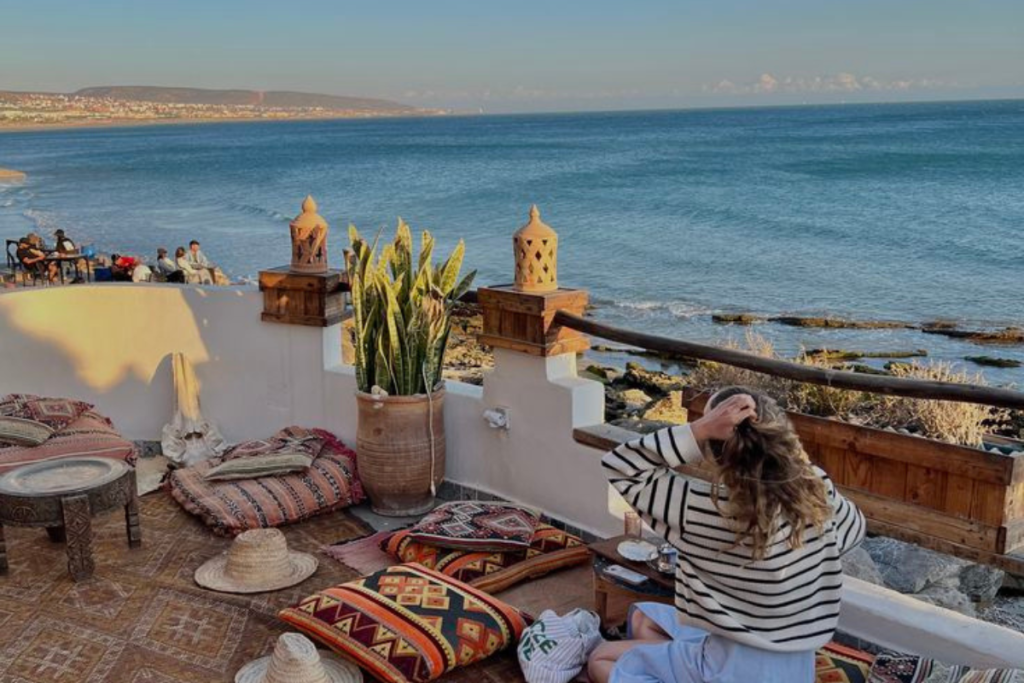
Fish is the obvious choice. Near the port, open-air grills cook sardines, sea bream, squid and prawns chosen from the display; agree on the price by weight before you sit down. The medina has a good range of small restaurants and rooftop terraces. The region is also the home of argan oil, used in cooking and in amlou, a spread of argan oil, almonds and honey.
Where to Stay
Riads inside the medina are atmospheric and close to everything; the sea air can make rooms damp, so look at recent reviews. Hotels along the beachfront offer more space and parking. For quiet and surf, some travelers base themselves in the villages south of town.
Around Essaouira
- Sidi Kaouki: a laid-back surf beach about half an hour south.
- Argan cooperatives: on the roads inland, women’s cooperatives show how the oil is produced. Buy where you can see the work being done.
- Diabat: a village across the river mouth, with dunes and a ruined palace half-buried in sand.
How to Get to Essaouira
Most visitors come from Marrakech, two and a half to three hours away by bus or car. Comfortable coaches run several times a day; book ahead in high season. Buses also connect Essaouira with Agadir along the coast road, passing Taghazout. The small local airport has a limited number of flights.
Best Time to Visit
Temperatures are mild all year and rarely hot. The wind is strongest from late spring through summer, which is ideal for kitesurfers and tiring for everyone else. April, May, September and October usually offer the best balance of sun and calmer days. Winter is quiet, with some rain.
Practical Tips
- Cars cannot enter the medina. Porters with handcarts wait at the gates to carry luggage.
- Pack a windproof layer and a scarf, whatever the season.
- The Atlantic is cold and has currents. Swim near the port end of the beach, where it is more sheltered.
- A day trip from Marrakech means five to six hours on the road. Staying overnight changes the experience.
Pingback: Ouirgane Travel Guide | 7 Best Things to Do in This Atlas Retreat
Pingback: What to Eat in Morocco: 18 Must-Try Dishes and Drinks
Pingback: El Jadida Travel Guide: Portuguese Cistern, Ramparts and Oualidia