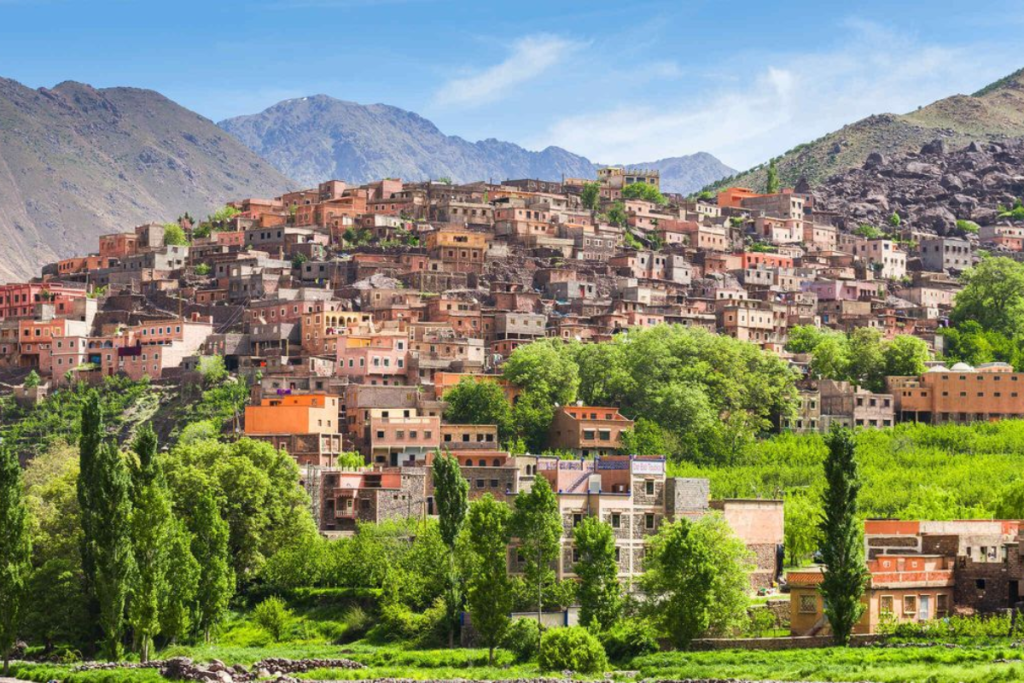
This Imlil Toubkal trek guide introduces you to the heart of Morocco’s High Atlas Mountains. Nestled in a steep valley just two hours from Marrakech, Imlil serves as the main base camp for climbers and hikers aiming to summit Mount Toubkal (4,167 m), the highest peak in North Africa.
Far more than a transit village, Imlil offers dramatic mountain scenery, authentic Berber hospitality, walnut groves, rushing rivers, and a wide choice of day hikes and multi-day treks. Whether you’re an experienced mountaineer or a first-time trekker, this Imlil travel guide will help you plan an unforgettable adventure in the Atlas Mountains.
Before diving into the details, check our comprehensive Morocco Travel Guide to understand how Imlil fits into a classic Morocco itinerary that often combines Marrakech, the Atlas, and the Sahara.
Where Is Imlil and How to Get There?
Imlil sits at 1,800 meters elevation in the High Atlas Mountains, approximately 65 km south of Marrakech. The road from Marrakech winds through beautiful valleys and offers stunning views as you gain altitude.
Getting to Imlil is easy and scenic:
- From Marrakech: 1.5 to 2 hours by private transfer, shared grand taxi, or organized tour. Most trekkers arrange pickup directly from their riad in Marrakech. See our detailed Marrakech Travel Guide for transport tips.
- From Marrakech Menara Airport: Around 2 hours. Private transfers are recommended for comfort after a long flight.
- Public transport: Buses or taxis to Asni, then a 30-minute ride up to Imlil.
Many visitors combine Imlil with a visit to the Ourika Valley or Setti Fatma waterfalls. For full route planning, explore our recommendations in Best Morocco Trekking Tours.
Why Imlil Is the Perfect Base for the Imlil Toubkal Trek
Imlil is the official starting point for almost all Imlil Toubkal trek routes. From here, the trail to the summit typically takes 2–3 days (including descent), with an overnight at the Toubkal Refuge (3,207 m) or higher camps.
The standard Imlil Toubkal trek route follows:
- Day 1: Imlil → Toubkal Refuge (5–6 hours)
- Day 2: Refuge → Summit (4–6 hours up) → Return to Imlil or Refuge
- Optional extra days for acclimatization or visiting nearby peaks like Ouanoukrim.
Local mountain guides and mules are readily available in Imlil, making the logistics straightforward even for independent travelers.
External resource: For technical route information, refer to the Mount Toubkal Wikipedia overview.
Beyond Toubkal: Other Hiking Routes from Imlil
While the Imlil Toubkal trek is the main draw, the area offers excellent day hikes and longer treks that showcase Berber life in the High Atlas:
- Imlil Village Loop — Easy walk through walnut and apple orchards with visits to traditional houses.
- Cascade d’Imouzzer — Moderate hike to a dramatic waterfall.
- Armed Circuit or multi-day trek to Lac d’Ifni.
- M’Goun Massif longer expeditions (can be arranged from Imlil).
These trails take you through remote Berber villages where you can experience genuine mountain hospitality, enjoy mint tea, and learn about traditional farming methods.
Image ALT: “Hikers on the Imlil Toubkal trek trail with mule support Morocco”
Best Time to Visit Imlil for Trekking
The ideal seasons for an Imlil Toubkal trek are:
- May to October — Best weather, clearest trails, and warmer summit conditions.
- June to September — Peak trekking season with long daylight hours.
- December to April — Possible for experienced hikers with proper winter gear and crampons, but snow and ice make the summit significantly harder.
Avoid trekking during the hottest months in lower valleys or immediately after heavy rain when trails can be slippery. For broader seasonal advice across Morocco, read our guide Best Time to Visit Morocco.
Where to Stay in Imlil
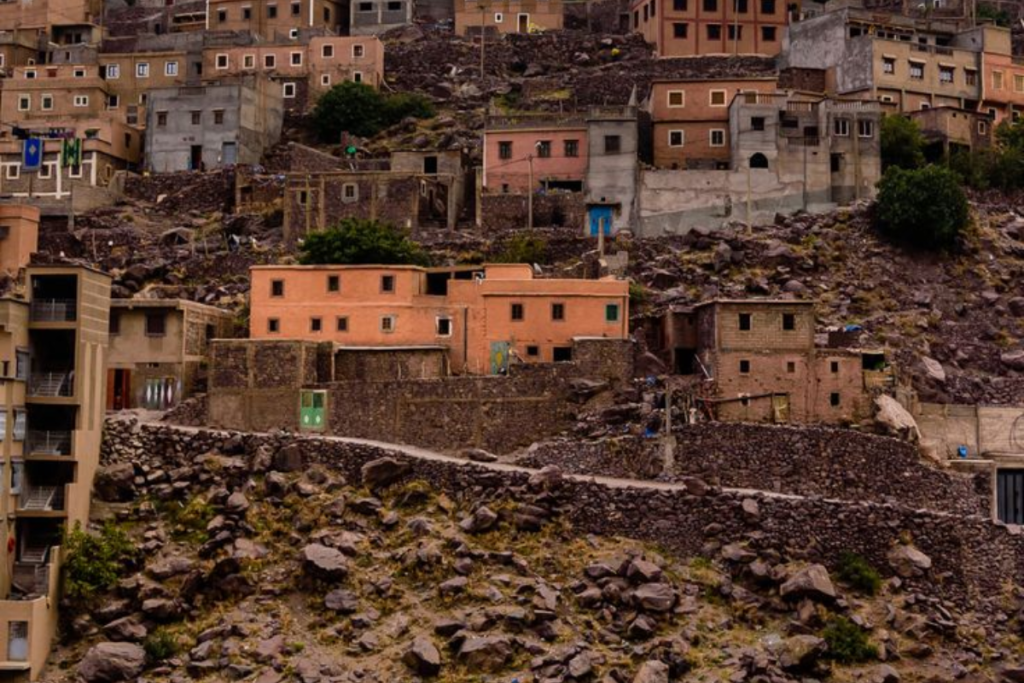
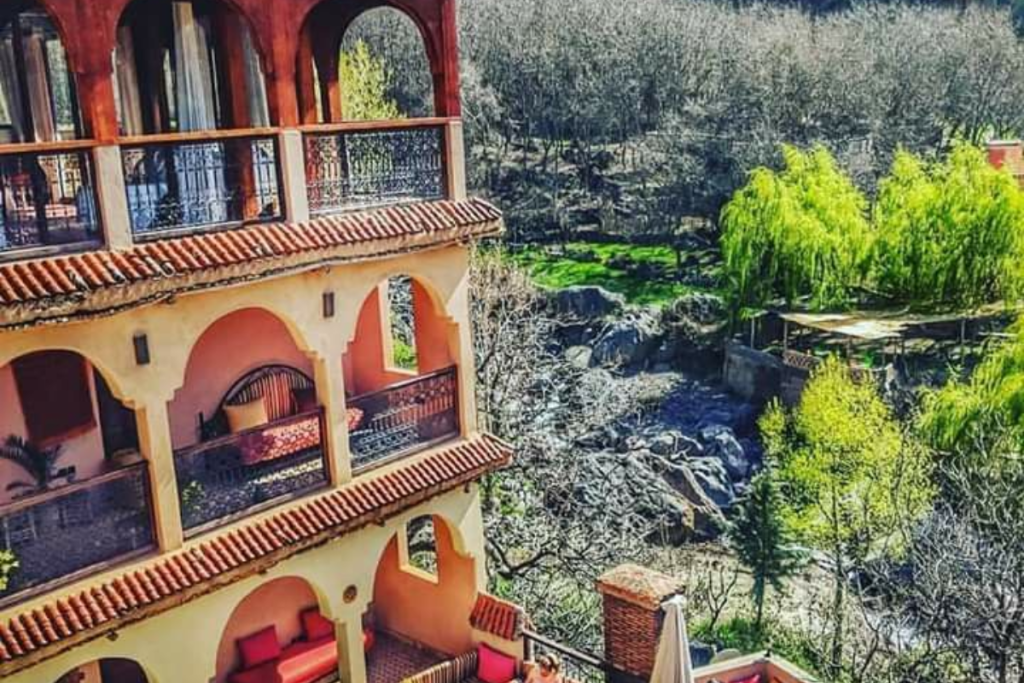
Accommodation in Imlil ranges from simple mountain guesthouses to comfortable riads with spectacular views:
- Budget: Dar Adrar or local guesthouses run by Berber families.
- Mid-range: Riad Imlil or Kasbah du Toubkal (featured in many films).
- Comfort/Luxury: Eco-lodges and riads with hammams, terraces, and excellent food.
Most accommodations can arrange guides, mule transport, packed lunches, and equipment rental for your Imlil Toubkal trek. Staying at least one night before and after the trek is highly recommended for proper acclimatization.
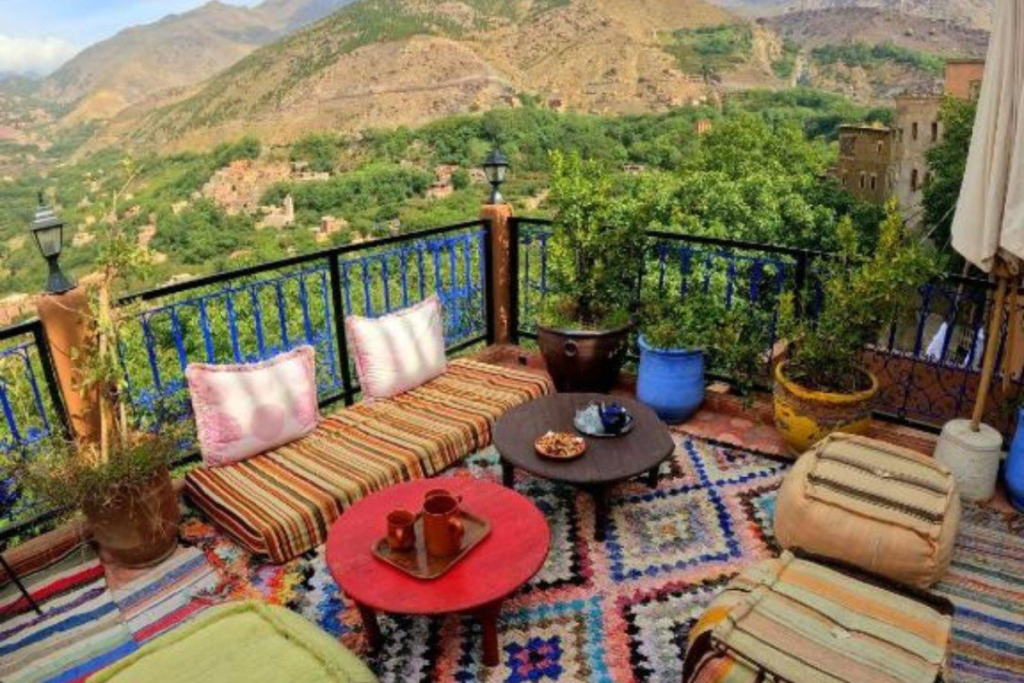
Image ALT: “Sunny terrace of a riad guesthouse in Imlil with mountain views”
Berber Culture, Food and Local Life
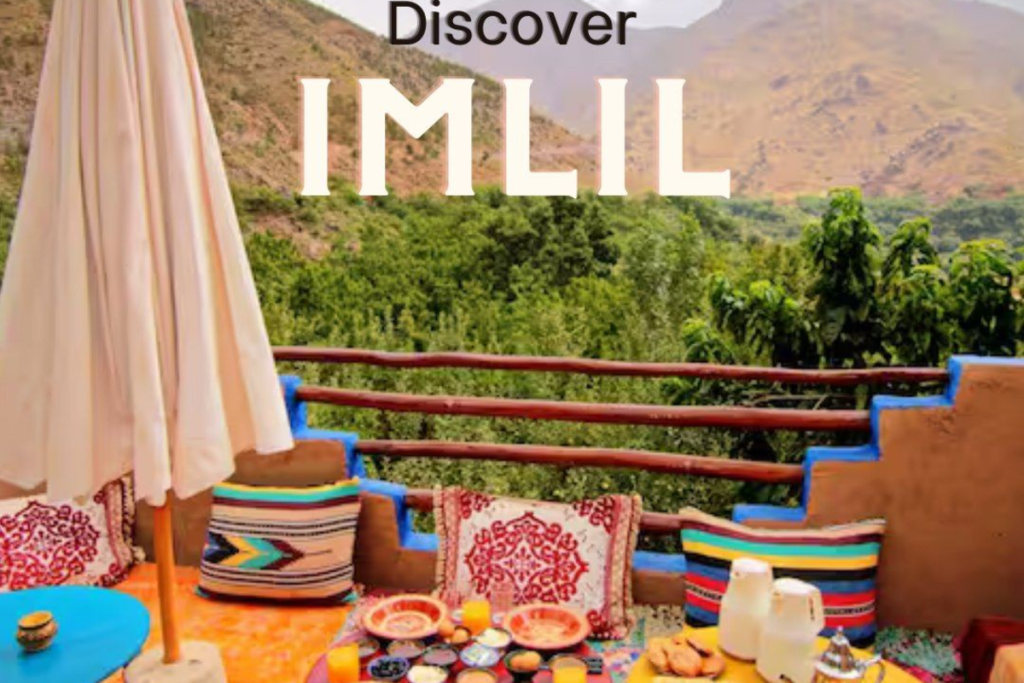
Imlil is a proud Berber (Amazigh) village. You’ll quickly notice the warm hospitality, traditional dress, and unique architecture built into the steep hillsides.
Local cuisine features hearty mountain dishes:
- Tagine with walnuts and prunes
- Berber pizza (madfouna)
- Fresh bread baked in outdoor ovens
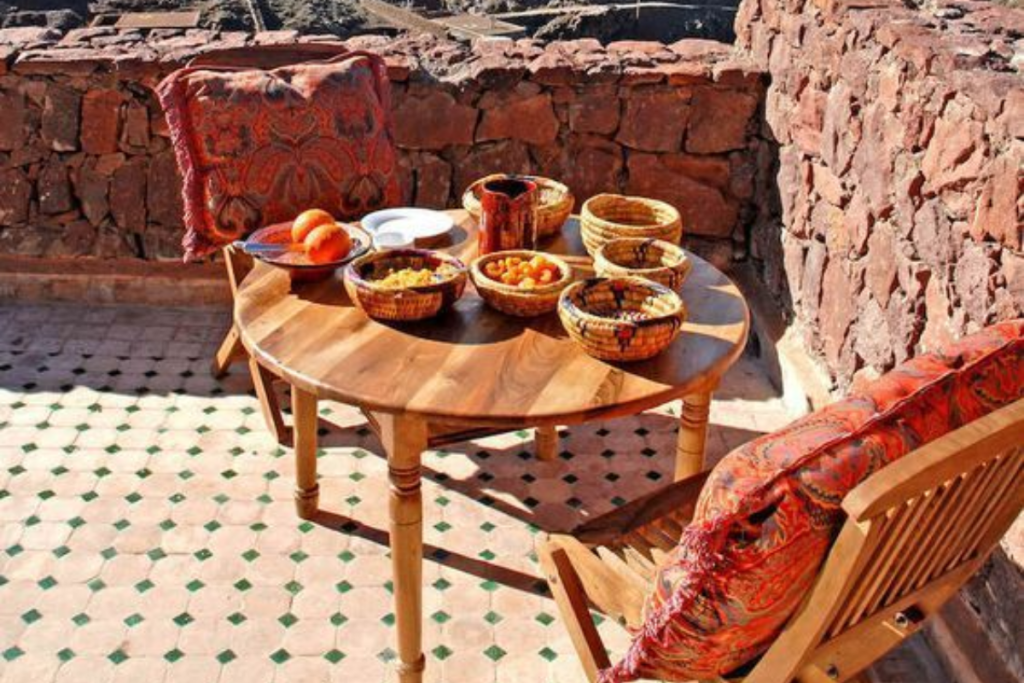
- Mint tea ceremonies
Many riads offer cooking workshops. Visiting the weekly souk gives insight into daily mountain life. Respect local customs — dress modestly and ask permission before photographing people.
What to Pack and Practical Trekking Tips
A successful Imlil Toubkal trek requires proper preparation:
- Essential gear: Hiking boots, trekking poles, warm layers (summit can be below freezing even in summer), rain jacket, headlamp, water purification, and high-factor sunscreen.
- Altitude awareness: Acclimatize properly. Headaches and nausea are common above 3,000 m.
- Guided vs self-guided: While independent trekking is possible, hiring a licensed local guide supports the community and increases safety.
- Women travelers: Solo female trekkers are generally safe but most prefer joining organized groups or hiring a guide.
Always check weather forecasts and trail conditions in Imlil before departure.
Image ALT: “Rugged High Atlas Mountains landscape near Imlil Morocco”
Day Trips and Longer Atlas Itineraries
If you have extra time, use Imlil as a base to explore:
- The sacred Jewish shrine at Moulay Brahim
- Oukaimeden ski station (in winter)
- Further High Atlas villages
Many travelers combine the Imlil Toubkal trek with a Sahara desert extension. See our Best Morocco Desert Tours for seamless multi-activity packages.
External links for further reading:
Immersive Berber Culture and Mountain Cuisine
Imlil is a proud Amazigh community. In 2026, cultural tourism has grown responsibly, with many families offering village tours, traditional cooking classes, and handicraft workshops.
Signature dishes include walnut and prune tagine, fresh-baked madfouna (Berber pizza), and herb-infused breads. The weekly souk remains vibrant — a fantastic place to buy local honey, nuts, and handwoven textiles while supporting the mountain economy.
Dress respectfully, ask permission before photographing locals, and embrace the genuine warmth that defines Berber hospitality.
Essential Packing List & Pro Tips for 2026
Success on the epic Imlil Toubkal trek depends on preparation:
- Core gear: Well-broken-in hiking boots, trekking poles, layered clothing (summit nights can drop below freezing even in summer), waterproof shell, headlamp, reusable water bottles with purification tablets, high-SPF sunscreen, and a sleeping bag liner.
- Health & altitude: Acclimatize for at least 24–48 hours in Imlil. Altitude medication and comprehensive travel insurance covering high-altitude trekking are strongly advised.
- Guided vs independent: While fit trekkers can go independently, hiring a local guide in 2026 supports community projects and significantly improves safety and cultural understanding.
- Women travelers: Solo female trekkers report feeling secure, especially when joining small group tours now offered by women-led cooperatives launched in 2025
The Soul of Imlil Village: More Than Just a Trailhead
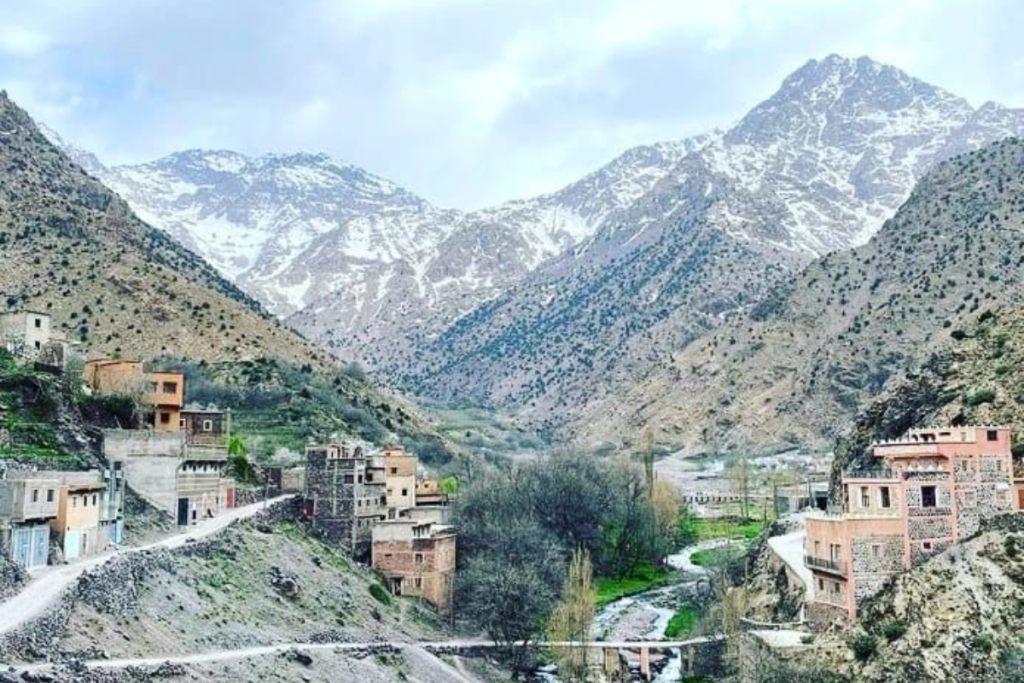
While the magnetic pull of Jebel Toubkal is undeniable, a truly enriching Imlil Toubkal Trek demands that you slow down and absorb the vibrant pulse of the village itself. Imlil is not merely a logistical pit stop with dusty parking lots and gear shops; it is a living, breathing community where the ancient rhythms of Amazigh (Berber) life play out daily against a backdrop of staggering natural beauty. Spend a leisurely morning wandering the narrow, stone-paved alleyways that wind between traditional mud-brick homes, where the air is thick with the comforting scent of baking bread from communal wood-fired ovens.
You will encounter smiling children practicing their English, weathered elders navigating the steep paths on sure-footed mules, and artisans meticulously crafting traditional tools. The weekly souk, held every Tuesday, transforms the valley floor into a bustling, colorful tapestry of commerce. Farmers descend from remote hamlets with crates of sun-ripened apples, sacks of earthy walnuts, and bundles of fragrant wild herbs.
It’s a fantastic opportunity to purchase authentic, locally sourced trail snacks directly from the people who cultivated them, injecting your tourist dollars powerfully into the grassroots economy. For an incredibly moving experience, seek out the village bridge at dusk. Here, you can witness the triumphant return of trekking parties—exhausted bodies, joyful faces, and emotional reunions with guides and muleteers.
The shared sense of accomplishment is palpable and heartwarming. Our Imlil Toubkal Trek guide urges you to resist the rush towards the summit for just one afternoon. Instead, sit on a sun-drenched rooftop terrace with a glass of sweet mint tea, simply watch the golden light shift across the Toubkal Massif, and feel the profound privilege of being a guest in this spectacular mountain sanctuary.
Conclusion: Start Your Moroccan Mountain Adventure in Imlil
This Imlil travel guide proves that the village is much more than a trailhead — it’s a living Berber community surrounded by some of North Africa’s most spectacular scenery. Whether you’re summiting Mount Toubkal or enjoying shorter valley walks, the combination of dramatic landscapes, cultural immersion, and genuine hospitality makes Imlil one of Morocco’s most rewarding destinations.
Ready to begin your Imlil Toubkal trek? Browse our full Morocco Travel Guide or explore recommended operators on our Best Morocco Trekking Tours page to start planning your High Atlas adventure today.