
Behind a plain wooden door in a narrow medina lane, a riad opens onto a quiet courtyard of tiles, plants and trickling water. Staying in a riad in Morocco is one of the most memorable parts of a trip: it puts you in the heart of the old city, with the warmth of a small guesthouse rather than the anonymity of a hotel. This guide explains what a riad is, how to choose the right one and what to expect when you arrive.
What Is a Riad?
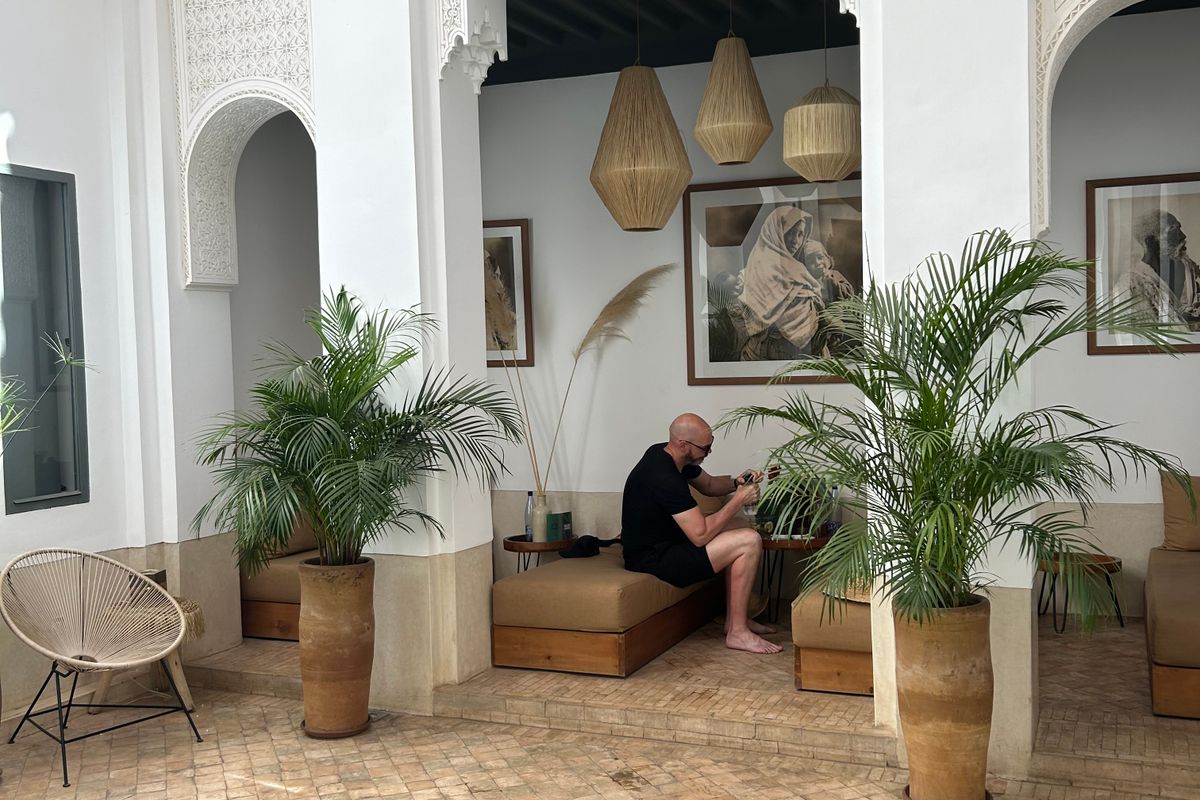
Traditionally, a riad is a family house built around an interior garden or courtyard. Moroccan medina homes look inward: the outside walls are almost windowless, keeping out heat, noise and curious eyes, while every room opens onto the central patio. Many of these houses have been restored and turned into guesthouses with anywhere from three to fifteen or so rooms.
Strictly speaking, a riad has a garden with trees, while a dar is a smaller house with a simple open courtyard. In practice, the word “riad” is used for almost any traditional guesthouse in the medina, so do not be surprised if your riad has a tiled patio and a plunge pool rather than orange trees.
Riad or Hotel: Which Is Right for You?
- Choose a riad if you want atmosphere, personal service, a central location in the medina and traditional architecture.
- Choose a hotel if you need a lift, large rooms, a big pool, a gym, step-free access or a car parked at the door.
Many travellers combine both: a riad in the medina for the city days and a hotel or kasbah lodge in the countryside.
How to Choose a Riad in Morocco
1. Check the Exact Location
Location matters more than anything else. A riad that is a five-minute walk from a taxi drop-off point is far easier than one buried deep in the medina, especially when you arrive with luggage or come back late at night. Look at the map, not just the description: “close to the main square” can mean very different things.
- Marrakech: the areas around Riad Zitoun, Bab Doukkala and Mouassine are central but a little calmer than the lanes right off Jemaa el-Fna. See our Marrakech travel guide.
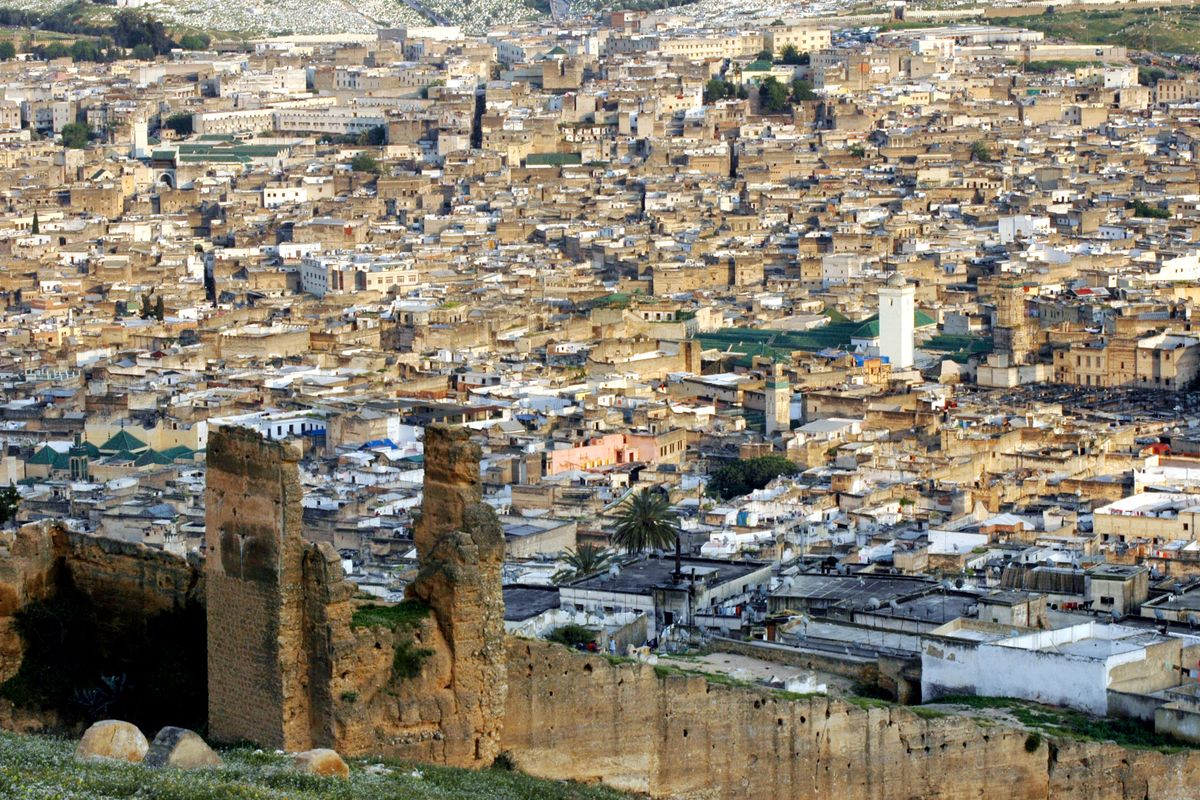
- Fes: staying near Bab Boujloud or another gate makes arrivals and taxis much simpler. More tips in our Fes travel guide.
- Essaouira: the medina is small and flat, so almost any riad works, but those near the ramparts can be windy and loud with waves. See our Essaouira travel guide.
2. Read Recent Reviews Carefully
Look for comments on cleanliness, hot water, noise, heating in winter and how helpful the staff are with arrivals and bookings. Pay most attention to reviews from the last few months, since riads can change hands or managers.
3. Ask About Rooms and Comfort
- Light: rooms open onto the courtyard, so ground-floor rooms can be dark and less private. Upper floors are usually brighter and quieter.
- Air conditioning and heating: essential in summer in Marrakech and Fes, and appreciated on chilly winter nights, when old stone houses can feel cold.
- Stairs: riads rarely have lifts and staircases can be steep. Request a ground or first-floor room if mobility is a concern.
- Bathrooms: most are en suite, often finished in polished tadelakt plaster. Check whether the room has a shower or bathtub if it matters to you.
4. Decide What Extras You Want
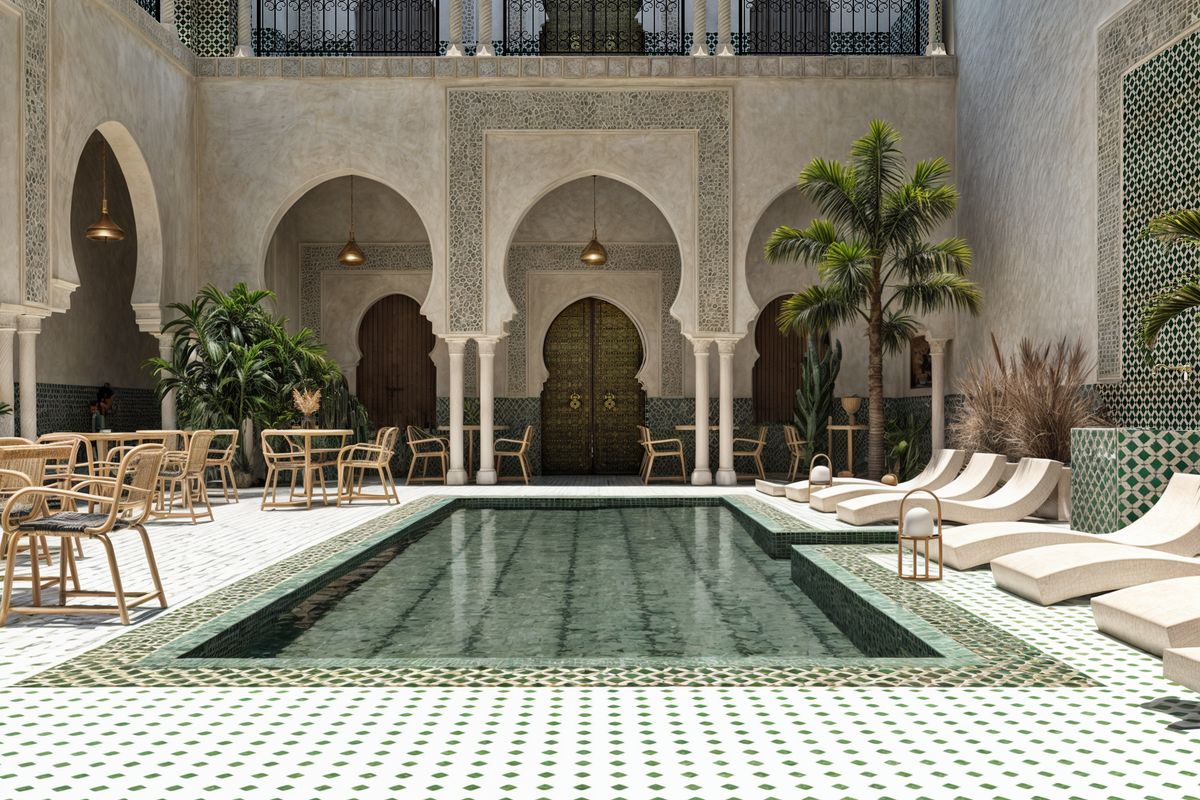
Some riads offer a small plunge pool, a hammam or spa, cooking classes or home-cooked dinners. A plunge pool is lovely in summer but usually too cold to swim in winter. If dinner is offered, it is often one of the best meals of the trip, so it is worth booking at least one night.
What to Expect During Your Stay
Arrival and Finding the Riad
Cars cannot enter most medina lanes, so taxis will drop you at the nearest gate or square. The simplest solution is to ask the riad to arrange an airport or station transfer; the driver will usually walk you to the door, and someone from the riad may meet you with a luggage cart. Send your arrival time in advance and save the riad’s phone number and location pin on your phone.
If you arrive on your own, you may be approached by people offering to guide you. Have the riad’s number ready to call, and be clear from the start if you do not want help. Our guide to Moroccan etiquette has tips on declining politely.
Welcome Tea and Breakfast
Most riads greet guests with mint tea and sweets, a good moment to ask questions and get a map of the area. Breakfast is usually included and served in the courtyard or on the terrace: Moroccan pancakes such as msemen and baghrir, bread, honey, jam, olive oil, eggs, fruit, fresh orange juice, coffee and tea.
The Rooftop Terrace
The roof terrace is one of the best features of any riad. It is the place to read in the sun, watch the sunset over the medina’s rooftops, hear the call to prayer echo across the city and, in Marrakech, see the snowy Atlas on clear winter days.
Noise and Sound
Because rooms face an open courtyard, sound carries. Voices, footsteps and the early call to prayer can be heard, so bring earplugs if you are a light sleeper. In return, riads are blissfully quiet compared with the lanes outside.
Practical Tips for Booking a Riad
- Book early for spring, autumn and holidays, when the best small riads fill up quickly. See our guide to the best time to visit Morocco.
- Check the payment terms. Some riads prefer cash or charge extra for card payments, and a local tourist tax is often added on top of the room price.
- Book directly when you can. Small riads often answer quickly by email or messaging apps and can help with transfers, guides and restaurant tips.
- Tip the staff at the end of your stay if they have helped you. A small envelope at reception is usually shared among the team.
- Respect the house. Riads are often homes as well as businesses; keep noise down in the courtyard at night.
FAQ
Are riads in Morocco safe?
Yes. Riads are generally very safe: the front door is kept locked and there is usually staff on site day and night. As anywhere, use the room safe for passports and valuables.
Are riads suitable for families?
Many are, and some have family suites. With young children, check for unfenced plunge pools, steep stairs and terrace railings before you book.
How many nights should I stay in a riad?
Two to three nights in each city is ideal. It gives you time to enjoy the riad itself, not just sleep there.
Conclusion
Choosing the right riad in Morocco comes down to location, comfort and the kind of experience you want. Pick one close to a gate, read recent reviews, ask the right questions about rooms, and let the staff help you arrive. You will be rewarded with a peaceful base, generous breakfasts and a rooftop view you will remember long after the trip.
Featured image: riad courtyard in Marrakech, photo by achraf borkadi on Pexels.
Pingback: Morocco on a Budget: 20 Practical Ways to Save Money
Pingback: Travelling in Morocco During Ramadan: What to Expect and Tips