
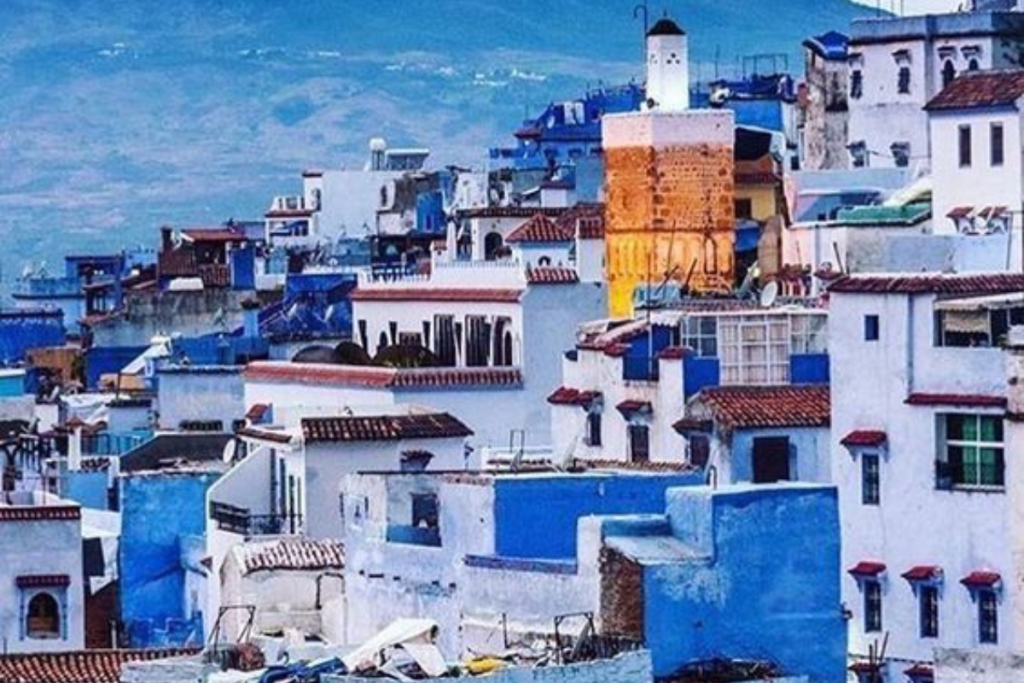
Chefchaouen is a small town in the Rif mountains whose old quarter is painted in every shade of blue. It is one of the most photographed places in Morocco, but it is also a real mountain town with a slow rhythm, good walking and cool air. This Chefchaouen travel guide explains what to see, how to get there and how to avoid the midday crowds.
Chefchaouen at a Glance
- Best for: photography, relaxed wandering, mountain walks.
- How long: one night at least; two if you want to hike.
- Best time: April to June and September to October.
- Good to know: there is no train. You arrive by bus, grand taxi or car.
Why Is Chefchaouen Blue?
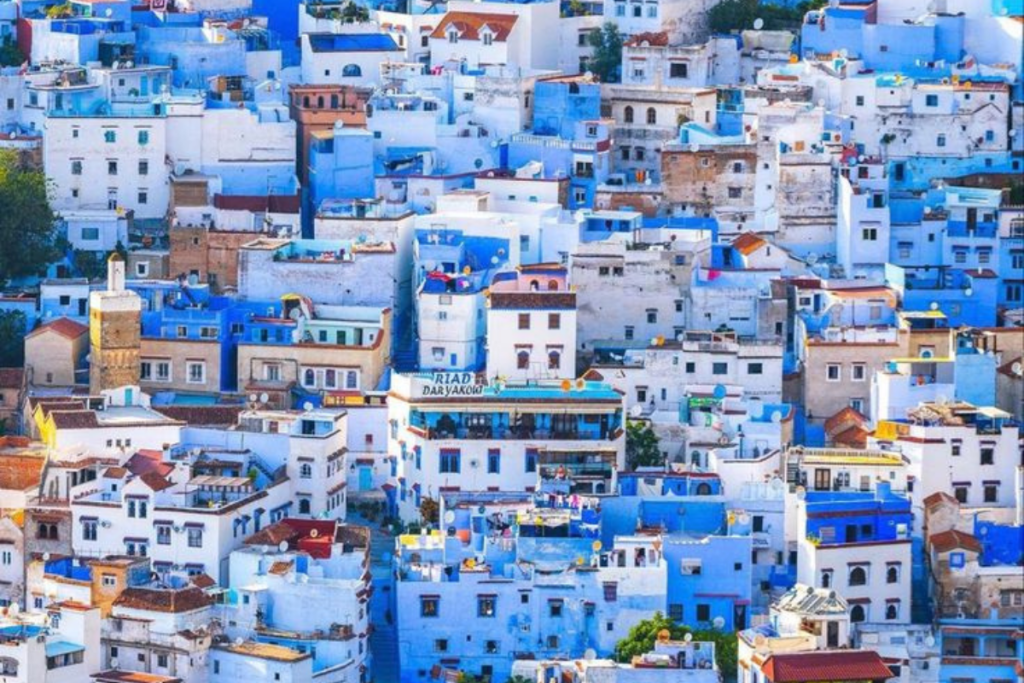
The town was founded in 1471 as a mountain stronghold and later took in Muslim and Jewish families who had left Spain. There is no single agreed explanation for the blue. The most common accounts credit the Jewish community, who used blue as a reminder of the sky and the divine; others say the color keeps houses cool or deters mosquitoes. Whatever the origin, residents repaint the walls regularly, and the tradition is now central to the town’s identity.
What to See and Do
Wander the Medina
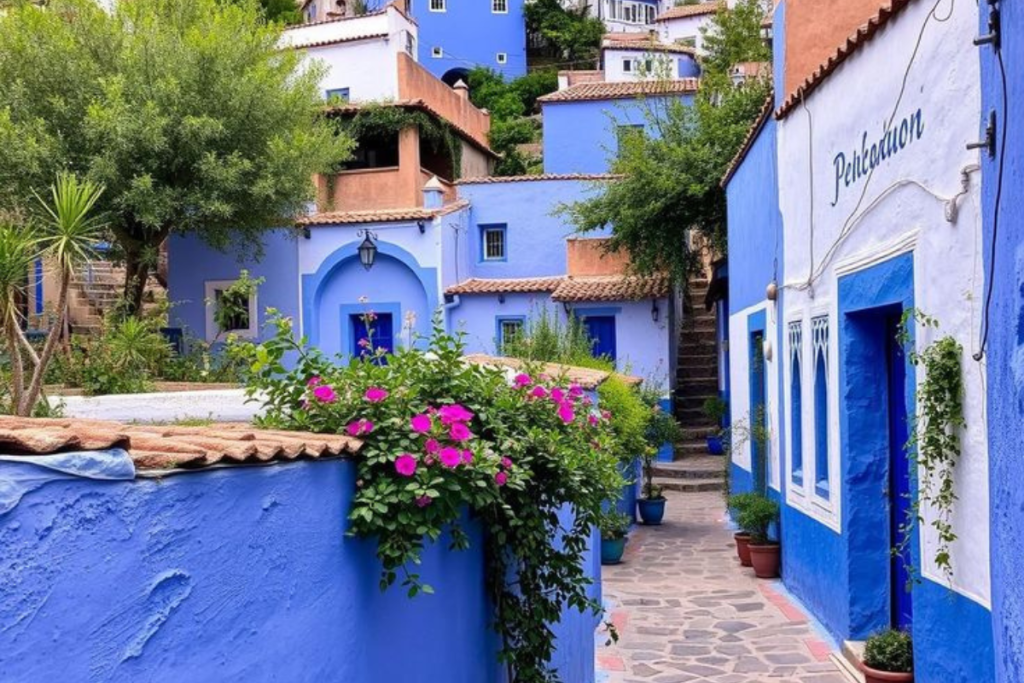
The medina is small enough to explore without a map. Climb the stepped lanes away from the main street and you will find quiet corners, painted doorways, flower pots and cats asleep on blue steps. Early morning is the best time: the light is soft and the lanes are almost empty.
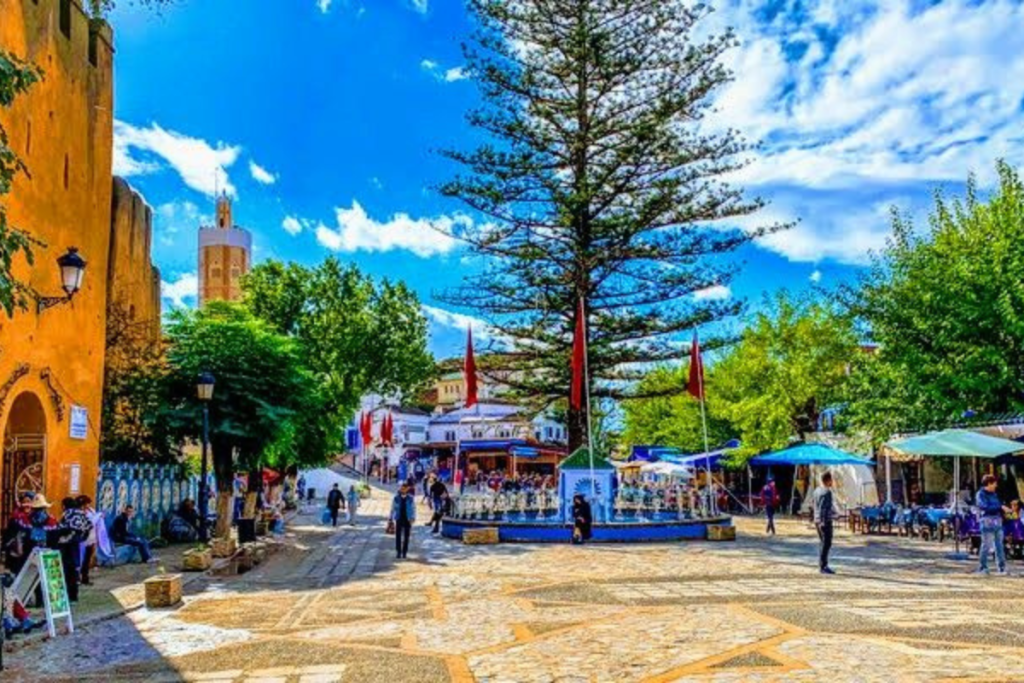
Plaza Uta el-Hammam and the Kasbah
The main square is lined with café terraces shaded by trees. On one side stands the Grand Mosque, with an unusual octagonal minaret, and the red-walled Kasbah, a small fortress with a garden, a modest museum and a tower you can climb for a view over the rooftops.
Ras el-Maa
At the eastern edge of the medina, a spring bursts from the mountainside and runs down past old washhouses where local women still do laundry. Cafés set their chairs beside the stream.
The Spanish Mosque at Sunset
From Ras el-Maa, a path climbs in 20 to 30 minutes to a small white mosque built in the 1920s on the hill opposite the town. The view of Chefchaouen against the mountains is the best there is, and half the town’s visitors gather here as the sun goes down. Bring a layer; it cools quickly.
Shopping
Chefchaouen is known for woven wool blankets and garments, leather goods and the local fresh goat cheese. Prices are lower and sellers calmer than in the big cities.
Hiking: Akchour and the Rif
The town sits at the edge of Talassemtane National Park. The most popular outing is Akchour, about 45 minutes away by grand taxi, where trails follow a river gorge to waterfalls and to a natural rock arch known as God’s Bridge. Allow a full day, wear proper shoes and expect company on weekends and in summer.
Where to Stay
Stay inside or right beside the medina, in one of the many small guesthouses with roof terraces. Cars cannot enter the old town, so expect to carry your bags up some steps or pay a porter. In winter, ask whether rooms are heated: nights in the mountains are cold.
How to Get to Chefchaouen
- From Tangier: two to two and a half hours by road. Direct buses run daily, or go via Tetouan.
- From Tetouan: a little over an hour by bus or grand taxi.
- From Fes: about four hours by bus.
Seats on the main bus company fill up in high season, so book a day or two ahead, including for your departure. The bus station is downhill from the medina; a petit taxi saves a steep walk.
Best Time to Visit
Spring and early autumn have mild days and green hills. Summer is warm but less hot than the plains, and very busy. Winter is cold and often rainy, though the town is quiet and atmospheric.
Practical Tips
- People live behind those blue doors. Ask before photographing residents, and do not block doorways or enter private stairways for a picture.
- Day-trip groups arrive from late morning to mid-afternoon. Sightsee early and late.
- You may be offered hashish, which is grown in the region. It is illegal; a simple “no, thank you” is enough.
- ATMs are found outside the medina, around the main square of the new town. Carry cash.
Pingback: Meta Title: Tangier Travel Guide 2026 : Best Things to Do in Tangier
Pingback: Fes Travel Guide 2026: Amazing Medina, Culture & Top Attractions
Pingback: Getting Around Morocco: Trains, Buses, Taxis and Driving
Pingback: Asilah Travel Guide: Murals, Ramparts and Atlantic Sunsets